
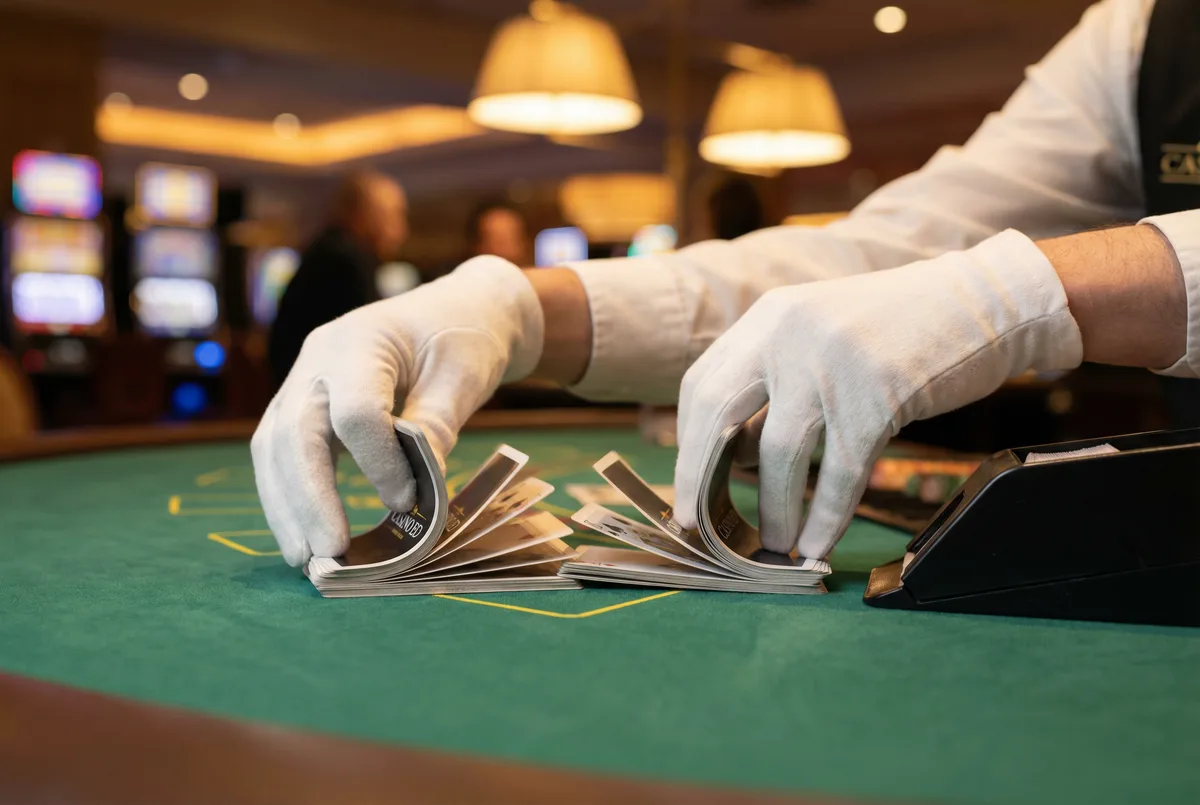
How Casino Shuffles Work and Their Effect on Blackjack Play
A casino shuffle is the process by which a used deck or shoe of cards is randomized before the next round of play begins. In blackjack, the shuffle method determines how thoroughly cards are mixed, how many cards are dealt before the next shuffle, and critically how much information about card composition reaches skilled players before the shoe ends. There are two primary shuffle types used in modern casinos: hand shuffles performed by dealers and automatic shuffling machines. The choice between them is not just procedural it directly affects the expected value available to every player at the table, from a tourist playing hunches to a serious advantage player tracking count.
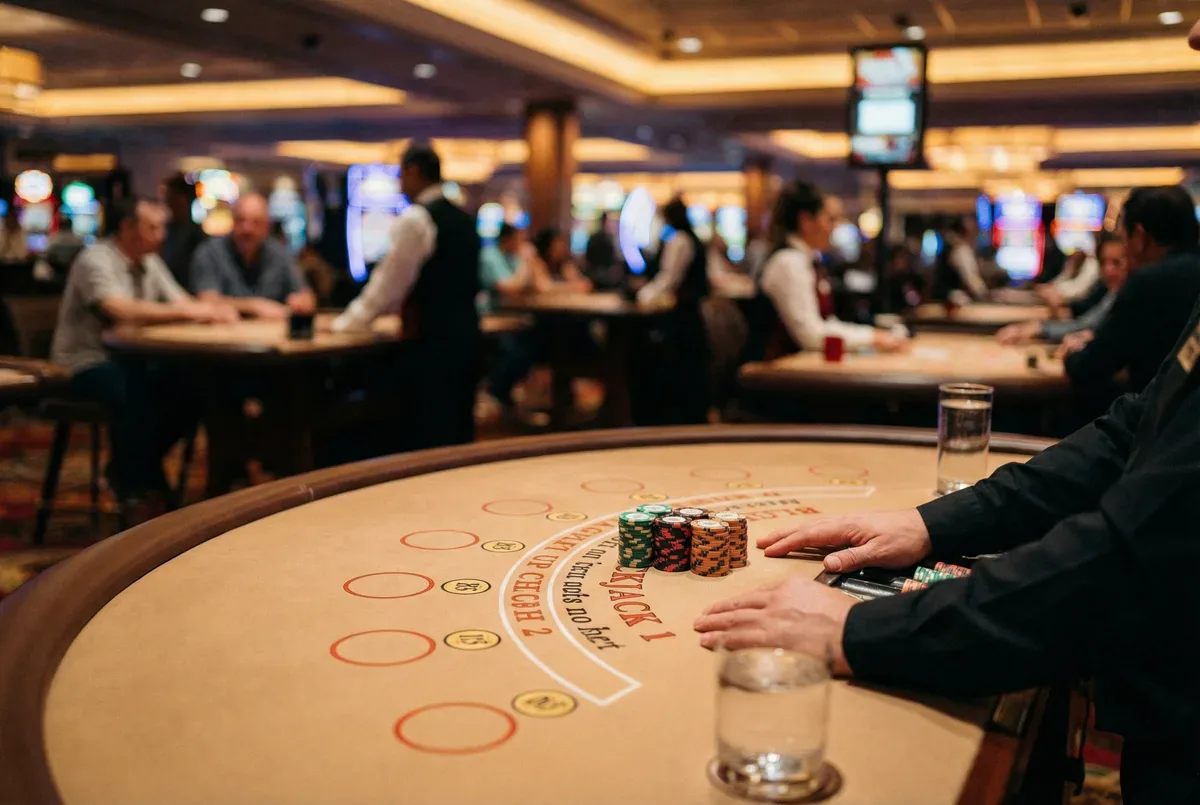
How Casino Blackjack Shuffles Work
Timeline
1960s
Hand shuffles standard in all casinos riffle, strip, and box methods used universally
1990s
First automatic shuffling machines (ASMs) introduced to increase hands per hour
2000s
Continuous shuffling machines (CSMs) deployed at select tables to eliminate counting
2010s
Shufflemaster and similar brands become standard in most mid-size casinos
Today
Mix of hand shuffles (high-limit) and ASMs (main floor) at most major properties
What Is Hand Shuffle vs. Shuffle Machine?
A proper casino hand shuffle consists of multiple steps: a wash (spreading cards face-down and mixing by hand), several riffle shuffles (splitting the deck and interleaving halves), a stripping motion (pulling cards off the top in small packets), and a cut by a player using the cut card. A complete hand shuffle takes 60 to 90 seconds and, when done correctly, produces a well-randomized shoe. The weakness, for the casino, and is time. Every minute spent shuffling is a minute not generating revenue from active bets.
Automatic shuffling machines (ASMs) speed the process by shuffling one shoe while the dealer deals from a second. When the cut card appears, the dealer swaps shoes and play continues almost without interruption. ASMs produce statistically random results comparable to a proper hand shuffle. Continuous shuffling machines (CSMs) are categorically different they return each played hand immediately back into the shuffler, eliminating any concept of shoe depletion or penetration. CSMs are legal, common in tourist casinos, and specifically hostile to card counters. For a blackjack basic strategy player, a CSM game is equivalent to a fresh shoe on every hand.
Hand Shuffle
CSM
- 60–80% typical
- None cards returned immediately
What Are Cut Card Placement and Why It Matters?
After the dealer completes the shuffle, a player inserts a cut card a solid plastic card into the deck or shoe. Where the dealer instructs the player to place it determines how much of the shoe gets dealt before reshuffling. If the cut card is placed one deck from the end of a six-deck shoe, the casino deals through five of six decks before reshuffling. This is called high penetration roughly 83%. If the cut card is placed two decks from the end, the penetration is 67%. The casino controls the range in which the player can cut: dealers typically instruct players to cut “somewhere in the middle” of the remaining shoe depth, not at the very front or back.
Penetration is the most important variable in how much useful information the final hands of a shoe contain. The last few decks of a shoe deal from a reduced card pool if many small cards have already appeared, the remaining deck is ten-heavy, shifting the advantage toward the player. This is not useful to a pure blackjack basic strategy player, but it is the entire foundation of blackjack card counting. Casinos managing tables with known counters will often cut off more cards two or even three decks making the final hands of the shoe statistically equivalent to early hands and neutralizing any count-based edge.
Watch where the cut card goes. At a six-deck table with the cut card placed two decks from the back, you are never seeing more than 67% of the shoe. At a table that cuts only one deck, you see 83%. Over a session of hundreds of hands, that difference in penetration is significant for any player using count-based decisions.
Why the Last Few Decks of a Shoe Are Different?
As a shoe progresses, the remaining cards are no longer a perfect statistical mirror of a full six-deck shoe. Each hand dealt removes cards and slightly adjusts the composition of what remains. In a random shoe, this natural variation has no predictable direction sometimes the end of the shoe is ten-heavy, sometimes it is not. The importance of deep penetration is not that the final decks are always favorable; it is that a player tracking composition has more information per remaining card the deeper the shoe runs, and that information becomes more precise as the shoe nears depletion. A count-based player operating at 80% penetration has a significantly sharper picture than one cut off at 50%.
Choosing Tables Based on Shuffle Type
For a blackjack basic strategy player, the shuffle type is secondary to payout structure and rule set a CSM table with 3:2 and S17 is still a better game than a hand-shuffled table with 6:5. But when two tables offer comparable rules and payouts, prefer the hand-shuffled game. The slower pace reduces your hands per hour, which mechanically reduces the dollars-at-risk even as the blackjack house edge percentage remains the same. Before committing to a live table, the apply this at a live real-money game section of this site provides a useful reference environment though be clear that those are real-money stakes. The same rule-checking habits you build there translate directly to evaluating physical casino tables.
Frequently Asked Questions
A standard ASM does not change the house edge. The cards are still randomized and dealt from a full shoe. A continuous shuffling machine also does not change the house edge mathematically, but it increases hands per hour, which increases total expected loss per hour at a fixed bet size.
Yes. Cutting the cards is offered to the player as a courtesy, but any player can decline. When a player declines, the dealer will typically cut the cards themselves or use a fixed position. Some players decline for superstitious reasons; there is no mathematical basis for preferring any specific cut position.
A preferential shuffle occurs when a casino dealer shuffles the cards mid-shoe specifically when the count is favorable to skilled players, resetting the shoe before the player can capitalize. This is legal but can be identified by patterns shuffles triggered only when bet sizes increase. Walking away from a table that appears to use preferential shuffling is the correct response.
Before you test these plays at a real table, run them through our free blackjack simulator practice unlimited hands at zero cost until every move becomes automatic.
Mathematical Risk Warning
Shuffle type and penetration affect the variance and information content of each session, but they do not eliminate the casino's edge for basic strategy players. No shuffle analysis substitutes for sound bankroll management.
Blackjack Academy is an educational resource. All strategy is based on mathematical expectation. Always play within your means.

Written by
Mark AnurakProfessional card counter since 2009 · 500,000+ hands logged · Former Macau advantage player. Studied under Thorp, Griffin & Wong methodology. Full bio →
Learn More
Continue your education with these related lessons.
When to Use the Surrender Rule to Save Half Your Bet
Late surrender on hard 16 vs dealer 9, 10, or ace and hard 15 vs dealer 10 is the most…
Is Playing Multi Hand Blackjack Actually Better for Your Profit?
Multi-hand blackjack looks like a shortcut to bigger wins but it exposes more money per round. Here is when it…
How Many Decks Are in a Blackjack Shoe?
Blackjack is dealt from 1, 2, 4, 6, or 8 decks. The number of decks directly affects the house edge…