
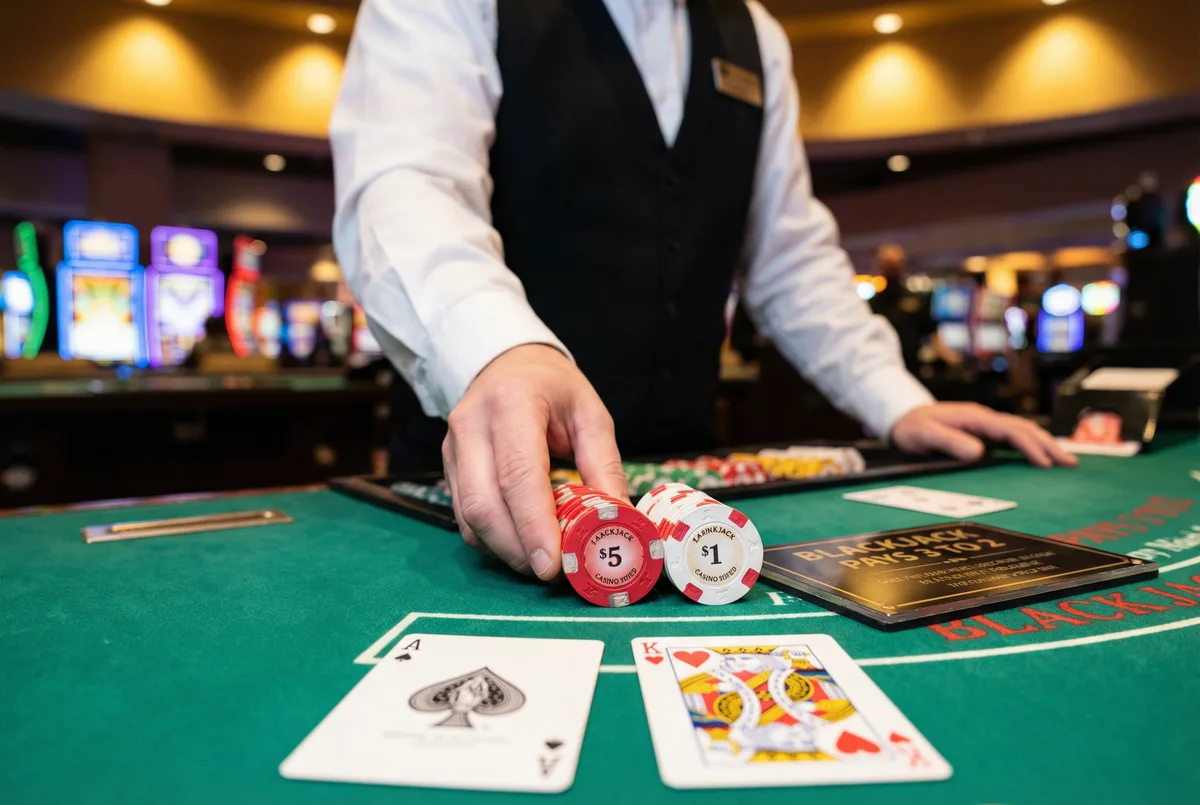
Blackjack Payout Structures Explained from 3 to 2 to Even Money
A blackjack payout structure defines how much the casino pays you when you hit a natural an ace plus any ten-value card on your first two cards. The three structures in common use today are 3:2, 6:5, and even money (1:1). On a $20 bet, a 3:2 natural pays $30 profit. The same $20 bet at a 6:5 table pays only $24. At even money, it pays $20. That $6 or $10 difference per natural is not a minor rounding detail a natural occurs roughly once every 21 hands, and the payout gap compounds into a measurable blackjack house edge increase that affects every hour of play. Identifying and demanding the correct payout before sitting down is the single most important table-selection decision a blackjack basic strategy player can make.
What Blackjack Payout Structures Actually Mean
| Payout Type | Natural Pays | House Edge Added |
|---|---|---|
| 3 | 2 (standard) | |
| $30 profit | ||
| 0% added | ||
| 6 | 5 (common trap) | |
| $24 profit | ||
| +1.39% added | ||
| Even Money (1 | 1) | |
| $20 profit | ||
| +2.27% added |
What Is the Math Behind the 6?
The mathematical cost of 6:5 is precise and well-documented. A natural blackjack has a probability of approximately 4.75% in a standard six-deck shoe. At 3:2, the expected value of a natural on a $1 bet is $1.50. At 6:5, it is $1.20. The EV difference of $0.30 per natural, multiplied by the 4.75% frequency, produces a blackjack house edge increase of approximately 1.39 percentage points on every bet placed. A blackjack basic strategy player already reduces the blackjack house edge to around 0.5% in a well-ruled game the 6:5 payout alone nearly triples that edge, pushing it above 1.8%. Over 100 hands at $25 per hand, the difference between 3:2 and 6:5 costs a player roughly $35 in pure expected value.
Casinos introduced 6:5 blackjack on single-deck games starting around 2003 as a way to offer the illusion of a favorable low-deck game while extracting more money per natural. The marketing works because many players associate single-deck with better odds which it is, in terms of blackjack basic strategy edge. But the 6:5 payout on a single-deck game produces a total blackjack house edge around 1.5%, significantly worse than a well-ruled six-deck game with a 3:2 payout. The deck count is not the variable to optimize the payout ratio is.
Common Myth
“Single-deck blackjack is always better than shoe games”
Players hear that fewer decks lower the house edge, so a single-deck game must be best.
The Reality
A single-deck 6:5 game has a higher house edge than a six-deck 3:2 game with good rules.
A single-deck 6:5 game runs around 1.5% house edge. A six-deck 3:2 S17 game with DAS runs around 0.44%. The payout is more important than the deck count.
How to Read the Table Felt for Payout Information?
Every licensed blackjack table is required to display the natural payout printed directly on the felt. The text appears in the semicircular arc closest to the dealer, typically alongside the minimum and maximum bet limits. The phrasing will say “Blackjack Pays 3 to 2” or “Blackjack Pays 6 to 5.” Some tables in tourist-heavy areas use “Blackjack Pays 3:2” in small font while printing side bet information in large, colorful graphics a deliberate design choice to draw attention away from the payout line. Read the felt before sitting, not after your first natural.
If the payout is not clearly legible, ask the dealer directly before placing a bet. A simple “Does this table pay 3 to 2 on blackjack?” takes three seconds and can save you a significant amount of expected value per session. Dealers are required to answer this question accurately. If a table offers 6:5 or even money and there is a 3:2 game available anywhere in the casino, walk to the better table. There is no circumstance not a friendlier dealer, not a luckier seat, not a nicer atmosphere that makes a 6:5 game the rational choice when a 3:2 game is accessible in the same building.
The felt never lies. Before you buy in, crouch to eye level if necessary and read the payout line. At a 6:5 table, you are paying the casino an extra $1.39 in expected loss for every $100 wagered just for the privilege of hitting a natural at reduced pay. Walk.
What Is Even Money on a Natural?
Even money is a specific offer the dealer makes when you hold a natural blackjack and the dealer shows an ace. The casino offers to pay you 1:1 immediately, before checking the hole card. If you decline and the dealer has a natural, the hand pushes and you win nothing. The even money offer is mathematically equivalent to taking insurance on your natural and insurance is a losing bet for non-counters. The probability that the dealer completes a natural when showing an ace is approximately 30.8% in a six-deck game. The expected value of declining even money is +0.038 units per unit bet, versus accepting even money for exactly +1.000. Accepting costs you roughly 3.8% of your bet in expected value compared to the mathematically correct refusal. Always decline.
Payout Structures in Live Dealer Blackjack
Online live dealer tables vary in their payout structures depending on the software provider and the platform hosting the game. Most reputable live dealer blackjack offerings from Evolution Gaming, Playtech, and similar providers pay 3:2 on naturals, but this is not universal check the game’s information panel before betting. The see this in action at a live table tables listed here are verified for correct payout ratios, but a word of caution: these are real-money games with live stakes, and the same 1.39% blackjack house edge penalty applies online as it does in a physical casino. Confirm the payout before your first bet and treat every session budget as money you are prepared to lose.
Frequently Asked Questions
A $10 bet wins $15 on a natural. The extra $5 half the original wager reflects the rarity of a natural occurring and is the main reason blackjack has a low house edge with correct play. Remove this bonus payout and blackjack becomes a near-even-money coin flip game with worse variance.
No. Taking even money (which is equivalent to taking insurance when you hold a natural) has negative EV in all standard counting contexts below TC +3. Declining even money and risking a push earns more in expected value over any meaningful sample of hands.
Most reputable online live dealer tables offer 3:2. RNG blackjack games vary some pay 3:2, others pay 6:5 or even 1:1 on naturals. Always verify the payout ratio in the game rules before playing, as it is the single most impactful figure in the game's expected value.
Before you test these plays at a real table, run them through our free blackjack simulator practice unlimited hands at zero cost until every move becomes automatic.
Mathematical Risk Warning
Payout structure determines expected loss rate before a single strategic decision is made. A 6:5 game is not a minor inconvenience it is a structurally worse investment of your session bankroll. Calculate your exposure before sitting.
Blackjack Academy is an educational resource. All strategy is based on mathematical expectation. Always play within your means.

Written by
Mark AnurakProfessional card counter since 2009 · 500,000+ hands logged · Former Macau advantage player. Studied under Thorp, Griffin & Wong methodology. Full bio →
Learn More
Continue your education with these related lessons.
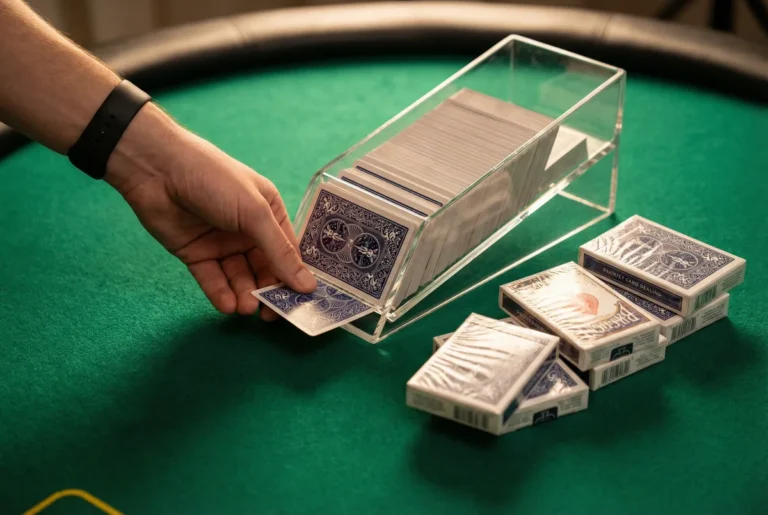
How the Number of Decks in a Shoe Affects Your Winning Odds
Moving from a 6-deck shoe to a single-deck game saves you roughly 0.35% in house edge unless the casino compensates…
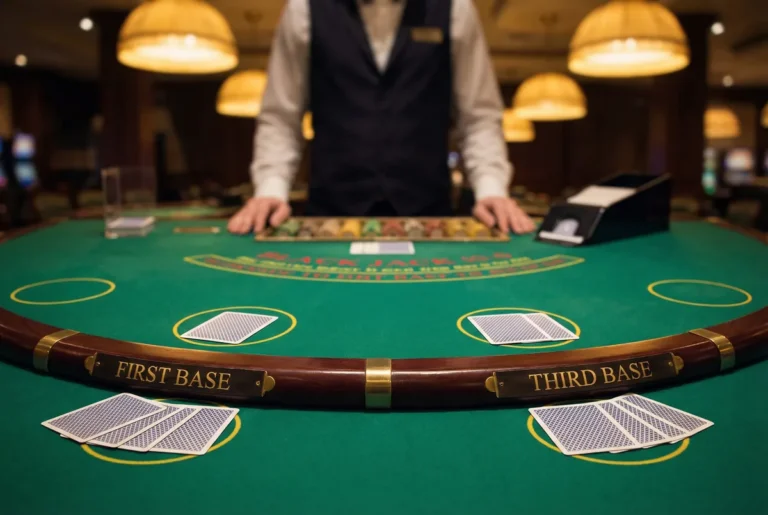
Is First Base or Third Base the Best Seat at a Blackjack Table
First base and third base have identical house edges. The myth that third base controls the dealer's fate has been…
Real History of Blackjack from 17th Century Spain to Today
The earliest documented reference to blackjack dates to 1601, in a Spanish story by Miguel de Cervantes. The game traveled…