

Why Smart Card Counters Never Take Blackjack Insurance Side Bets
Insurance becomes a profitable wager for card counters at exactly true count +3 when using the Hi-Lo counting system. Below that threshold, insurance is a negative-EV side bet with a blackjack house edge exceeding 7%. At TC+3, the deck is rich enough in tens that the probability of the dealer holding a ten underneath their ace crosses the breakeven point. This is one of the most reliable and well-documented index plays in blackjack card counting known as the insurance index, and always listed as the first entry in any index play table for good reason. Basic strategy players who refuse insurance in every situation are correct: in a neutral shoe, only 4 out of 13 cards are tens, and insurance pays 2:1 on a bet requiring better than 1-in-3 ten density to break even.
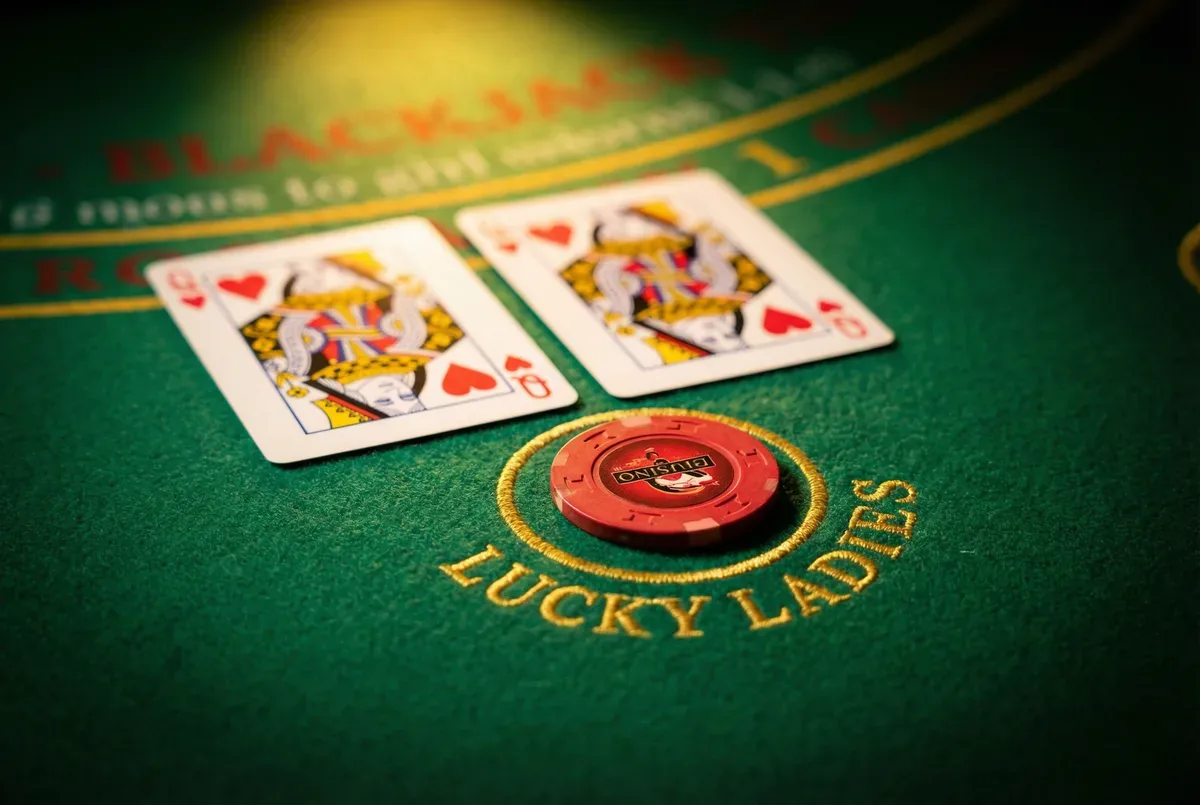
The Insurance Threshold: True Count +3 in Hi-Lo
- Neutral shoe30.8% tens remaining insurance is -7.7% EV
- True Count +1ten density slightly above neutral still losing
- True Count +2ten density rising approximately -2% EV
- True Count +3ten density crosses breakeven (~33.3%) take insurance
- True Count +4+insurance is meaningfully profitable always take
What Is the Mathematics?
Insurance pays 2:1. To break even on an insurance wager, the dealer must have a ten-value card as the hole card exactly one time for every two times they do not. That ratio is 1:2, or 33.3% of remaining cards being tens. In a standard six-deck shoe, there are 96 ten-value cards out of 312 total a density of 30.77%. Insurance is losing in a neutral shoe by a margin of 30.77% versus the required 33.33%. The Hi-Lo true count rises by 1 point for approximately every 3-4 low cards dealt beyond the expected rate. When the true count reaches +3, the accumulated removal of low cards has pushed ten density past the 33.3% threshold. The exact calculation: in a shoe with 2 decks remaining and a running count of +6, the true count is +3. With +6 additional low cards removed relative to high cards, ten density is approximately 34%-35% above breakeven.
The insurance index of +3 in Hi-Lo is one of the most precisely estimated index plays because the calculation is clean and the conditions are well-defined. Other index plays like the 16 vs. 10 stand decision at TC+0 involve complex multi-variable interactions between doubling, splitting, and surrender. Insurance involves no such complexity: it is a binary side bet with a fixed payoff. The true count +3 threshold holds across all deck counts, all shoe depths, and all rule variations because the breakeven condition depends only on ten density, and Hi-Lo tracks that precisely through the balanced count system.
Dealer Shows
Your Hand
Dealer shows Ace. True count is +3. You hold 16 against an Ace do you take insurance?
Insurance and your hand strategy are evaluated independently. Taking insurance at TC+3 is correct regardless of your hand. Do not let hand anxiety influence the insurance decision.
What Is Even Money?
When a player holds a natural blackjack and the dealer shows an ace, the dealer offers “even money” a guaranteed 1:1 payout instead of risking a push if the dealer also has blackjack. Even money is mathematically identical to taking insurance on a blackjack hand. If you hold blackjack and take insurance, you win 2:1 on the insurance bet if the dealer has blackjack (breaking even on both transactions combined), and win 3:2 on your blackjack while losing the insurance bet if the dealer does not. The net result of this combined outcome is exactly 1:1 on your total wager even money. The correct blackjack card counting decision for even money is identical to the insurance decision: decline below TC+3, take it at or above TC+3. Basic strategy players should never take even money because in a neutral shoe, you win more in the long run by declining even money and collecting 3:2 on your blackjack the majority of times the dealer does not have blackjack.
Insurance is a separate bet evaluated solely on ten density. Your hand, your other bets, and your session performance are irrelevant to the insurance decision.
Insurance Independence Rule
What Are Camouflage and the Insurance Decision?
The discipline challenge with insurance for counters is behavioral. Taking insurance is one of the most conspicuous departures from blackjack basic strategy that a counter makes, and doing it repeatedly at high counts signals count awareness to surveillance. A recreational player who takes insurance is usually acting on superstition protecting their hand because it feels important. A counter taking insurance precisely at TC+3 every time is demonstrating a mechanical, count-driven pattern that no recreational player produces. The camouflage response: occasionally decline insurance at TC+3 (the EV sacrifice is small), and occasionally accept it at TC+2 as cover (also a small sacrifice). Varying the exact threshold by one count point in either direction disperses the correlation signal meaningfully without significant EV cost.
Taking Insurance at the Live Table
Others build a consistent pattern of taking insurance in certain situations such as when they have made a large bet to make the behavior appear superstitious rather than count-based. If you want to rehearse the insurance decision under realistic time pressure before a live-money session, practice tools help build automatic responses, but live tables carry real financial stakes ensure any real-money session uses only funds you can afford to lose entirely. You can verify your insurance decision speed in real conditions at test this insurance call at a live table real money, so only play with what you can afford to lose.
Frequently Asked Questions
Yes, if you are playing with full index adherence. The insurance side bet is capped at half your main wager, and at TC+3 it has positive EV regardless of bet size. That said, some counters elect to skip insurance on small bets as camouflage, since the absolute dollar value of the insurance EV is small relative to the cover benefit of appearing like a basic strategy player. This is a personal camouflage decision, not a math decision.
Yes. Different counting systems assign different tag values to low cards, which changes the exact index. In Omega II (a level-2 system), the insurance index may be +3 or +4 depending on the count calibration. In Hi-Opt I and II, insurance indices differ slightly. The +3 threshold is specific to Hi-Lo. Always verify the correct insurance index for the specific counting system you use.
The gain from perfect insurance decisions (taking at TC+3 or higher, refusing below) is approximately 0.02%-0.04% of total action in a typical six-deck game. It is a real improvement but a small one far less impactful than bet spreading or basic strategy. The insurance index is worth learning and applying because every index play adds up, not because insurance alone transforms your edge.
Before you test these plays at a real table, run them through our free blackjack simulator practice unlimited hands at zero cost until every move becomes automatic.
Mathematical Risk Warning
Even when insurance is a positive-EV bet at TC+3, the dealer will not have blackjack the majority of the time. Individual insurance decisions will frequently lose. The edge is real but requires thousands of decisions to manifest.
Blackjack Academy is an educational resource. All strategy is based on mathematical expectation. Always play within your means.

Written by
Mark AnurakProfessional card counter since 2009 · 500,000+ hands logged · Former Macau advantage player. Studied under Thorp, Griffin & Wong methodology. Full bio →
Learn More
Continue your education with these related lessons.
Complete Reference for All 18 Illustrious Card Counting Deviations
The Illustrious 18 deviations are the highest-value index plays in blackjack. This complete reference lists all 18 with TC thresholds,…

How to Use Counting Software and Simulators to Sharpen Your
Counting software and simulators are the fastest path from theory to casino-ready accuracy. Learn how to configure tools like Casino…

How to Build Your Card Counting Bankroll From Scratch
Starting a card counting bankroll requires capital you build before sitting at a table not profits from underfunded sessions. Learn…