
How the MIT Blackjack Team Won Millions Before Casinos Shut Them Down
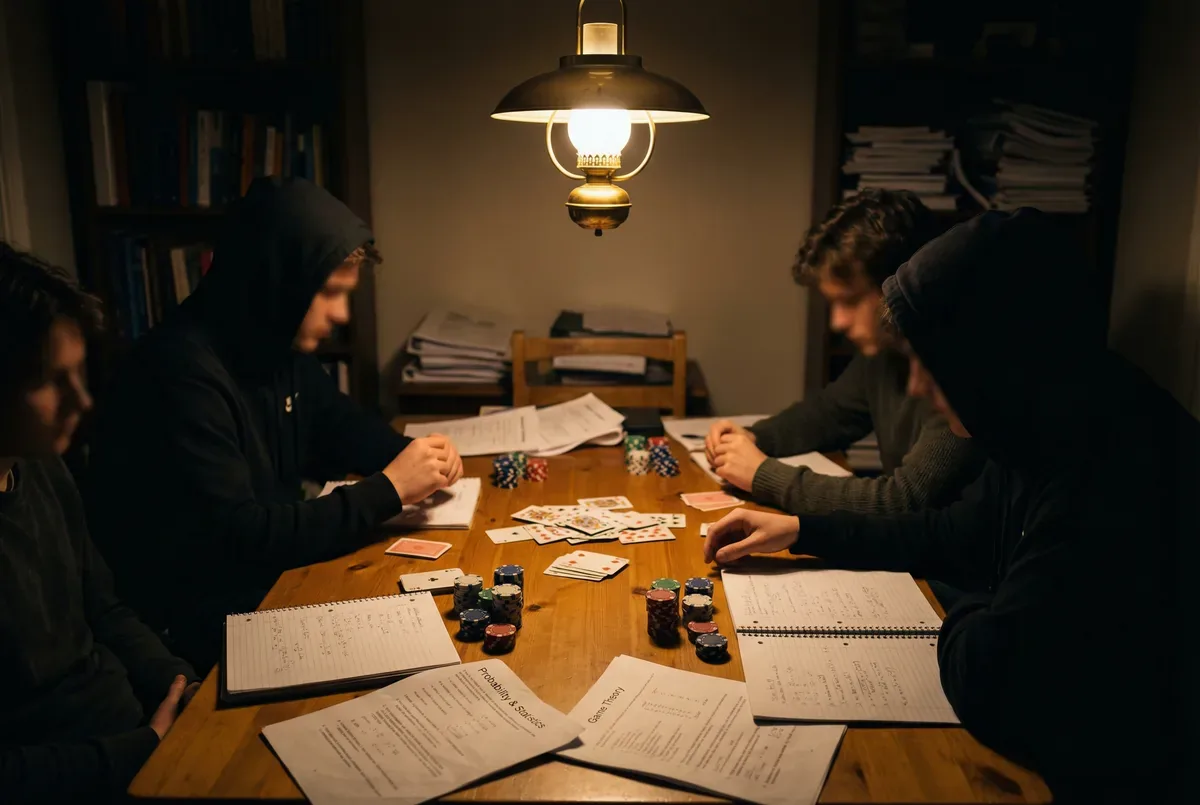
The MIT Blackjack Team was a rotating group of students and alumni from MIT, Harvard, and other universities that ran coordinated blackjack card counting operations against major casinos from the early 1980s through the late 1990s. At peak operation, the team employed dozens of players, maintained a capital pool in the hundreds of thousands of dollars, and executed play across Las Vegas, Atlantic City, and international casinos simultaneously. The operation was structured as a business, with investment rounds, profit sharing, and formal training programs for new players. Their edge was not any single exotic technique it was scale, coordination, and the ability to deploy Big Players only when the count was already deeply favorable, bypassing the risky low-count hands that solo counters must endure to avoid suspicion.

How the MIT Blackjack Team Actually Operated
Timeline
1979-1980
Bill Kaplan organizes first professional BJ team at Harvard, proves the model works
1984
Kaplan merges with MIT group led by J.P. Massar the core MIT team is formed
1986-1992
Peak operation: teams hit casinos across US and internationally, capital exceeds $1M
1993
Griffin Investigations begins compiling facial profiles of known team members
1994-1997
Coordinated casino bans spread team forced to use more elaborate disguises
1998-2000
Core team disbands after facial recognition makes extended play impossible
2003
Ben Mezrich publishes Bringing Down the House story reaches mainstream audience
What Is the Three-Role System?
The genius of the MIT system was the division of labor into three distinct roles. Spotters sat at tables, playing minimum bets, and counting down shoes without varying their bet size. A spotter playing flat bets draws almost no surveillance attention because there is no bet spread to flag. When the true count reached the team’s designated threshold typically TC+3 or higher the Spotter sent a signal to call in the Big Player. Signals were covert: touching chips, ordering a specific drink, scratching the ear. Controllers occupied a middle role, managing multiple Spotters and relaying information to Big Players. The Big Player the team’s high-roller persona would walk up to the hot shoe cold, already knowing the count was favorable, and immediately begin wagering thousands of dollars per hand. From the casino’s perspective, an aggressive player who just sat down and made large bets looks like a reckless gambler, not a counter. That was the camouflage.
The mathematical advantage of this structure is significant. A solo counter must play through hundreds of hands at neutral or negative counts to maintain cover, diluting their overall EV. The team system means every hand a Big Player sees is at a favorable count. If the average team-favorable true count is +4, and each TC point is worth 0.5% edge, the Big Player holds a 2%+ edge on every single hand they play. At $1,000–$5,000 per hand, the expected value per hand is $20–$100. Multiplied across multiple simultaneous Spotters feeding multiple Big Players at different casinos, the operation generated significant income. Estimates of total winnings range from $5 million to over $10 million across the team’s active years though exact numbers were never publicly verified.
- Spotterflat bets minimum, counts full shoe, signals favorable count
- Controllermanages 2-3 spotters, relays signals, cover as friend/colleague
- Big Playerarrives at hot shoe, bets $500-$5,000 per hand, zero count history
- Training requirement100+ hours before any casino play
- Capital poolinvestors contributed and received pro-rata profit share
How Casinos Identified and Stopped the Team?
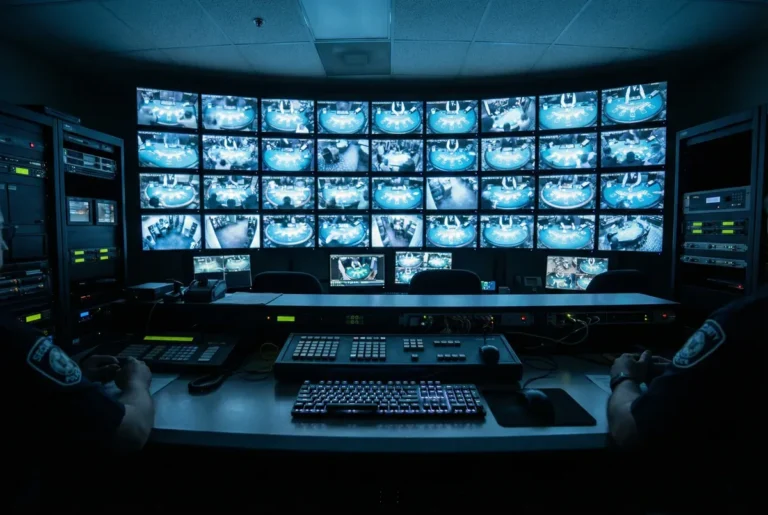
Griffin Investigations was a private intelligence agency contracted by casinos to identify and track advantage players. Their database, the Griffin Book, and contained photographs, physical descriptions, and behavioral profiles of thousands of known counters. As MIT team members were identified at one casino, their information was shared across the Griffin network to affiliated properties. A player banned in Las Vegas would be flagged in Atlantic City within weeks. The team’s initial countermeasure was elaborate disguises: wigs, colored contacts, prosthetics, theatrical makeup. These worked for a time. The deeper problem was that as the team grew and operated for over a decade, the number of people who had interacted with their operation former players, investors, jealous outsiders expanded the exposure surface. By the mid-1990s, surveillance technology had improved enough that even good disguises failed under careful review.
Dealer Shows
Your Hand
You're a Spotter. True count is +4. Do you signal the Big Player or keep playing minimum?
The Spotter's discipline is to bet flat regardless of count. Raising your own bet breaks cover. Your value to the team is purely as an information relay at positive counts.
What the MIT Team’s Legacy Actually Teaches?
The MIT team demonstrated that blackjack card counting, properly funded and properly organized, generates consistent positive expected value at scale. Their operation required institutional-level discipline: formal training programs, capital allocation rules, bankroll management, and strict behavioral protocols. Individual members who deviated from team protocols bet sizing errors, breaking cover, bringing uninvested friends to games were removed. The lesson for solo counters is not to replicate the team model but to absorb their discipline principles: quantify your edge, size bets mechanically, and protect your access to favorable games above all other concerns.
The MIT System in a Modern Live Context
The coordination dynamics the MIT team mastered reading count depth, sizing bets to edge, maintaining a convincing table persona translate directly to any live game. If you want to feel how quickly real-money pressure tests count discipline, a live blackjack session carries financial stakes that make the lessons concrete, but approach it only with money you can afford to lose in full. Test your own table persona under genuine financial pressure at execute team play at a live real-money table real stakes only, funded from entertainment budget.
Frequently Asked Questions
Verified figures are unavailable the team never published audited accounts. Ben Mezrich's book cited figures implying several million dollars in total winnings over the team's active years. Bill Kaplan, the team's co-founder, confirmed that the operation was consistently profitable but declined to give specific totals. Most credible estimates range from $5M to $10M across all active years combined.
Team play is theoretically viable but operationally much harder. Casino surveillance has improved dramatically since the 1990s. Facial recognition, RFID tracking, and networked player databases mean that players identified at one property are flagged system-wide much faster. Team operations today require much more frequent rotation of personnel, more sophisticated disguise protocols, and higher capital per team member to justify the overhead.
No criminal charges were ever filed against MIT team members for card counting. Counting is legal. Several members were detained and questioned by casino security, and some were added to exclusion lists in jurisdictions where that is enforceable, but no one faced criminal prosecution for the counting activity itself. The legal history of card counting is more nuanced covered separately in the legal history article.
Before you test these plays at a real table, run them through our free blackjack simulator practice unlimited hands at zero cost until every move becomes automatic.
Mathematical Risk Warning
Even sophisticated team operations like the MIT system experienced significant losing months. A mathematical edge guarantees nothing in the short run. Capital can be wiped out by variance before expected value is realized.
Blackjack Academy is an educational resource. All strategy is based on mathematical expectation. Always play within your means.

Written by
Mark AnurakProfessional card counter since 2009 · 500,000+ hands logged · Former Macau advantage player. Studied under Thorp, Griffin & Wong methodology. Full bio →
Learn More
Continue your education with these related lessons.
How Casino Surveillance Identifies Card Counters
Modern casino surveillance uses RFID chips, facial recognition, and betting pattern analysis to identify card counters. Learn exactly what surveillance…

Is Card Counting Worth It? The Honest ROI Analysis with Real Numbers
Card counting gives you a real mathematical edge. Whether that edge is worth the investment of time, travel, and discipline…

How to Choose the Right Blackjack Table as a Card Counter
Table selection determines a card counter's long-run profitability before a single hand is dealt. This guide covers the full checklist…