
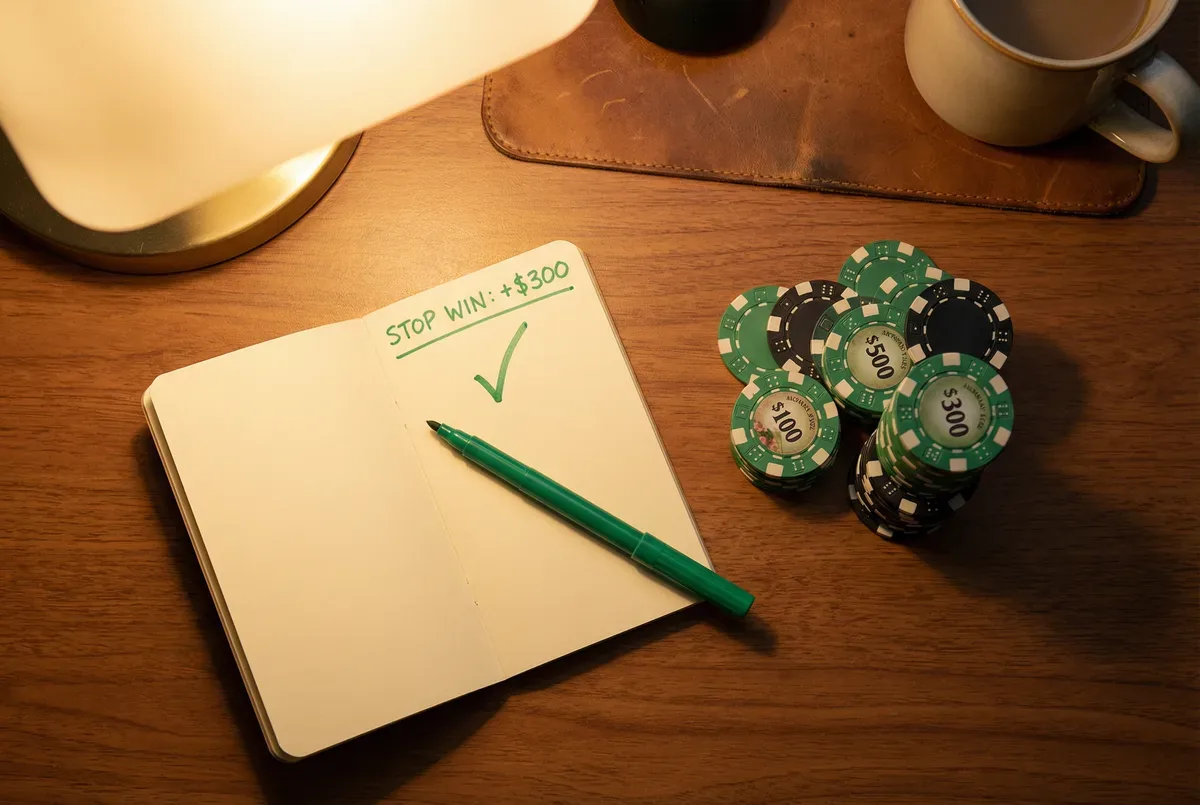
Why Setting a Stop Win is a Critical Professional Skill
The stop-win rule is the hardest discipline to enforce in blackjack because it requires walking away from a positive experience by design rather than by necessity. Unlike the stop-loss, which terminates painful sessions, the stop-win terminates enjoyable ones. The mathematical justification is simple and final: every additional hand played after reaching a profit threshold carries the same negative expected value as the hands that produced the profit. The blackjack house edge does not pause when you are winning. It accumulates at the same rate on every hand regardless of the session’s current status. A player who reaches 20 units profit and continues playing for two more hours is not building on that profit they are exposing it to expected erosion at a calculable rate. The expected value of stopping when the threshold is hit is always better than the expected value of continuing play in a negative-EV game.
The Mathematical Case for Stopping When You Are Ahead
Additional expected loss per 100 hands at $20 bet / 0.5% edge
total
Sessions where stop-win prevents a profitable session turning negative
% of reaching threshold
Value of pre-committed stop-win over 50 sessions vs no rule
expected per session
How Do You Set the Right Stop-Win Threshold?
A stop-win threshold should be achievable frequently enough to build the habit of honoring it. A threshold set at 50 units requires an exceptional session to trigger and may go unmet for months, depriving the player of the reinforcement that comes from consistently walking away at a defined profit. A threshold of 15–20 units hits in a meaningful percentage of sessions realistic at typical variance levels over 100-hand plays while representing a clear and satisfying session win relative to most buy-ins.
The threshold should be calibrated to both bankroll size and session structure. For a 50-unit session bankroll, a 20-unit stop-win represents 40% profit on the session buy-in a strong result worth protecting. For a player with a 200-unit total bankroll, a 20-unit session win is 10% of total bankroll a meaningful progress event. Both framings justify honoring the threshold without hesitation when it is reached.
Common Myth
“Setting a stop-win means leaving money on the table when you are on a hot streak”
Winning sessions feel like they will continue; quitting feels like forgoing future profits
The Reality
Each additional hand has the same negative EV the streak has zero predictive power
Continuing after threshold exposes locked profit to expected erosion with no compensating advantage
How Do You Build the Psychological Infrastructure to Honor the Rule?
The stop-win fails not in design but in execution. Players who set a 20-unit target intellectually and then override it when they hit 21 units have not built the psychological infrastructure to honor the rule under momentum pressure. Three tools help make the stop-win executable in real conditions. First, write the threshold on a physical card before the session the act of writing creates concrete commitment. Second, when you hit the threshold, stand up from the table immediately, even if you intend to review the decision. Physical separation breaks the momentum. Third, treat the stop-win as a mechanical trigger rather than a decision point you are not deciding whether to leave, you are executing the plan you already decided on before you sat down.
The stop-win is a mechanical rule, not a discussion point. When your running tally hits the threshold, you are done. The debate 'maybe one more shoe' does not happen because the rule has already answered the question. Mechanical rules survive session pressure; open-ended decisions do not.
What Is Counters and Stop-Wins?
For card counters, the stop-win rule requires modification. If you have reached a profit threshold but are currently in a high-positive-count situation where the expected value of continuing is actually positive stopping immediately sacrifices expected edge. The professional counter’s approach is a conditional stop-win: honor the session profit target unless the count is significantly positive, in which case play out the high-count cards before stopping. Once the count returns to neutral or negative, exit regardless of profit level. This modification preserves the bankroll-protection function of the stop-win while not sacrificing positive-EV opportunities that exist only at specific count levels.
For recreational players with no counting ability, the unconditional stop-win is correct. There is no condition under which continuing play at a standard blackjack house edge is mathematically preferable to locking in realized profit at a pre-set threshold.
Practice the Exit Under Real Stakes
The most instructive stop-win exercise is at bring this to a live dealer with stakes tonight, where real money is on the line and the emotional pull to continue a profitable session is fully present. Set your stop-win before you open the session, track your running tally, and execute the exit the moment you hit the threshold not the next hand, not the next shoe, the moment. If you experience strong resistance to leaving at the threshold, that resistance is exactly the psychological pattern the stop-win rule was designed to override. Note how you feel, and honor the rule anyway. That is how the discipline is built.
Frequently Asked Questions
It does not change the EV of individual hands it reduces variance by locking in positive sessions before they revert toward the expected-loss average. Over many sessions, this reduces the frequency of sessions where a profit is given back to the house through extended play.
15–20 units is standard for recreational play. It is achievable frequently enough to build the habit, represents a meaningful win relative to typical session bankroll, and provides the variance protection worth honoring.
They use conditional stop-wins: exit when the profit target is reached unless in a high positive count. The high-count condition temporarily suspends the rule because the expected value of continued play is genuinely positive in that scenario.
Before you test these plays at a real table, run them through our free blackjack simulator practice unlimited hands at zero cost until every move becomes automatic.
Mathematical Risk Warning
Stop-win rules protect realized profits by ending exposure to continued house edge erosion. They do not guarantee winning sessions or change long-run expected value. Every session carries real risk of loss regardless of early positive results.
Blackjack Academy is an educational resource. All strategy is based on mathematical expectation. Always play within your means.

Written by
Mark AnurakProfessional card counter since 2009 · 500,000+ hands logged · Former Macau advantage player. Studied under Thorp, Griffin & Wong methodology. Full bio →
Learn More
Continue your education with these related lessons.
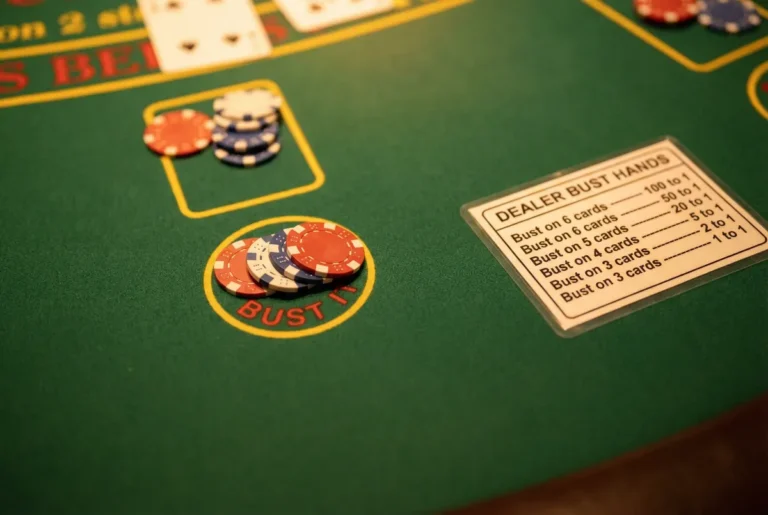
The Real Math Behind the Bust It Side Bet and Why You Should Avoid It
The Bust It side bet pays when the dealer busts with three or more cards. It sounds appealing dealers bust…

How Much Money You Really Need for a Blackjack Session
The answer to 'how much should I bring?' depends entirely on your bet size, session length, and risk tolerance. This…
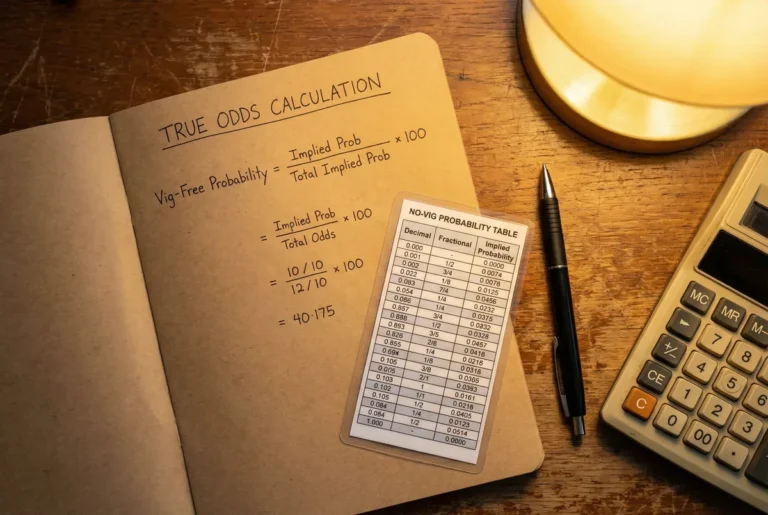
Finding the True Odds of Every Wager with No Vig Math
Every casino wager carries a spread between true odds and casino payout the vig. Learning to strip out the vig…