
The Real Math Behind the Bust It Side Bet and Why You Should Avoid It
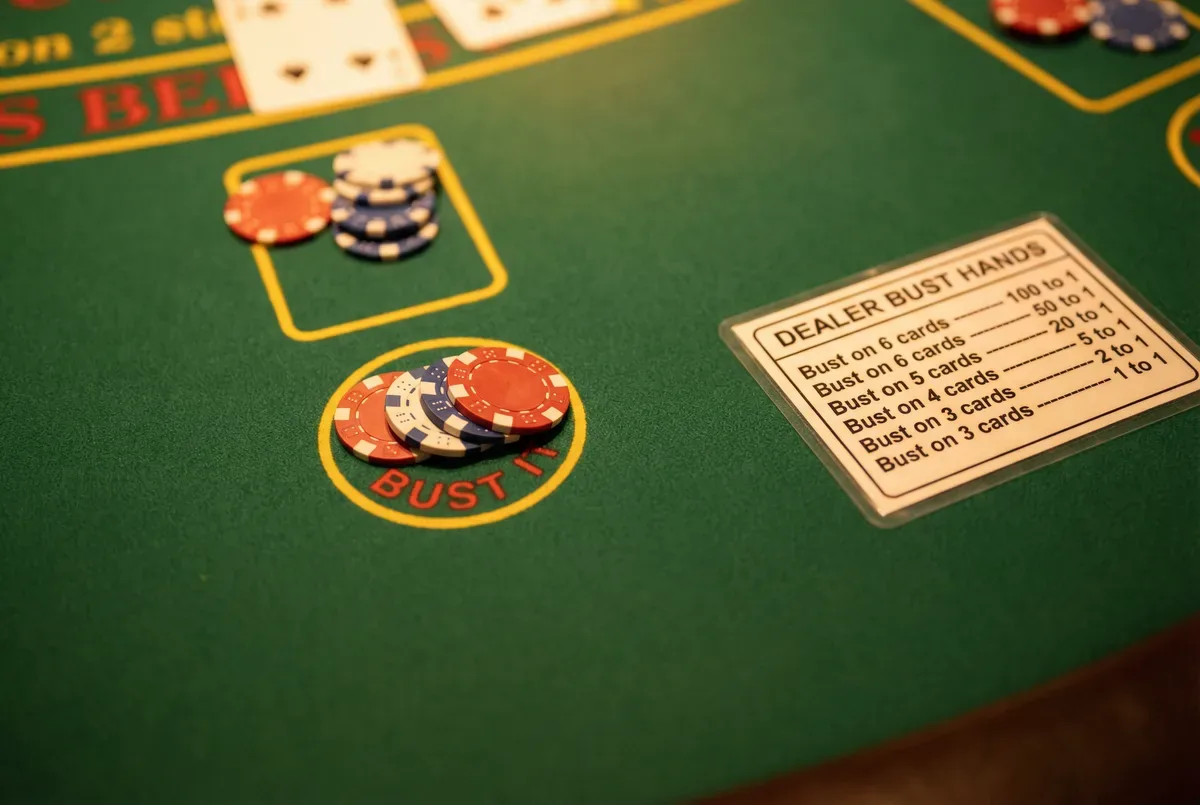
The Bust It side bet is offered at the start of each hand and pays when the dealer busts using three or more cards. The payout structure escalates with the number of cards in the dealer’s busted hand a dealer busting with three cards pays 1:1, four cards pays 2:1, five cards pays 9:1, six cards pays 18:1, seven or more cards pays 50:1. These escalating payouts are designed to make the bet look exciting and valuable. Dealers do bust approximately 28% of hands, so the event is not rare. The trap is that the Bust It bet only pays on three-plus card busts a dealer busting with two cards (drawing a ten to a ten upcard, for example) returns nothing on the Bust It wager. This restriction, combined with payout rates that fall short of true probability, produces a blackjack house edge that erases the appeal quickly under scrutiny.
Why the Bust It Bet Seems Appealing
- Dealer busts with exactly 3 cards pays 11
- Dealer busts with exactly 4 cards pays 21
- Dealer busts with exactly 5 cards pays 91
- Dealer busts with exactly 6 cards pays 181
- Dealer busts with 7+ cards pays 501
How Do You Calculate the True House Edge?
The blackjack house edge on Bust It varies by the number of decks in play and the specific payout table used by the casino. In a six-deck game with the most common payout structure, the blackjack house edge is approximately 8–12%. The two-card dealer bust which returns nothing to the Bust It bettor accounts for roughly 8% of all dealer busts, immediately costing the bettor a meaningful portion of events they believed they were betting on. A simulated analysis across all possible dealer starting cards and drawing scenarios confirms that the weighted expected return of the Bust It bet is approximately $0.88 to $0.92 per dollar wagered meaning the house captures $0.08 to $0.12 per dollar on this wager, eight to twelve times the expected loss rate on the main hand.
The dealer upcard creates significant variation in Bust It value within a single session. When the dealer shows a high up-card (7 through ace), dealer busts are less frequent and tend to occur with fewer cards when they do happen. When the dealer shows a low card (2 through 6), busts are more frequent but the distribution of bust card counts matters for payout purposes. None of these variations create a positive-EV condition for the Bust It bettor using the standard payout table.
Common Myth
“Bust It is worth placing when the dealer shows a 6”
Dealer 6 has the highest bust rate (~42%), making a dealer bust more likely
The Reality
Higher bust frequency does not offset the poor payout math house edge remains above 8%
Expected return is worse than the main hand regardless of dealer upcard in standard games
What Is Card Counters Exploit Bust It?
Card counting can shift the Bust It edge under specific conditions. High counts increase the proportion of ten-value cards in the remaining shoe. Paradoxically, this has a mixed effect on Bust It: more tens mean dealers draw to blackjack totals more quickly, which slightly reduces multi-card busts. A shoe rich in small cards (low count) produces more multi-card dealer hands generally, which could theoretically shift Bust It toward positive EV at extreme count values. However, the thresholds required are impractical in normal play, and no published counting system specifically indexes Bust It as a positive-expectation side bet at achievable count values in standard games.
The 50:1 payout on a seven-card dealer bust is the attention anchor that makes Bust It feel valuable. A seven-card dealer hand occurs roughly once in every 3,500+ hands at 80 hands per hour, that is approximately once every forty-four hours of play. The spectacular payoff distorts perception of expected frequency.
How Do You Compare Bust It to the Main Blackjack Hand?
Every dollar redirected from the main hand to Bust It increases your expected session loss by eight to twelve times the main hand rate. On a $20 main bet with 0.5% edge, expected loss per hand is $0.10. Adding a $5 Bust It side bet at 10% edge adds $0.50 in expected loss per hand five times the main bet exposure from one-quarter the dollar amount. Over 100 hands, the Bust It side bet adds $50 in expected loss to a $10 main-hand expected loss. The entertainment value of the escalating payout structure does not compensate for this cost for any player measuring outcomes over a meaningful sample.
Bet
Expected Loss (100 hands)
- $10
- $50
- $100
- $10
The Real Cost Becomes Clear in Live Play
The most effective way to internalize this analysis is to play through a hundred hands at face this bet at a live table with real money where real money is at stake and observe the frequency with which Bust It wins, loses, and what the payout sequence actually looks like over a genuine session. Every loss on Bust It is a direct, immediate reminder that the 10% blackjack house edge is not theoretical. Track the results separately and calculate your actual return per dollar staked on the side bet. One hundred real-money hands will teach this lesson more effectively than any simulation.
Frequently Asked Questions
The house edge on Bust It in a standard six-deck game with the most common payout table is approximately 8–12%, depending on the specific casino variant. This is eight to twenty times the house edge on the main blackjack hand with basic strategy.
No. While dealer 5 and 6 upcards carry the highest bust frequency, the payout structure still produces negative expected value regardless of the dealer upcard. Selective betting based on upcard does not convert Bust It into a profitable wager.
In theory, extreme low counts increase multi-card dealer hands, but no published system identifies a practical, achievable threshold where Bust It becomes positive EV under normal playing conditions. Counters should not devote tracking effort to Bust It.
Before you test these plays at a real table, run them through our free blackjack simulator practice unlimited hands at zero cost until every move becomes automatic.
Mathematical Risk Warning
The Bust It side bet carries a house edge of 8–12%, dramatically higher than the main blackjack hand. Every dollar staked on this bet increases your expected session loss far beyond basic strategy alone.
Blackjack Academy is an educational resource. All strategy is based on mathematical expectation. Always play within your means.

Written by
Mark AnurakProfessional card counter since 2009 · 500,000+ hands logged · Former Macau advantage player. Studied under Thorp, Griffin & Wong methodology. Full bio →
Learn More
Continue your education with these related lessons.
Is the Match the Dealer Side Bet Ever Worth the Financial Risk
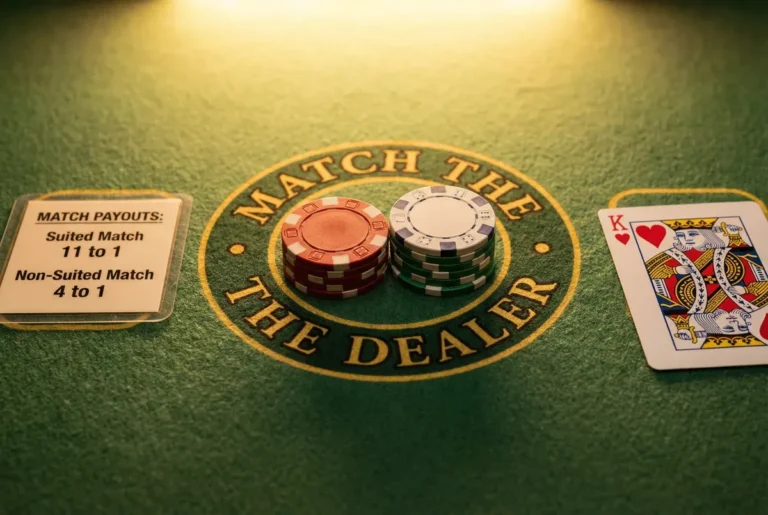
Match the Dealer pays when your initial cards match the dealer's upcard by rank or suit. The payout table looks…
How to Size Your Blackjack Bets on a Fixed Entertainment Budget
Playing blackjack on a fixed monthly budget requires the 1% per-bet rule, a 100-unit minimum bankroll, and a clear allocation…
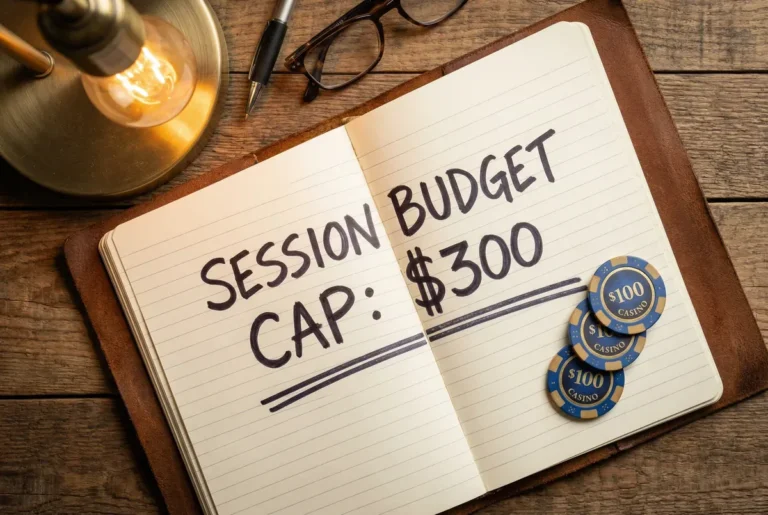
Why Every Blackjack Session Needs a Hard Budget Cap
Setting a hard dollar limit before you sit down is the single most important bankroll decision you will make. Here…