Why Chasing Losses is the Biggest Mistake in the Casino
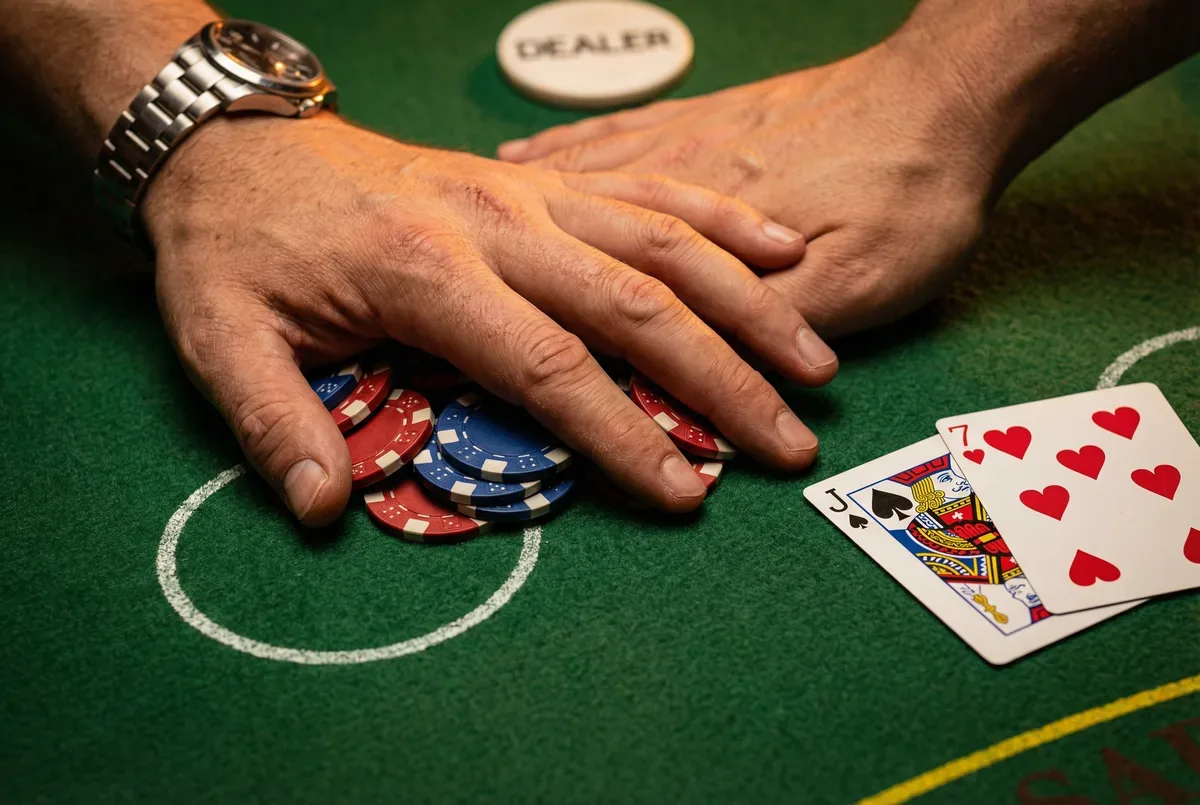
Chasing losses is the act of increasing bet sizes or continuing play beyond planned session limits in response to a current deficit, with the goal of winning back what was lost. It is the most common financial mistake made at casino tables worldwide, and its appeal is almost perfectly inverse to its mathematical rationality. The blackjack house edge does not care about your current session deficit. It operates identically on the next hand as it did on the first an independent probability that your prior results do not influence in any direction.
Chasing Losses Multiplies Your Expected Loss Without Changing the Odds
The damage from chasing compounds in two ways simultaneously. First, increasing bet size to recover losses faster means larger bets are now subject to the same blackjack house edge, accelerating the expected loss rate rather than reversing it. Second, extended play means more hands are played, each carrying its own expected loss. A player who loses 20 units in the first two hours and then plays three more hours trying to recover expects to lose a further 30 units during the chase, ending the session down 50 instead of 20.
The mathematics are clear but the psychology is powerful. Loss aversion the human tendency to weight losses more heavily than equivalent gains makes the desire to recover feel urgent and compelling. Understanding that this feeling is a cognitive bias, not a rational assessment of odds, is the first step toward resisting it.
Timeline
Planned session start
Buy in 25 units at $10 each $250 session fund
Planned loss limit
Hit −15 units ($150) → leave table
Chase begins here
−15 units reached, but player continues hoping to recover
1 hour later
−30 units chase has doubled the loss
2 hours later
−45 units now risking entire bankroll
Session end
−50 units ($500) lost vs. planned −$150 loss limit
Why Does the Psychology That Make Loss-Chasing Feel Rational?
Loss aversion bias means that losing $100 produces roughly twice the psychological pain of the pleasure gained from winning $100. This asymmetry makes a current deficit feel like an active injustice requiring correction, rather than a statistical outcome requiring nothing more than walking away. The brain categorizes the loss as an open wound that needs closing, and continued play feels like closing it rather than deepening it.
Sunk cost fallacy reinforces this. The money already lost this session feels like it belongs to you and can be reclaimed. In reality, money already spent is gone regardless of future play. Each new hand starts from zero in terms of expected outcome the previous losses are irrelevant to what the next card will be.
The illusion of control compounds both biases. Players who have been playing for hours develop a false sense of having decoded the shoe or the dealer’s patterns. This confidence accelerates chasing because the player believes their extended observation gives them an edge that actually does not exist. Card distribution in a shuffled shoe has no memory of previous hands.
Common Myth
“I am due for a win after this many losses”
Gambler's fallacy the belief that past losses increase the probability of future wins
The Reality
Each hand is independent. The probability of winning the next hand is identical whether you have won the last 5 or lost the last 20
Expected value of the next hand is negative by the house edge amount, regardless of recent history
How Does Protocols That Make Walking Away Automatic?
The most effective protection against chasing is pre-commitment to a loss limit before the session starts. Write the loss limit number on your phone. When you hit it, you are not deciding whether to leave you already decided before sitting down. The decision was made by a rational, calm version of yourself, and the only task now is to follow through on that pre-commitment.
How Do You Make Walking Away Automatic When the Urge Hits?
A second protocol: keep only your session buy-in accessible at the casino. Leave extra cash, ATM cards, and credit cards in the hotel room or car. If the session funds are the only funds available, the physical constraint makes chasing impossible even when the emotional impulse is strong. Many experienced players use this rule as their primary protection.
When you chase losses at blackjack, you are not playing to win you are playing to avoid the psychological pain of booking a loss. The house edge on each new hand is identical to the house edge that produced the loss. Chasing does not change the math. It only extends the time you spend in negative-EV territory, and extends it with a larger bet than your original session plan called for.
Practicing Loss-Limit Discipline Before the Stakes Are High
The loss-chasing impulse is most powerful when real money is at stake and a session has gone badly. At stress-test your cover at a live table this week, experience a losing session and practice the walk-away with actual financial consequences on the line. Every dollar you decline to chase is a dollar your bankroll keeps. Real stakes produce the real emotional pressure that makes loss-limit discipline meaningful budget only entertainment funds for live sessions and treat the clean stop as the measure of a session well-managed.
Frequently Asked Questions
No. The expected value of every additional hand is negative by the house edge amount, regardless of session history. There is no mathematical scenario where playing more hands after hitting your loss limit improves your expected outcome. The loss limit exists for exactly this moment respect it.
Wagering requirements change the equation somewhat: you may need to continue playing to unlock a bonus. In that case, set your loss limit at the point where continued play would cost more than the bonus is worth. Calculate this before starting, not mid-session.
You do not need to justify disciplined bankroll management to anyone. 'I've hit my session limit' is a complete explanation. Friends who pressure you to keep chasing do not have your financial interests in mind.
Before you test these plays at a real table, run them through our free blackjack simulator practice unlimited hands at zero cost until every move becomes automatic.
Mathematical Risk Warning
Chasing losses increases expected session losses by extending play time and increasing bet sizes both of which amplify the house edge's effect on your bankroll. The rational response to hitting your loss limit is always to stop playing immediately.
Blackjack Academy is an educational resource. All strategy is based on mathematical expectation. Always play within your means.

Written by
Mark AnurakProfessional card counter since 2009 · 500,000+ hands logged · Former Macau advantage player. Studied under Thorp, Griffin & Wong methodology. Full bio →
Learn More
Continue your education with these related lessons.
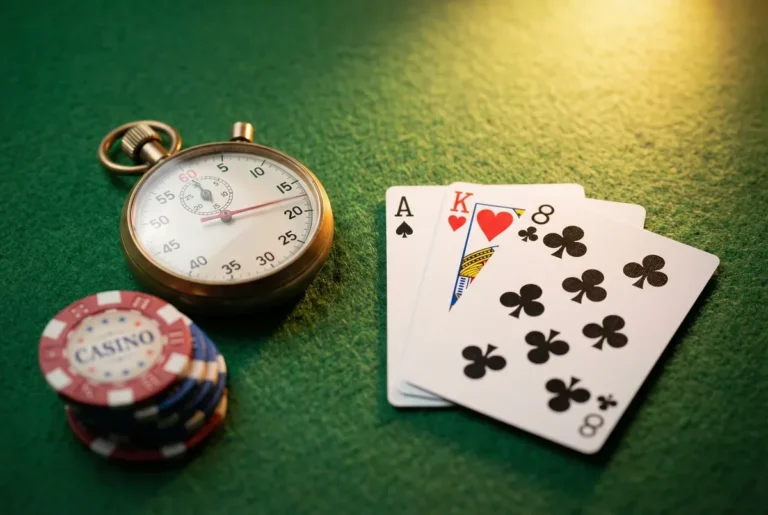
How Table Speed Increases or Decreases Your Variance
Table speed measured in hands per hour directly controls how quickly variance resolves and how quickly house edge accumulates. Knowing…
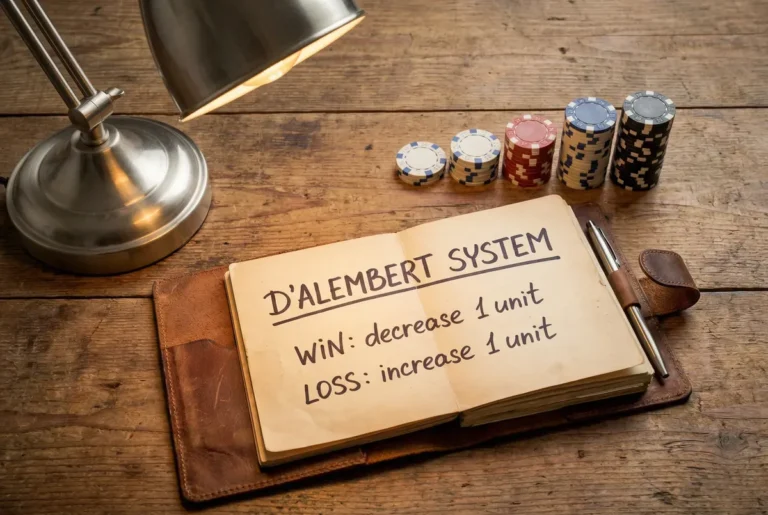
Why the D’Alembert Betting System Fails Most Blackjack Players Long-Term
The D'Alembert system raises your bet by one unit after a loss and lowers it by one after a win.…
Simple 5 Minute Strategy Check Before You Sit Down
A five-minute pre-session check is the single highest-return investment a blackjack player can make before risking a dollar. Most players…