

Why Sticking to Your Tactical Plan and Leaving Early Wins More Money
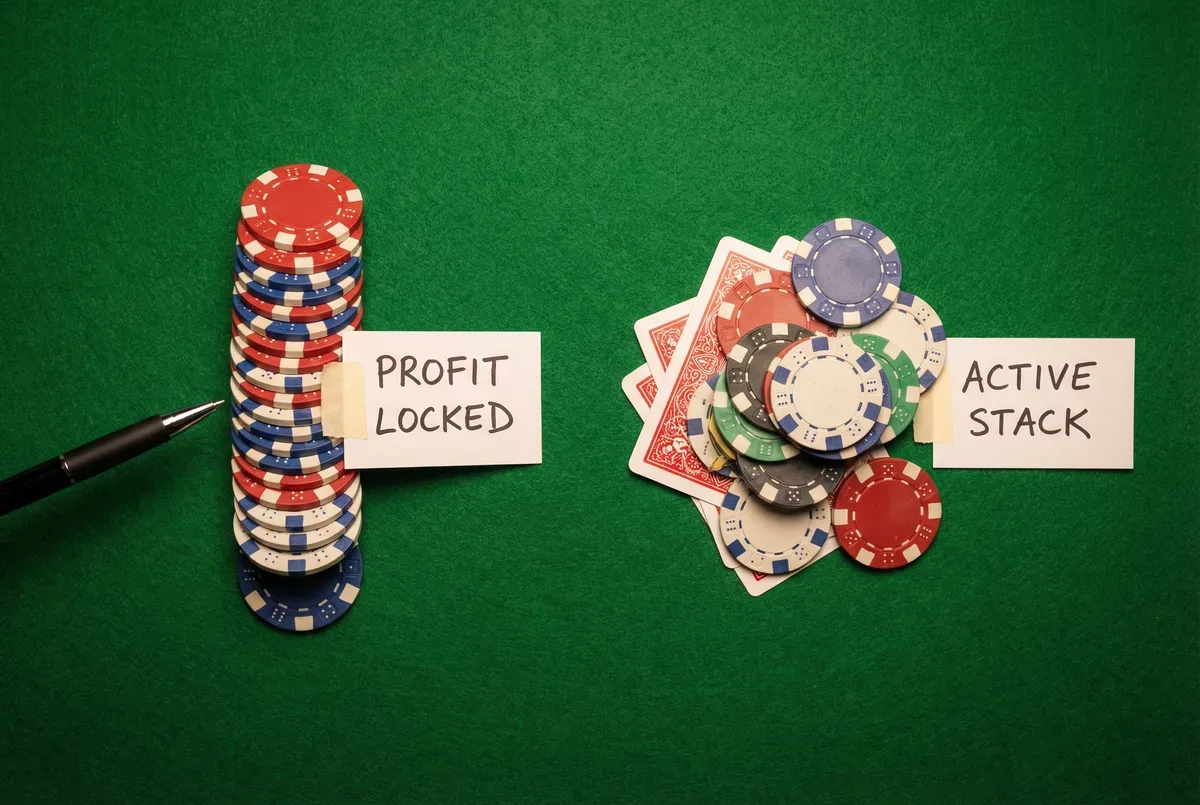
Every experienced blackjack player has experienced this moment: the session plan says walk at plus-20 units, the tally reaches plus-22, and the internal voice says one more shoe. This is not strategic thinking it is sunk-time fallacy dressed as opportunity. The rational case for walking when your threshold is hit is airtight. Every additional hand adds expected value loss at the prevailing blackjack house edge. The session variance you have already survived does not make future variance more favorable. The profit you have locked in exists only if you leave. A tactical plan has exactly one function: to govern decisions that emotion would otherwise make worse. A plan that you override whenever momentum is running your way has zero protective value and creates the illusion of discipline without the substance of it.
A Plan That Bends Is Not a Plan
A stop-win target is not a ceiling on your ambition it is the point at which the EV of continued play is demonstrably worse than the certain value of realized profit.
Session Rule
How Do You Design a Tactical Plan That Survives Session Pressure?
The reason most session plans fail is that they are designed in a state of calm rationality and tested in a state of emotional activation. The solution is to design your plan to anticipate the psychological pressures you will feel during play and build resistance to them into the structure. A stop-loss set at 20 units should come with a written rule: at 15 units down, close the betting log, stand up, and spend five minutes outside the playing environment before making any decision to continue. This cooling period breaks the momentum cycle. Most players who follow this protocol find that the decision to stop becomes obvious once they physically separate from the session environment.
Stop-win triggers are psychologically harder to honor than stop-loss triggers because winning sessions feel different. The gambler’s fallacy runs both ways: after a winning run, players believe either that the luck will continue (encouraging more play) or that a correction is overdue (also sometimes encouraging more play under a rationalized strategy framing). Neither belief has mathematical validity. Winning sessions end the same way as all sessions with the blackjack house edge grinding against every subsequent hand. The only way to lock in a win is to stop exposing it to further variance.
Write your stop-win and stop-loss thresholds on a card and put it in your wallet before you enter the casino or load the app. The act of writing makes the commitment concrete. Reviewing it at the table is a thirty-second ritual that has prevented countless expensive deviations.
What Is the Expected Value of Leaving Early?
Walking away from a positive session at 25 units profit instead of continuing to a natural stop costs you an average of (hands played × EV per hand) in expected gains versus expected losses on the marginal hands. At a 0.5% blackjack house edge with $20 bet, each additional hand has expected loss of $0.10. If you play 100 more hands, expected marginal loss is $10 on top of the variance risk. The certain value of locking in 25 units ($500) dominates the expected value of additional play ($500 − $10 expected loss plus significant variance). The rational player walks at threshold every time.
Expected loss per 100 hands at $20 flat / 0.5% edge
total
Variance risk (1 SD) per 100 hands
swing
Value of locking in 25-unit win vs playing on
EV advantage of walking
How Do You Build Exit Discipline into Your Routine?
Exit discipline is a trainable skill. The process starts with making tactical decisions before the session begins, not during it. Pre-commit three numbers before every session: entry bankroll, stop-loss (suggested: 20–25 units), and stop-win (suggested: 15–20 units). These numbers should be set when you are calm, not reactive. During the session, you are executing the plan not revising it. Any revision mid-session requires stepping away from the table, which is itself a meaningful circuit breaker against impulsive adjustments.
Post-session review reinforces exit discipline better than any pre-session exercise. Track whether you hit your stop-win or stop-loss and whether you honored it. Over twenty sessions, this log will reveal your actual compliance rate. Players who see their compliance data in black and white consistently improve faster than those who rely on memory and self-assessment, because memory systematically reconstructs past deviations as rational decisions in hindsight.
Practice the Exit Under Real Conditions
The only meaningful test of exit discipline is a real-money session where walking away early has financial consequence. At test this approach with real stakes tonight under pressure, commit your stop-win number before loading the table, and end the session the moment you hit it even if you have been playing for only fifteen minutes. Real money on the line makes the emotional pull to continue palpable in a way that practice play never replicates. Honoring the threshold on a short winning session is the most important exit discipline exercise a developing player can perform.
Frequently Asked Questions
Yes. Every additional hand carries expected loss at the house edge. Locking in realized profit by stopping eliminates that expected loss. The only mathematically rational reason to continue is if you have a genuine positive edge through counting, which changes the equation.
A stop-win of 15–20 units is standard for recreational play. It is achievable in a typical session, large enough to represent meaningful profit relative to buy-in, and small enough that you will hit it frequently enough to build the habit of honoring exits.
The streak has no predictive value for future hands. The house edge does not adjust based on recent outcomes. Every hand after your stop-win threshold is additional negative-EV exposure. Honor the threshold regardless of current momentum.
Before you test these plays at a real table, run them through our free blackjack simulator practice unlimited hands at zero cost until every move becomes automatic.
Mathematical Risk Warning
Blackjack sessions carry real variance risk. Stop-win and stop-loss rules are critical bankroll protection tools. Never play beyond your pre-committed exit thresholds regardless of session momentum.
Blackjack Academy is an educational resource. All strategy is based on mathematical expectation. Always play within your means.

Written by
Mark AnurakProfessional card counter since 2009 · 500,000+ hands logged · Former Macau advantage player. Studied under Thorp, Griffin & Wong methodology. Full bio →
Learn More
Continue your education with these related lessons.
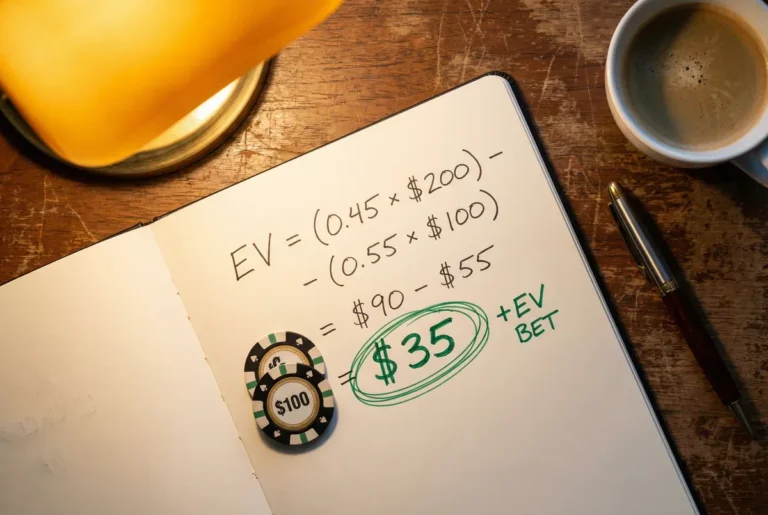
The Proven Rule of Only Betting When You Have Positive Expected Value
The discipline of only placing bets when mathematical expected value favors you is what separates professional play from recreational gambling.…

How to Keep Blackjack Sustainable and Fun for Years
Blackjack is most rewarding as a long-term pursuit strategic, intellectually engaging, and financially manageable. Sustainability requires intentional structure that most…

Why Betting Psychology Changes Dangerously with Virtual Chips vs Real Cash
Virtual chips in online blackjack reduce the psychological pain of loss, causing players to bet more recklessly than they would…