

Why the Martingale System is the Fastest Way to Go Broke
The Martingale betting system works on a simple premise: double your bet after every loss so that when you eventually win, you recover all previous losses plus one unit of profit. In theory, it sounds mathematically certain. In practice, every casino in the world profits enormously from players who use it, because two real-world constraints shatter the theory completely table limits and finite bankrolls.
The Martingale System Guarantees Small Wins and Catastrophic Losses
The fatal assumption built into the Martingale is that you will always have enough money to double again, and that the table will always let you. Neither is true. A player starting at $10 who hits a 7-hand losing streak needs to bet $1,280 on the eighth hand just to net $10 in profit. A 10-hand losing streak requires a $10,240 bet to recover $10. These are not exotic scenarios 7-hand losing streaks happen in roughly 1 in every 128 sequences of hands, and they happen to every active player multiple times per year.
The Martingale does not give you an edge. It converts a slow, manageable loss rate into rare but total financial devastation. That trade is universally bad for the player.
Timeline
Hand 1
Lose $10 total loss $10
Hand 2
Lose $20 total loss $30
Hand 3
Lose $40 total loss $70
Hand 4
Lose $80 total loss $150
Hand 5
Lose $160 total loss $310
Hand 6
Lose $320 total loss $630
Hand 7
Lose $640 total loss $1,270
Hand 8
Must bet $1,280 just to net $10
Why Table Limits Make the Martingale Mathematically Impossible?
Every blackjack table has a maximum bet. Most $10 minimum tables cap bets at $500 or $1,000. The Martingale requires unlimited bet doubling, which means once you hit the table maximum, the system breaks completely you can no longer double, so your only option is to place a flat bet that will not cover your accumulated losses even if you win. The house designed these limits specifically because the Martingale would be dangerous to the casino if tables had no ceiling.
Consider a $10-minimum, $500-maximum table. After five consecutive losses, a Martingale player has lost $310 and needs to bet $320 to recover. That is still within limits. After six losses, they need $640 but the table cap is $500. They are now stuck betting $500, which covers only part of the $630 total loss. If they win, they still net a loss of $130. If they lose again, the total deficit becomes $1,130 on an attempt to make $10.
Online casinos use the same table limits and sometimes tighter ones. The mathematical structure is identical whether you are playing in Vegas or on a browser. The table limit is the point where the Martingale stops being a system and starts being a very expensive flat bet on top of an already deep hole.
Common Myth
“The Martingale always wins if you have a big enough bankroll”
With infinite money and no table limits, the system would theoretically work
The Reality
No player has infinite money and no table has unlimited maximums. Both constraints guarantee the system's failure in real conditions
Expected value is unchanged by bet sequencing. The Martingale produces identical negative EV to flat betting, but concentrates all losses into catastrophic single events
What the Expected Value Math Actually Shows?
The deepest problem with the Martingale is often misunderstood: it does not improve expected value. The EV of each individual hand in blackjack is fixed by the rules and your strategy. Doubling your bet after a loss does not change the probability of winning the next hand. The next hand is a completely independent event with its own probability, and that probability is slightly below 50% regardless of what happened before.
Why Does the Statistical Reality of Betting System Over Time?
What the Martingale does change is the distribution of outcomes. Instead of experiencing many small losses spread across a session, Martingale players experience many small wins punctuated by occasional catastrophic losses. The total expected loss over a long session is identical to flat betting the same average stake. But the variance is dramatically worse, and the tail risk total ruin is far higher than with disciplined flat play.
Every time you feel the Martingale impulse that urge to double down after a bad run to 'get it all back' ask one question: am I changing the probability of the next hand? The answer is always no. Your previous losses have no influence on the cards about to be dealt.
Better Systems Exist Test Them Before Risking Real Money
If the appeal of the Martingale is its structure the feeling of a system rather than random flat play there are alternatives with far more manageable risk profiles. Positive progressions like Paroli and Oscar’s Grind press bets after wins rather than losses, so losing streaks do not trigger exponential escalation. Before testing any system with real money, experience it in live conditions at run this system at a real money table immediately, where real dealer mechanics reveal exactly how streaks and table dynamics interact with your chosen progression. Real stakes mean real consequences budget your session funds accordingly and never chase a deficit mid-session.
Frequently Asked Questions
No version of the Martingale is mathematically safe. Modified versions that use smaller multipliers reduce the speed of escalation but still hit table limits and finite bankroll ceilings. The fundamental problem that losing streaks always come and always outpace finite doubling capacity cannot be solved by modifying the multiplier.
Confirmation bias. Martingale players experience frequent small wins and attribute those to the system. The rare catastrophic losses are mentally filed as bad luck rather than the mathematical consequence of the strategy. Because catastrophic events are infrequent, many players quit before experiencing one and incorrectly conclude the system is sound.
Flat betting at 1–2% of bankroll is mathematically superior to the Martingale for managing risk of ruin. If you prefer a progression, positive progressions like Paroli or Oscar's Grind press bets when you are winning rather than when you are losing, which limits maximum exposure during cold streaks.
Before you test these plays at a real table, run them through our free blackjack simulator practice unlimited hands at zero cost until every move becomes automatic.
Mathematical Risk Warning
No betting system including the Martingale and all its variants changes the house edge or the expected value of any blackjack hand. Systems that increase bet size after losses dramatically increase the probability of total bankroll loss during normal variance.
Blackjack Academy is an educational resource. All strategy is based on mathematical expectation. Always play within your means.

Written by
Mark AnurakProfessional card counter since 2009 · 500,000+ hands logged · Former Macau advantage player. Studied under Thorp, Griffin & Wong methodology. Full bio →
Learn More
Continue your education with these related lessons.
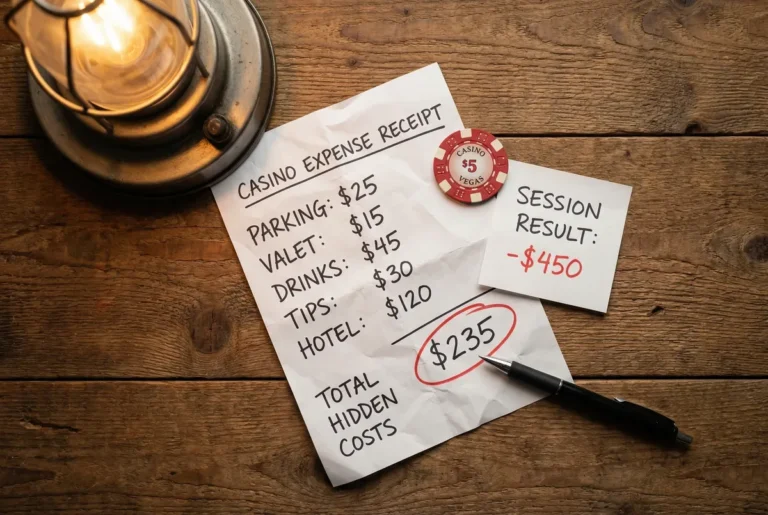
Hidden Costs of Playing Blackjack in a Physical Casino
The house edge is not the only cost of a casino blackjack session. Travel, accommodation, food, drinks, and time all…
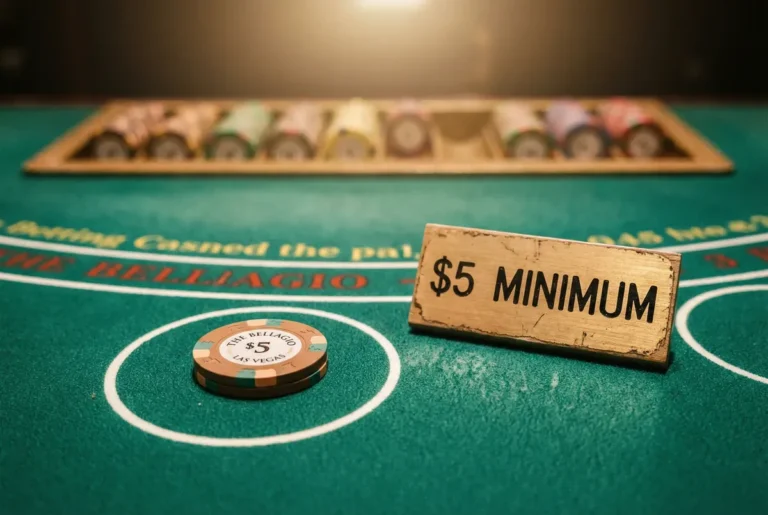
Why You Should Always Start at the Table Minimum Bet
Starting at the table minimum is not a beginner's habit it is a professional protocol. Learn why experienced players invariably…

Why Past Blackjack Hands Mean Nothing and the Gambler’s Fallacy Costs You
The gambler's fallacy is the single most expensive cognitive bias at the blackjack table. Learn why each hand is statistically…