Ex Dealer Reveals 5 Ways Casinos Trick You Into Losing
Every experienced blackjack dealer has watched the same patterns play out hundreds of times. A player sits down with discipline, plays correctly for an hour, then something shifts a complimentary drink arrives, a floor supervisor offers a comp upgrade, a losing streak triggers a change in betting behavior and the disciplined player becomes the player the casino was designed to create. The mechanisms behind these shifts are not accidental. They are designed, tested, and refined by casino operations teams whose entire job is maximizing revenue per player per hour. Understanding exactly how they work is the first line of defense against them.
Five Casino Tactics That Work Even on Players Who Know Better
What follows is not speculation or conspiracy. These are structural and behavioral features of the casino experience that are documented in gaming industry literature, taught in casino management programs, and observable to any attentive player. The goal is not to make you paranoid it is to make you immune to mechanisms you cannot defend against if you have not first named them.
Timeline
Trick 1
The complimentary drink arrives precisely when you are playing well and relaxing your guard
Trick 2
The 6:5 blackjack table is placed next to the 3:2 table with identical signage from a distance
Trick 3
The pit supervisor comps your room upgrade right after a large winning session now you feel obligated
Trick 4
The continuous shuffle machine is presented as 'more convenient' rather than what it is: more hands per hour against the house edge
Trick 5
The side bet dealer pushes during a cold shoe creates the illusion the main game is where the heat is
What Is Trick 1 and 2?
Complimentary beverages are the oldest psychological manipulation in casino history, and they remain extraordinarily effective. The mechanism is not simply the alcohol though that obviously helps. The mechanism is reciprocity: when someone gives you something freely, humans experience a psychological obligation to return value. A free dinner or room upgrade creates a social debt that many players unconsciously repay by extending their session, increasing their bets, or relaxing the discipline that was limiting the casino’s revenue. The comp is not generosity. It is a precisely calculated acquisition cost that the casino’s analytics team knows returns multiple dollars in additional play for every dollar of free food or beverage provided.
The 6:5 blackjack payout where a natural blackjack pays 6 to 5 ($12 on a $10 bet) instead of the standard 3:2 ($15 on a $10 bet) adds approximately 1.39% to the blackjack house edge immediately. That single rule change wipes out nearly all the value that blackjack basic strategy recovers. Casinos deploy this rule change strategically: at the entry-level tables where new players are most likely to sit, near higher-traffic areas, and with table signage that buries the distinction in small print. From twenty feet away, a 6:5 table looks identical to a 3:2 table. The only defense is reading every table placard before you sit.
Some properties take the payout manipulation further by posting rules in ways that require interpretation. “Blackjack pays 6:5” and “Blackjack pays 3:2” mean completely different things, but both are presented with equal visual weight. The casino’s signage design is not neutral it is crafted to minimize the cognitive alarm that correct information would trigger in an informed player.
Common Myth
“The casino gives you free drinks because they value your business”
The hospitality narrative is entirely successful at obscuring the calculated reciprocity mechanism behind comps
The Reality
Every comp has an exact calculated acquisition cost and expected return built into casino revenue models. You are never receiving free anything you are receiving a precisely priced behavioral nudge
Casino comp economics: every $1 in free F&B generates an average of $3.20–$5.80 in additional theoretical loss across studied properties.
What Is Trick 3 and 4?
Pit supervisor presence is a tool casinos use specifically with players showing signs of skill. When a floor person stands directly behind the dealer and watches every bet, most players even those doing nothing illegal experience stress that degrades their performance. This is the point. Counting requires clean cognitive focus. An observing supervisor who maintains unbroken eye contact with a player forces that player to suppress the natural counting process or risk being obvious about it. Many otherwise capable counters make errors under direct observation that they would never make alone.
The speed of play is another structural lever. Continuous shuffle machines and experienced dealers can deal up to 30% more hands per hour than a standard shoe game with manual shuffles. Casinos present faster games as a feature more hands, more action, more excitement. What this actually means for any player facing a positive blackjack house edge is more theoretical loss per hour. The entertainment value of faster play comes at a direct mathematical cost that the casino never communicates.
Dealer Shows
Your Hand
You have soft 18. Dealer shows Ace. Pit supervisor is watching you closely. Do you stand, hit, or double?
Casino observation is designed to create hesitation and error. The player who executes basic strategy identically whether alone or under observation is demonstrating the mental discipline that makes long-run positive play possible.
What Is Trick 5?
Casino environmental design is a discipline with its own academic literature. No windows, no clocks, oxygen-enriched air, specific lighting temperatures, strategic sound design, carpet patterns that keep eyes at table level rather than exit-seeking these are standard features of virtually every commercial casino in the world. The effect is measurable: players lose accurate time perception, underestimate session length, and make decisions in a sensory context optimized to reduce their cognitive performance and reduce the salience of the money they are handling.
Chip color psychology is subtle but real. Casinos design chip colors and denominations so that larger amounts feel like smaller ones in hand. A stack of $100 purple chips feels physically similar to a stack of $5 red chips the tactile experience of betting five $100 chips is not substantially different from betting five $5 chips, and the brain habituates to the color faster than it maintains accurate value attribution. Placing cash amounts on every bet in your internal monologue not ‘five purples’ but ‘five hundred dollars’ counteracts this.
Building Immunity Through Awareness and Practice
Knowing these mechanisms does not automatically protect you from them awareness is the starting condition, not the finish line. Building genuine immunity requires practicing decision-making under the specific pressures described here. The live dealer environment at stress-test your cover at a live table in your next session creates realistic session conditions where you can observe your own behavioral responses without the real-money consequences of casino play though any live gambling involves real money and you should always approach it with the same discipline you would bring to a physical casino floor.
Frequently Asked Questions
This is a persistent myth without credible evidence. No study has documented casinos piping oxygen, and the fire safety implications would be severe. What casinos do control is air circulation, temperature, and scent these are documented environmental design tools. The oxygen story distracts from the real environmental manipulations that are well-documented and actually effective.
No. Casino environmental design, comp programs, and game rule presentation are all legal commercial practices. The 6:5 payout is legal as long as it is posted on the table. Comp programs are voluntary. None of these practices constitute fraud. The most effective protection is self-education, not legal recourse.
Some properties note comp refusals as a possible sign of advantage play a player who does not want a player card or comps may be trying to avoid tracking. Ironically, accepting comps and player cards while playing correctly is generally better camouflage than refusing them. The risk is psychological: accepting comps requires the discipline to not let them influence your play.
Before you test these plays at a real table, run them through our free blackjack simulator practice unlimited hands at zero cost until every move becomes automatic.
Awareness Is Your First Defense
Casino design is sophisticated and intentional. Every element of the environment works to keep you playing longer and betting more. Knowledge is protection but only if applied with consistent discipline.
This content is educational. All casino games carry a house edge. No strategy eliminates the risk of financial loss. Please gamble responsibly and within your means.

Written by
Mark AnurakProfessional card counter since 2009 · 500,000+ hands logged · Former Macau advantage player. Studied under Thorp, Griffin & Wong methodology. Full bio →
Learn More
Continue your education with these related lessons.
The Real Future of Professional Blackjack Play and What It Means for You
The Blackjack Academy is building toward a complete professional development ecosystem. This article outlines what is coming, what is available…
Arnold Snyder’s Proven Math Method for Advanced Shuffle Tracking
Arnold Snyder developed the analytical framework for shuffle tracking a technique that goes beyond card counting to track clumps of…
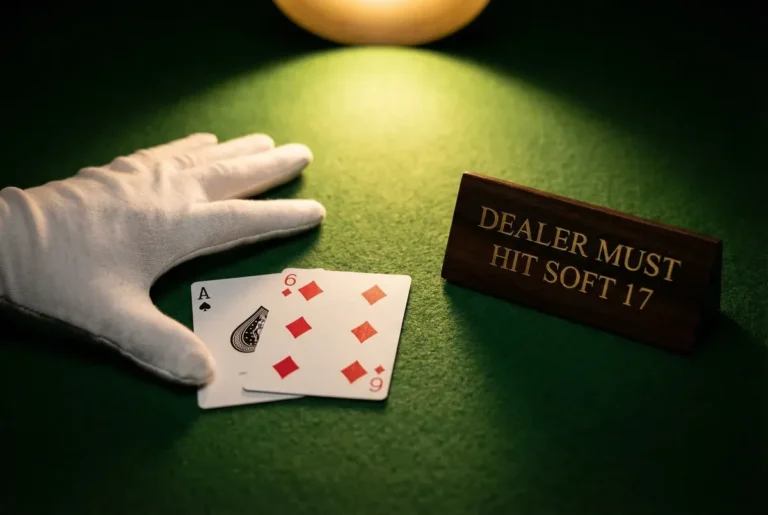
Why You Should Run from Any Dealer Hits Soft 17 Game
Dealer Hits Soft 17 is a rule that adds 0.22% to the house edge instantly and it is present on…