

The Elite Wonging Tactic for Mastering Table Hopping and Maximizing Profit
Standard blackjack card counting requires sitting at a table from the first hand of the shoe and counting through all conditions favorable and unfavorable alike. Wonging, named after blackjack author and Hall of Famer Stanford Wong, sidesteps that requirement entirely. The technique involves standing behind or near a blackjack table, counting the cards as they are played without being seated or betting, and only sitting down and placing a large bet when the count has risen to a favorable level. The negative-count hands the ones that drag down the counter’s overall expected value are simply never played. The result is a dramatically higher average edge per hand wagered.
Wonging Eliminates the Negative-Count Hands That Drag Down Every Counter
A standard card counter plays approximately 60% of their hands at a neutral or negative edge. Wonging eliminates most of those hands. The counter who Wongs correctly plays almost exclusively at a player advantage a fundamentally different profit structure than sitting through the full shoe.
What Is the Mathematics of Back-Counting?
In a standard six-deck shoe, a Hi-Lo counter sitting through all hands achieves a player edge of approximately 0.5–1.0% when accounting for the full distribution of positive and negative count periods. The negative counts when the deck is rich in low cards and the blackjack house edge climbs sharply dilute the overall edge substantially. The standard counter endures those periods to be in position when the count swings positive.
Wonging eliminates the dilution. A back-counter who enters tables only when the true count reaches +2 or above is playing exclusively at a meaningful player advantage. The average edge on hands actually wagered rises dramatically from roughly 0.7% to 2–4% depending on the entry threshold and betting spread. The trade-off is that fewer hands are played per hour. But the hands that are played are the right hands the profitable ones.
The entry threshold is a strategic choice with mathematical trade-offs. Entering at true count +1 maximizes hands played but keeps more neutral-EV hands in the sample. Entering at true count +3 or higher produces a very high per-hand edge but means sitting down rarely walking more between entries, playing fewer total hands per session. Professional Wongers typically enter around true count +2 to +3, which balances adequate edge per hand against sufficient playing time to generate meaningful expected profit.
Standard counter avg edge per hand
% with full shoe
Wonger avg edge per hand entered
% at TC +2 entry
Hands per hour seated counter
hands
What Are Table Hopping Logistics and Execution?
Executing Wonging in a real casino requires navigating several practical challenges. First, casinos have implemented “no mid-shoe entry” rules specifically in response to the technique signs at many tables read “No entry after first card” or similar. These rules exist because casinos recognized that players entering tables only mid-shoe were exploiting positive counts. Finding tables without this rule, or playing in rule-sets where mid-shoe entry is permitted, is a prerequisite for Wonging.
Second, back-counting while standing attracts attention. A person standing behind a table watching every card for several minutes looks like exactly what they are. Effective Wongers develop natural-looking behaviors appearing to watch sports on overhead screens, chatting with seated players, moving between multiple tables rather than staring at one. The physical execution of Wonging requires as much thought as the counting mechanics.
Third, the Wong-out leaving a table when the count drops back below the entry threshold must be executed smoothly. Sitting down at a positive count, betting large for a few hands, and then leaving when the count drops is a recognizable pattern. Effective Wongers vary their exit timing, occasionally play a neutral-count hand or two before departing, and use social excuses (phone call, bathroom, meeting a friend) to camouflage the strategic departure.
Advantages
- Dramatically increases edge per hand wagered
- Eliminates most negative-count exposure
- Flexible entry across multiple tables
- Lower detection risk than obvious bet spreading
- Can be combined with team Big Player systems
Disadvantages
- No mid-shoe entry rules block it at many tables
- Standing behind tables draws casino attention
- Fewer hands per hour reduces total earnings
- Exit timing requires additional camouflage skill
- Tiring to maintain count while standing and moving
When Wonging Combines With Team Play?
The natural synthesis of Wonging and the Big Player team model is exactly what Ken Uston and Al Francesco developed: spotters count at the table, and the Big Player Wongs in when signaled rather than counting on their own. This combines the efficiency of back-counting with the camouflage of team operations the Big Player simply looks like a gambler choosing a hot table, not a systematic advantage player entering at a precise mathematical threshold. The team approach makes the Wonging behavior invisible because the Big Player has no history at the specific table that would trigger surveillance attention.
Build Count Speed Before Attempting Back-Counting Live
Back-counting requires maintaining an accurate running and true count while standing, moving, holding conversations, and tracking multiple tables simultaneously. The counting mechanics must be completely automatic before attempting this in a live environment. Develop reliable counting speed in a focused practice environment first the back-count and enter mid-shoe at a real-money live table simulator builds exactly those reflexes without any real money at risk while you find your rhythm.
Frequently Asked Questions
Wonging is the practice of counting cards while standing behind a blackjack table without betting, then sitting down and placing large bets only when the count reaches a favorable level. Named after Stanford Wong, it eliminates negative-count hands from the counter's played sample.
Specifically to counter Wonging. Casinos recognized that players entering tables mid-shoe were selecting positive-count opportunities. No mid-shoe entry rules force all players to join at the start of a fresh shoe, eliminating the ability to cherry-pick favorable deck conditions.
At a true count +2 entry threshold, a Wonger's average edge per hand wagered is approximately 2.5–4%, compared to 0.5–1% for a counter playing through full shoes. The trade-off is significantly fewer hands per hour.
Before you test these plays at a real table, run them through our free blackjack simulator practice unlimited hands at zero cost until every move becomes automatic.
The Best Hands Are the Ones You Choose
Wonging lets you play only when the math is in your favor. But it requires flawless counting mechanics under pressure. Build that foundation first.
Blackjack involves real financial risk. Casino countermeasures including no mid-shoe entry rules may limit or eliminate Wonging opportunities.

Written by
Mark AnurakProfessional card counter since 2009 · 500,000+ hands logged · Former Macau advantage player. Studied under Thorp, Griffin & Wong methodology. Full bio →
Learn More
Continue your education with these related lessons.

The Critical Psychological Edge Every Professional Blackjack Player Needs
Technical skill gets you to the table. Mental fortitude keeps you profitable. The psychological demands of professional blackjack are harder…

Pro Player’s Essential Guide to Managing Blackjack Taxes on Winnings
Gambling winnings are taxable income in most jurisdictions. Professional blackjack players who ignore this reality face significant legal and financial…
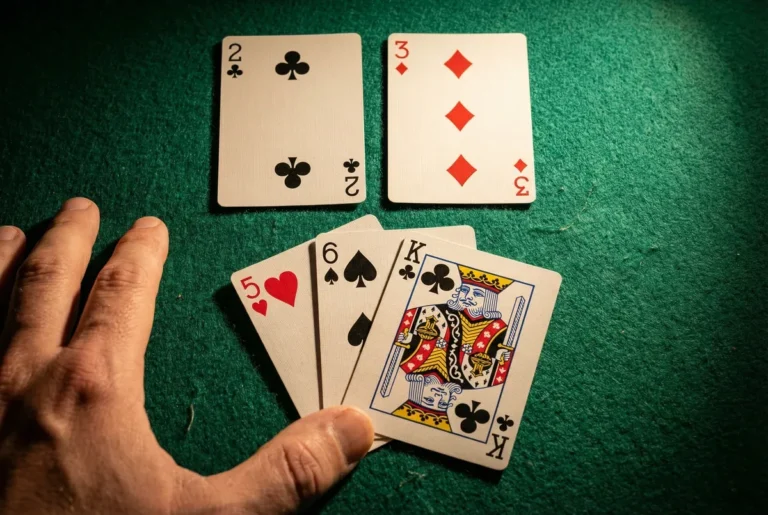
Why the 2 and 3 are Historically Strong Cards for the Dealer
The 2 and 3 look weak but they are trap cards. Discover why these small upcards historically produce strong dealer…