
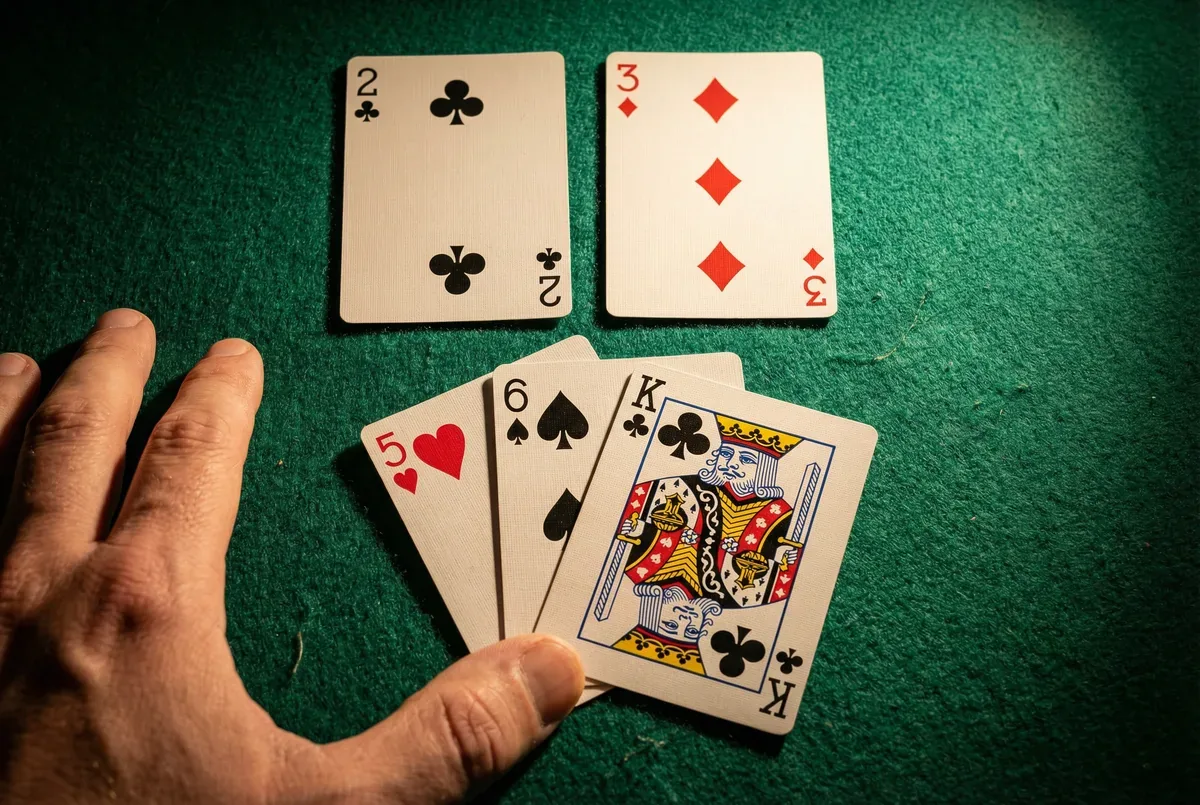
Why the 2 and 3 are Historically Strong Cards for the Dealer
The dealer’s 2 and 3 are consistently misread as weak cards by recreational players. They are not. While the 4, 5, and 6 are the true bust cards the ones where standing and letting the dealer self-destruct is almost always correct the 2 and 3 occupy a different zone entirely. These cards give the dealer a strong foundation to build toward 17, 18, 19, or 20, and their bust rates are significantly lower than most players assume. Misreading a dealer 2 or 3 as equivalent to a dealer 5 is a strategy error with a real cost per hand.
Why the Dealer’s 2 and 3 Are the Most Misread Cards in Blackjack
- Dealer 2busts 35.3% of the time
- Dealer 3busts 37.6% of the time
- Dealer 4busts 40.3% of the time
- Dealer 5busts 42.9% of the time
- Dealer 6busts 42.1% of the time
How Does the Bust Rate Difference That Change Everything?
The dealer busts with a 6 upcard 42.1% of the time. With a 2 upcard, that number drops to 35.3%. That 6.8-percentage-point gap is the difference between a hand where you can afford to stand on nearly anything and a hand where you need to be more aggressive. Players who treat the 2 exactly like the 6 are leaving money on the table by standing when they should hit, or failing to double when doubling is correct.
The 2 and 3 are what experienced players call the dealer’s “pivot cards.” They sit at the boundary between the dealer’s comfort zone and the danger zone. With a 2 showing, the dealer starts with 2 and must draw until reaching 17. That drawing sequence regularly produces totals of 17 through 21 because the deck is rich in middle cards that bridge the gap. Unlike a 5 or 6 upcard where multiple draws are needed and bust risk compounds, a 2 upcard often requires only two or three cards to reach a standing total.
The practical implication shows up in hard 12 decisions. Against a dealer 4, 5, or 6, standing on hard 12 is correct because the bust rate justifies it. Against a dealer 2 or 3, the math shifts. The dealer completes their hand more often, and standing on 12 against a 2 or 3 loses money in the long run. Basic strategy says to hit 12 against a 2, and hit 12 against a 3. Many recreational players stand on both because they see any low card as a bust card and treat all of them identically. That is the mistake.
Dealer Shows
Your Hand
You have hard 12 against a dealer 3. What is the correct play?
Basic strategy requires hitting hard 12 against a dealer 2 or 3. The composition exception for 12 vs. 4 also requires careful card-count analysis. Against 3, always hit.
How the 2 and 3 Affect Doubling and Splitting Decisions?
Because the dealer 2 and 3 are stronger than the classic bust cards, doubling down against them is less aggressive than doubling against a 5 or 6, but still correct in many spots. Doubling 9 against a dealer 3 is correct. Doubling soft hands like soft 13, 14, and 15 against a 3 is correct. Players who never double against low cards because they fear the dealer completing the hand are being too conservative and sacrificing positive expected value in those spots.
How Do Common Errors Players Make Against Dealer 2 and 3?
Splitting decisions are also affected. Splitting 3s against a dealer 2 is correct you take two hands starting at 3 and build from there. Splitting 2s against a dealer 3 is correct for the same reason. These are not obvious plays, and many players refuse them because starting two hands at 2 or 3 feels weak. But the expected value calculation supports the split because the dealer’s 2 and 3, while stronger than a 5 or 6, are not strong enough to make these splits unprofitable.
The dealer's 2 and 3 are not bust cards they are build cards. Treat them as mid-strength threats, not automatic dealer failures.
Strategy Axiom
Apply the Correct Read at a Live Table
The dealer 2 and 3 regularly appear at live tables and the misread costs players real chips on every session where it occurs. The respect the 2 and 3 upcards at a live real-money table practice environment lets you drill specifically against these upcards it is well worth isolating dealer 2 and 3 scenarios to build the correct automatic response before risking actual money at a casino table.
Frequently Asked Questions
The dealer 2 busts 35.3% of the time, which is meaningfully lower than the true bust cards (4–6 at 40–43%). It is a low card, not a bust card, and strategy should reflect that distinction.
Yes. Basic strategy requires hitting hard 12 against a dealer 2 and 3. The dealer's bust rate against these upcards is not high enough to justify standing on 12. The only time standing on 12 is correct is against dealer 4, 5, and 6.
Because any low dealer upcard looks like a bust card and players over-generalize. They see 2 and think 'weak dealer' without realizing the bust rate gap between a 2 and a 5 is nearly 8 percentage points.
Before you test these plays at a real table, run them through our free blackjack simulator practice unlimited hands at zero cost until every move becomes automatic.
Small Cards, Big Mistakes
Misreading dealer 2 and 3 upcards costs money on every session they appear. Learn the correct responses before sitting at a real-money table.
Blackjack carries real financial risk. Optimal strategy reduces but does not eliminate the house edge.

Written by
Mark AnurakProfessional card counter since 2009 · 500,000+ hands logged · Former Macau advantage player. Studied under Thorp, Griffin & Wong methodology. Full bio →
Learn More
Continue your education with these related lessons.
How Restricted Doubling Drains Your Total Return
Games that restrict doubling to totals of 9, 10, and 11 only cost players up to 0.25% in expected return.…

How Professional Players Use Simulation Tools to Stay Sharp
Professional blackjack players do not simply play more hands to stay sharp. They use targeted simulation tools to stress-test their…

Proven Modern Blackjack Strategies for Today’s Tougher Casino Reality
Today's casino floor is fundamentally different from the blackjack landscape of the 1990s. Continuous shuffle machines, 6-deck shoes, and sophisticated…