
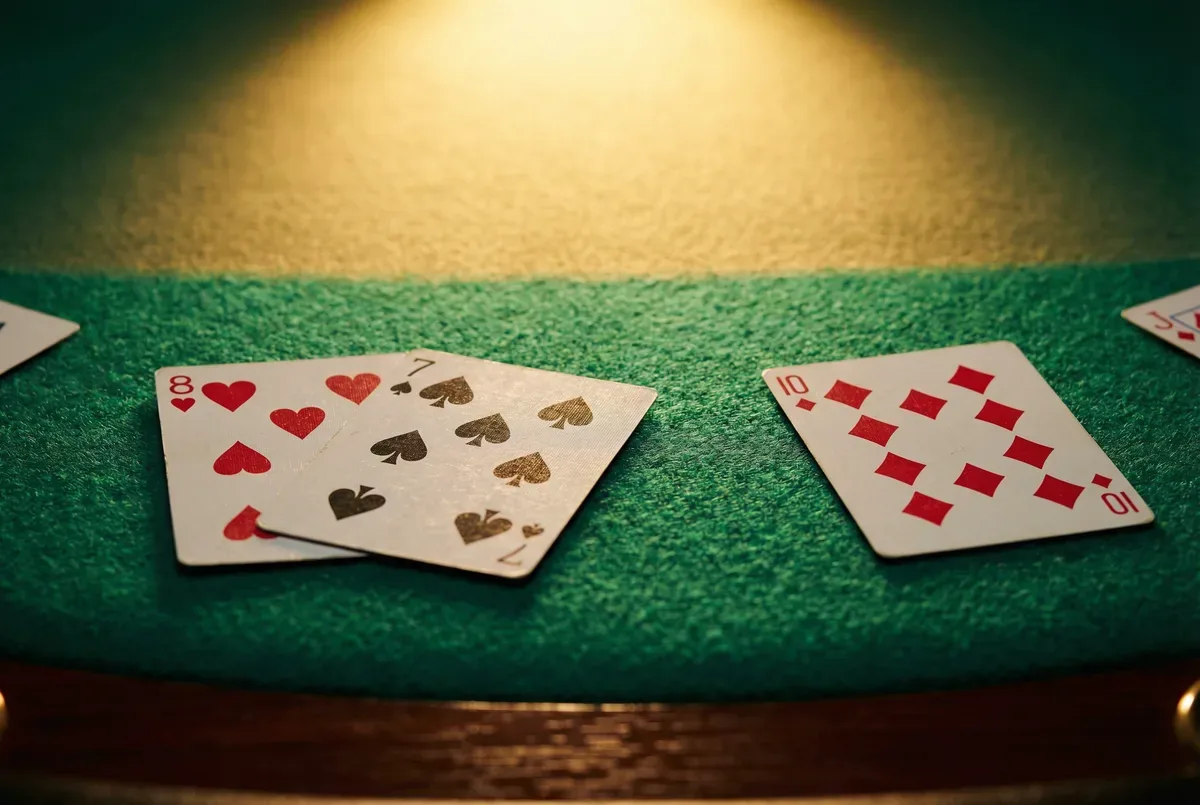
Saving Money by Surrendering Hard 15 Against a 10
- Surrendering Hard 15 Against a 10 Is Not Giving Up It's Precision
- What Makes Hard 15 vs. Dealer 10 a Surrender Situation?
- Why Does the Four Standard Surrender Situation in Multi-Deck Blackjack?
- Why Casinos Offer Surrender and How to Use It Without Hesitation?
- Drill Surrender Decisions Before Playing Real Money
Surrender is the most underused option in recreational blackjack. Giving back half a bet feels like defeat, and most players avoid it on instinct. But hard 15 against a dealer 10 is one of four standard surrender situations where the math unambiguously supports folding the hand. You will lose this hand more than you will win it when played to completion. Surrendering recovers 50 cents of every dollar wagered in a spot where playing would return less than 40 cents. That 10-cent-per-dollar difference, accumulated across a session, is the difference between surviving and bleeding out.
Surrendering Hard 15 Against a 10 Is Not Giving Up It’s Precision
Hard 15 vs. dealer 10 win rate when played
of the time
Return from surrender
cents per $1
Return from playing hard 15 vs. 10
cents per $1
What Makes Hard 15 vs. Dealer 10 a Surrender Situation?
The threshold for profitable surrender is straightforward: if the expected value of playing the hand is worse than -0.50 per unit (losing more than 50 cents per dollar when played), surrendering which always returns exactly -0.50 per unit is the superior play. Hard 15 against a dealer 10 has an expected value of approximately -0.543 when played. Surrendering returns -0.500. The 4.3-cent improvement per dollar wagered is reliable and automatic every time this situation arises.
The dealer 10 upcard is the engine driving this calculation. With a ten showing, the dealer has a high probability of already holding a pat 20 (with a 10 in the hole) or reaching 17 through 20 when forced to draw. Hard 15 most commonly composed of 9-6 or 10-5 loses to all of those outcomes. The only winning paths for hard 15 played to completion involve the dealer busting or the player drawing to exactly 16–21 without busting first. Neither happens frequently enough against a dealer 10 to justify playing rather than surrendering.
Composition matters here in one notable way: 10-5 hard 15 and 9-6 hard 15 are both surrender situations against a dealer 10 in standard six-deck play. The 8-7 composition, also hard 15, is the same situation. What changes the calculation is when a hard 15 is composed of three or more cards in single-deck games with three-card hard 15 configurations, the composition can shift the decision. For standard two-card hard 15 in a multi-deck shoe, surrender is correct against dealer 10 every time.
Common Myth
“Surrendering is a sign of weak play”
Players equate surrender with giving up and see it as a character flaw at the table
The Reality
Surrender is a mathematically superior play in four specific situations and good players use it without hesitation
Late surrender on hard 15/16 vs. 10 saves 4–9 cents per dollar wagered in those spots
Why Does the Four Standard Surrender Situation in Multi-Deck Blackjack?
Hard 15 vs. dealer 10 is one of four universally correct surrender plays in standard multi-deck blackjack. The complete list: hard 16 vs. dealer 9, hard 16 vs. dealer 10, hard 16 vs. dealer Ace, and hard 15 vs. dealer 10. Some blackjack strategy charts also add hard 17 vs. dealer Ace in certain rule sets. Players who memorize these four situations and act on all of them apply surrender correctly across every standard game without needing to analyze each hand from scratch.
Late surrender available at most modern casinos allows you to surrender after the dealer checks for blackjack. If the dealer has blackjack, the hand is over and no surrender refund is given. Early surrender, rarer and more valuable to the player, allows folding before the dealer checks for blackjack. Early surrender is worth approximately 0.62% in player edge and is rarely offered anymore precisely because it is so favorable to the player.
| Player Hand | Dealer Upcard | Decision |
|---|---|---|
| Hard 16 | ||
| Dealer 9 | ||
| SURRENDER | ||
| Hard 16 | ||
| Dealer 10 | ||
| SURRENDER | ||
| Hard 16 | ||
| Dealer Ace | ||
| SURRENDER | ||
| Hard 15 | ||
| Dealer 10 | ||
| SURRENDER | ||
| Hard 17 | ||
| Dealer Ace | ||
| SURRENDER (some rules) |
Why Casinos Offer Surrender and How to Use It Without Hesitation?
Casinos offer late surrender because the vast majority of players never use it. It is a rule that looks generous on paper and is essentially ignored in practice. The house would rather offer surrender and capture money from players who do not use it optimally than not offer it at all and deal with fewer decisions per hour. For players who do use surrender correctly, it shaves a small but real amount from the blackjack house edge roughly 0.07–0.09% in a standard multi-deck game when applied to all correct situations.
Drill Surrender Decisions Before Playing Real Money
The hesitation most players feel when surrendering is psychological, not mathematical. Overcoming it requires repetition in a low-stakes environment where the correct play can be reinforced. The apply surrender at a live dealer table practice mode lets you face hard 15 and hard 16 scenarios against dealer 10 and Ace repeatedly until surrendering becomes a reflex building the right habit before real money is ever at risk.
Frequently Asked Questions
Late surrender allows a player to fold their hand and recover half their bet after the dealer checks for blackjack. If the dealer has blackjack, surrender is not available and the full bet is lost.
Yes, in the long run. The expected value of playing hard 15 vs. a dealer 10 is approximately -0.543. Surrender always returns -0.500. Every time you play instead of surrendering, you lose an additional 4.3 cents per dollar over the long run.
If surrender is unavailable, hit hard 15 against a dealer 10. Do not stand standing is worse than hitting in this spot because the player busts first and the dealer retains positional advantage.
Before you test these plays at a real table, run them through our free blackjack simulator practice unlimited hands at zero cost until every move becomes automatic.
Half a Bet Is Better Than No Bet
Late surrender on hard 15 vs. dealer 10 is one of the clearest money-saving plays in the game. Learn all four surrender situations before your next session.
Blackjack involves real financial risk. Surrender reduces losses in specific situations but does not eliminate the house edge.

Written by
Mark AnurakProfessional card counter since 2009 · 500,000+ hands logged · Former Macau advantage player. Studied under Thorp, Griffin & Wong methodology. Full bio →
Learn More
Continue your education with these related lessons.

The Real Legal Risks of Blackjack Team Communication in Casinos
Blackjack team play occupies a legally complex space. Card counting alone is not a crime, but team communication inside a…
Correct Strategy for Playing Against Two Face Up Dealer Cards
When both dealer cards are face up, every strategy calculation changes. Games like Double Exposure Blackjack expose both dealer cards…
How Restricted Doubling Drains Your Total Return
Games that restrict doubling to totals of 9, 10, and 11 only cost players up to 0.25% in expected return.…