
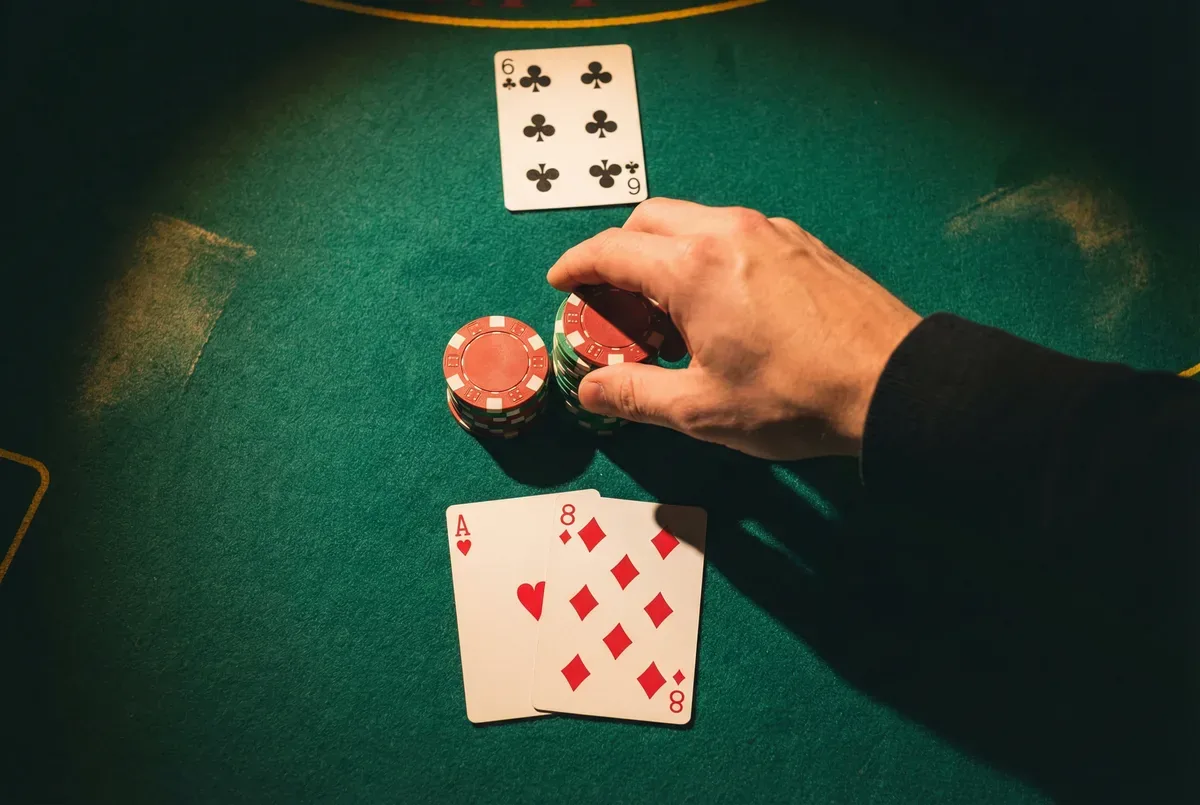
Aggressive Pro Play Doubling Soft 19 Against a 6
- Doubling Soft 19 Against a Dealer 6 Is Correct in H17 Games
- Why Is the H17 Condition Critical This Does Not Apply Everywhere?
- How Do You Read Table Reaction and Managing the Double?
- What Is the Mathematical Edge of Doubling Soft 19 Against a 6?
- Applying Aggressive Soft Doubles in Real Table Conditions
Soft 19, an Ace plus an 8, and is a strong hand. It wins against most dealer totals without any action required. That’s exactly why doubling it feels counterintuitive: you already have a winning hand, so risking extra money seems unnecessary. But against a dealer showing 6 in a game where the dealer hits soft 17, the math shifts in favor of doubling. The dealer’s 6 up-card is the single most bust-prone card in the deck, with a bust rate approaching 44%. When you double soft 19 against that card, you’re not protecting the hand you’re pressing maximum money into a spot where the dealer is statistically likely to fail. Played over thousands of hands, doubling soft 19 vs dealer 6 in an H17 game extracts significantly more EV than standing does.
Doubling Soft 19 Against a Dealer 6 Is Correct in H17 Games
Common Myth
“Soft 19 is too strong to double you'll wreck a winning hand”
Players see a total of 19 and assume protecting it is correct because 19 beats most dealer outcomes
The Reality
Against dealer 6 in H17, doubling soft 19 produces a higher expected return than standing because the dealer's bust frequency makes aggressive action profitable
Doubling soft 19 vs dealer 6 in H17 adds approximately +0.07 EV per unit compared to standing
Why Is the H17 Condition Critical This Does Not Apply Everywhere?
The doubling soft 19 strategy is explicitly conditional on H17 (dealer hits soft 17) rules. In S17 games where the dealer stands on all 17s the correct play on soft 19 against a dealer 6 is to stand. The rule difference matters because an H17 dealer has more ways to improve or bust from a soft hand, and the combination of dealer 6’s vulnerability with the dealer’s inability to lock in at 17 produces a slightly more volatile dealer distribution that benefits aggressive player action.
This distinction is practically important because many players use one blackjack strategy chart across all game types. If you learn “double soft 19 vs 6” from a resource that doesn’t specify H17, and then apply it in an S17 game, you’re making a small but real error. Strategy resources that specify rule conditions are more useful and more trustworthy than those that present strategy as universal.
It’s also worth noting that doubling soft 18 against a dealer Ace is another H17-specific play that doesn’t appear in S17 strategy. The same conditional logic applies. H17 opens a category of aggressive doubles that are simply not available in more favorable S17 games which is one reason H17 games, despite their higher blackjack house edge, sometimes produce higher-quality strategic decision-making challenges.
- S17 gameStand on soft 19 vs dealer 6
- H17 gameDouble soft 19 vs dealer 6
- S17 gameStand on soft 18 vs dealer Ace
- H17 gameDouble soft 18 vs dealer Ace
- EV gain from H17 doublesapproximately +0.05 to +0.10 per hand
How Do You Read Table Reaction and Managing the Double?
At a live table, doubling soft 19 draws immediate attention. Other players may question the decision or in slower games attempt to advise you against it. This social pressure is the primary reason amateur players abandon the play even when they know it’s correct. The discipline to double soft 19 at the correct moment, ignore the table commentary, and execute without hesitation is a marker of a player who has genuinely internalized the strategy rather than memorized it superficially.
Double soft 19 vs dealer 6 in H17 is not a close call it's a firm strategy rule. The EV gap is small but positive and consistent. The players who can't pull this double are losing value they should be capturing. Practice the play until it requires no conscious decision.
What Is the Mathematical Edge of Doubling Soft 19 Against a 6?
Skilled players build systematic routines around this principle. Each decision becomes automatic through deliberate practice, and the sessions where discipline holds produce consistent results over hundreds of hands. The professional edge is not just knowing the rule it is executing it without hesitation under casino conditions.
Applying Aggressive Soft Doubles in Real Table Conditions
The only way to verify that you’ve genuinely internalized these conditional strategy plays is to execute them under real-game pressure. Simulator drilling teaches you the intellectual framework. Live-game pressure tests whether the decision is automatic or deliberate. At double down with real money on the line you can face these soft double situations in a real live dealer environment note that actual money is at risk from the moment you join the table, so only bring a session stake you’ve deliberately set aside for practice under fire.
Frequently Asked Questions
The strategy applies in H17 games across all standard deck counts (single, double, and multi-deck). The EV magnitude varies slightly by deck count, but doubling remains correct in H17 configurations regardless.
Any low card (2 through 9) converts soft 19 to a made hand between 11 and 20. A 2 gives you 21. A 3 gives 20. Even drawing a 9 produces 18, which is a reasonable outcome. The Ace produces a soft 20. Only drawing a ten-value card produces soft 19 the same hand which still wins often against dealer 6.
In H17 games, the standard strategy only calls for doubling soft 19 against dealer 6. Some counting strategies extend the double into other spots when the count is highly positive, but as a basic strategy play, dealer 6 is the only target.
Before you test these plays at a real table, run them through our free blackjack simulator practice unlimited hands at zero cost until every move becomes automatic.
Correct Plays Don't Win Every Hand
Doubling soft 19 vs dealer 6 is the right decision but you will still lose this double roughly 40% of the time. Correct strategy optimizes expected value over thousands of hands not individual outcomes.
Blackjack Academy is an educational resource. Real money gambling involves the risk of financial loss. Play responsibly.

Written by
Mark AnurakProfessional card counter since 2009 · 500,000+ hands logged · Former Macau advantage player. Studied under Thorp, Griffin & Wong methodology. Full bio →
Learn More
Continue your education with these related lessons.

How to Stay Calm and Keep Your Money After a Back Off
Getting backed off is a defining moment for any advantage player. How you respond in the next sixty seconds determines…

Why Relying on Intuition Drains Your Blackjack Bankroll
Gut instinct feels reliable at the table, but the math says otherwise. This article dissects the cognitive traps that make…
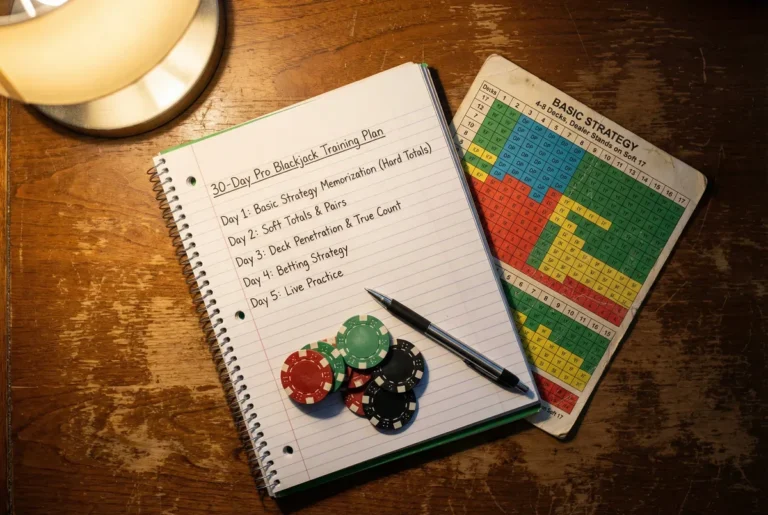
Moving from Casual Player to Professional in 30 Days
The path from casual blackjack player to professional-level competence is defined and trainable. This 30-day roadmap covers every stage from…