
How a Natural Blackjack Works and the Power of the Ace
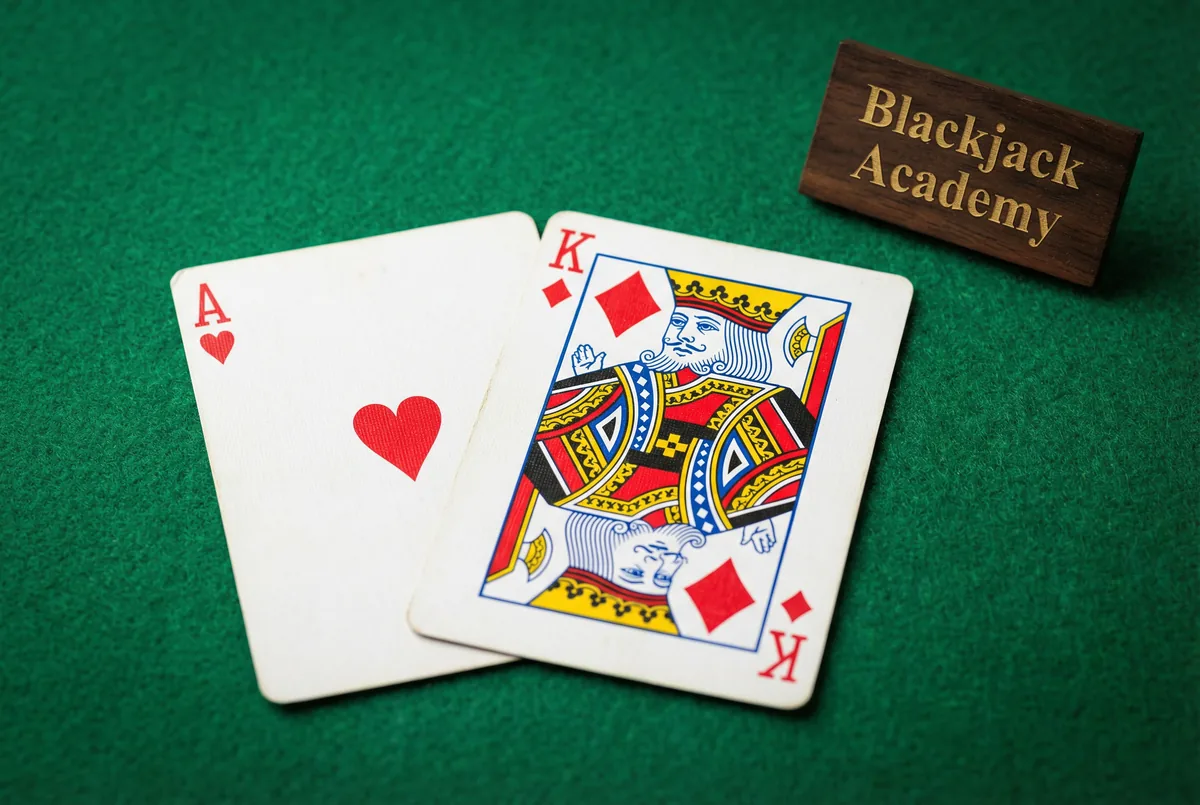
I have never forgotten my first natural blackjack. Ace of hearts, King of diamonds. $25 bet, $37.50 back, and I did not have to make a single decision. The hand played itself. That moment taught me something: 4.8% of the time, roughly 1 in every 21 hands, you get dealt the best possible outcome in the game. But the natural is more than a lucky draw. It is the single most profitable event in blackjack, and it exists because of one card: the Ace. Understanding how naturals work and why the Ace dominates every hand you play is the difference between sitting down and knowing exactly what your cards are worth.
What Is a Natural Blackjack
A natural blackjack is a two-card hand totaling exactly 21. It requires one Ace and one ten-value card (10, Jack, Queen, or King) dealt on the initial deal. No other combination qualifies. If you hit to 21 with three or more cards, that is just 21, not a natural, and it pays even money instead of the bonus 3:2 payout.
This distinction matters more than most beginners realize. A three-card 21 wins the hand, but it does not trigger the bonus payout. You collect even money, same as any other winning hand. The natural is special precisely because it rewards you for the statistical rarity of drawing two perfect cards on the opening deal.
Probability
1 in 21 hands
Standard Payout
$37.50 on $25 bet
Avoid This Payout
Costs +1.39% edge
The order does not matter. Ace first or ten-value card first, the result is identical. Both players and the dealer can receive naturals. If you and the dealer both get a natural, the hand pushes and your bet is returned. If only you have the natural, you win at 3:2. If only the dealer has one, you lose your bet immediately.
In a 6-deck shoe with 312 cards, there are 24 Aces and 96 ten-value cards. The probability of receiving a natural on any given hand is 2 times (24/312) times (96/311), which equals approximately 4.75%. That works out to roughly 1 natural every 21 hands.
Why the Ace Is the Most Powerful Card in the Deck?
The Ace is the only card in blackjack that holds two values simultaneously: it counts as 11 when that keeps your total at 21 or below, and automatically drops to 1 the moment an 11 would bust you. It counts as 11 when that keeps your total at 21 or below, and it drops to 1 the moment an 11 would bust you. No other card adapts to the situation. Every other card is fixed. The Ace moves.
The Ace is the only card in the deck that adapts to your hand. It counts as 11 when you need power and drops to 1 when you need survival. Every other card is fixed. The Ace moves.
The Ace Rule
This flexibility is what creates soft hands. Any hand containing an Ace counted as 11 is called a soft hand because it cannot bust on the next card. Soft 17 (Ace + 6) lets you hit freely. The worst outcome is that the Ace drops to 1 and you have a hard total to work with. You get a second chance that hard hands never offer.
The Ace also drives counting systems. In Hi-Lo, the Ace is tagged as -1, grouped with the other high cards (10s, Jacks, Queens, Kings). When Aces leave the shoe, naturals become less likely and the remaining deck favors the house. When Aces remain, the shoe is rich with natural potential.
Some advanced players go further and track Aces separately with a side count. The standard Hi-Lo system does not distinguish between an Ace and a King, but the Ace is far more valuable because it enables both naturals and soft hand flexibility. A shoe rich in Aces is worth more to you than a shoe rich in Kings, even though both are counted identically in the running count.
How the 3:2 Payout Protects Your Bankroll Over Hundreds of Hands?
A natural blackjack at 3:2 pays $15 for every $10 wagered, and this bonus payout is the primary mechanism that offsets the blackjack house edge over hundreds of hands. This bonus payout is the primary mechanism that offsets the blackjack house edge. Without the 3:2 payout, the casino advantage would be significantly higher because you and the dealer get naturals at the same frequency, but you get paid a bonus and the dealer does not.
Think of the 3:2 payout as the player’s one structural advantage built into the rules. The house wins in the long run because you bust first, the dealer does not have to make decisions, and there are more losing scenarios than winning ones. The 3:2 natural payout partially compensates for all of that. Remove it and the math tilts hard against you.
Over 200 hands at $25 per hand, you can expect roughly 9 to 10 naturals. At 3:2, each natural earns you $37.50 instead of $25. That is $12.50 extra per natural, adding up to approximately $112 to $125 in bonus value across those 200 hands. At 6:5, each natural pays only $30, which is just $5 extra. The difference between 3:2 and 6:5 over those same 200 hands is roughly $67 to $75 that stays in the casino instead of your pocket.
| Payout Rule | $25 Bet Win | Edge Cost vs 3:2 |
|---|---|---|
| 3:2 (standard) | $37.50 | |
| 6:5 (avoid) | $30.00 | |
| 1:1 (even money) | $25.00 |
The 1.39% difference between 3:2 and 6:5 is one of the largest single-rule impacts in blackjack. On a $25 table over 500 hands, that 1.39% translates to roughly $173 in additional losses. Always verify the payout printed on the table felt before sitting down. If it says 6:5 or “Blackjack Pays Even Money,” walk to another table.
How Do Soft Hands Give You a Built-In Safety Net That Hard Hands Never Offer?
A soft hand is any hand where the Ace is currently counted as 11, giving you complete bust protection on the next card because the Ace automatically drops to 1 if needed. Soft 13 through soft 17 are hands where you should almost always take another card because you cannot bust. The Ace absorbs the risk. If you hold Ace-5 (soft 16) and draw a 9, the Ace drops to 1 and you have a hard 15. You did not bust. You just lost the soft advantage and now play the hand as a hard total.
Soft 18 is the hand that trips up the most players. Most recreational players stand on 18 every time because it feels like a strong total. But against a dealer showing 9, 10, or Ace, blackjack basic strategy says to hit soft 18. The logic is simple: 18 loses to those dealer upcards more often than it wins, and because the Ace gives you bust protection, taking another card improves your expected value. It feels wrong. The math does not care how it feels.
A natural pays 3 to 2 because the casino is giving you a premium for completing a two-card 21 before the hand even starts. That premium is exactly why 6 to 5 payouts are so damaging, they cut the most valuable outcome in the game by nearly half, costing you around 1.4% edge on naturals alone.
Doubling down on soft hands against weak dealer upcards is one of the most profitable plays in blackjack basic strategy. Soft 16, 17, and 18 against a dealer 5 or 6 are textbook doubling situations. You get one more card with double the money on the table, and the Ace protects you from busting. Many recreational players miss these opportunities because they see a total of 17 or 18 and think standing is safe enough. The math says otherwise.
Using the Ace to Make Better Decisions at the Table
Every hand that contains an Ace requires you to check whether you are playing a soft or hard total. This distinction changes the correct play in dozens of situations. Hard 17 is always a stand. Soft 17 (Ace + 6) is always a hit or double. Same total, completely different decisions. If you treat them the same, you are giving up expected value on every soft hand you receive.
The moment you receive an Ace, identify the hand type before doing anything else. Ace-4 is soft 15, not hard 15. Ace-6 is soft 17, not hard 17. Ace-9 is soft 20, not hard 20. Get the classification right and the correct blackjack basic strategy play follows. Get it wrong and you will stand when you should hit, or hit when you should double. This single habit eliminates one of the most common sources of mistakes at the table.
Pair of Aces is the strongest split in the game. Two Aces together make a soft 12, which is an awkward hand. Split them and you start two new hands each with an Ace, giving both hands a chance at a natural or at minimum a strong soft total. Basic strategy says split Aces against every dealer upcard, no exceptions. Some casinos restrict you to one card per split Ace. Even with that restriction, splitting is still the mathematically correct play.
Look for tables that allow resplitting Aces. If you split two Aces and receive another Ace on one of the split hands, some casinos let you split again. This is a valuable rule because every additional split gives you another hand starting with the strongest card in the deck. Also look for tables that allow hitting after splitting Aces. The standard restriction of one card per split Ace reduces your expected value, and finding a table without that restriction puts more money in your favor over a long session.
The next time you sit at a table and receive an Ace as your first card, you already know the math. You know the natural pays 3:2. You know soft hands let you hit without fear. You know splitting Aces is non-negotiable. The natural is rare enough that you notice every one. I still do. Experience it firsthand at a live table. Play 40 hands and track how many naturals you receive. The math says roughly 2 in 40. If you get 0, that is variance. If you get 4, that is also variance. Neither changes the strategy. You are risking real money from the first card, so lock your budget before the session starts.
Frequently Asked Questions
A natural blackjack is exactly two cards totaling 21: one Ace and one ten-value card (10, Jack, Queen, or King). Hitting to 21 with three or more cards does not count as a natural and pays even money instead of 3:2.
In a standard 6-deck shoe, the probability of being dealt a natural blackjack is approximately 4.75%, which works out to about 1 natural every 21 hands.
The Ace is the only card that holds two values. It counts as 11 when that helps your hand and drops to 1 when 11 would cause a bust. This dual value creates soft hands, enables naturals, and gives you flexibility that no other card provides.
Before you test these plays at a real table, run them through our free blackjack simulator practice unlimited hands at zero cost until every move becomes automatic.
Know Your Edge Before You Bet
The calculator shows your exact expected value before you sit down.
Blackjack Academy is an educational resource. All strategy is based on mathematical expectation. Always play within your means.

Written by
Mark AnurakProfessional card counter since 2009 · 500,000+ hands logged · Former Macau advantage player. Studied under Thorp, Griffin & Wong methodology. Full bio →
Learn More
Continue your education with these related lessons.
Complete Roadmap to Becoming a Professional Blackjack Player
Becoming a professional blackjack player is a 4-stage progression that takes most people two to four years of deliberate practice.…
Why the Blackjack Insurance Side Bet is a Statistical Trap
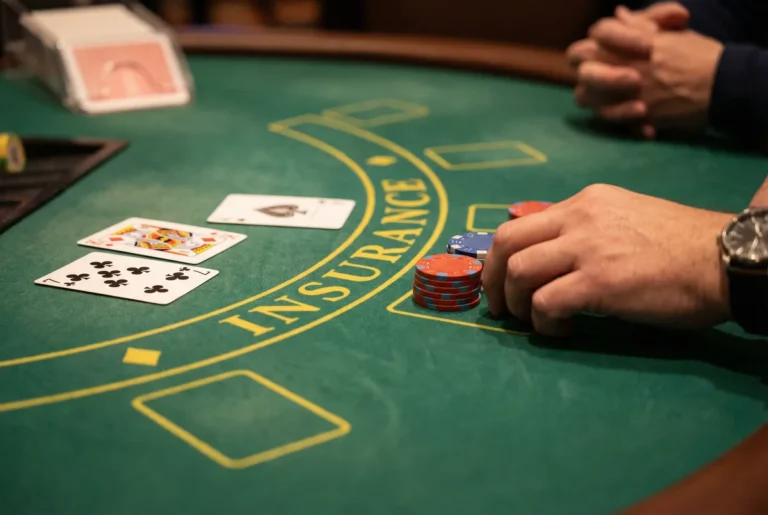
Insurance pays 2:1 but the true odds are 2.25:1 against in a 6-deck game. That gap gives the house a…

Best Blackjack Books for Learning Professional Strategy
Four books define the canon of serious blackjack strategy. Beat the Dealer started it. Basic Blackjack refined it. Professional Blackjack…