
The Real Mathematics of Blackjack Every Serious Player Must Master
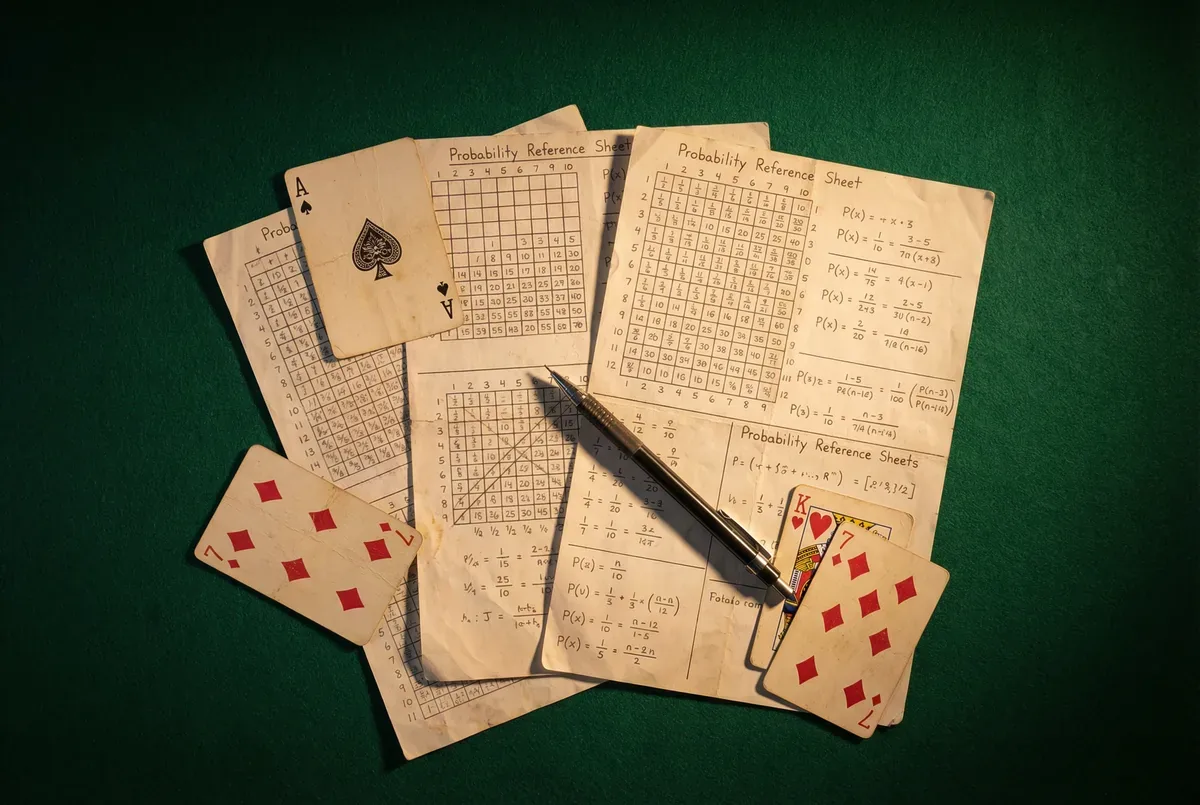
Blackjack strategy is ultimately a set of probability statements compressed into a decision table, and understanding the underlying numbers is what separates a counter who follows rules mechanically from one who can adapt correctly when conditions deviate from the standard. Every blackjack basic strategy decision reflects a specific probability comparison the expected outcome of hitting versus standing versus doubling, calculated across the full distribution of possible card draws and dealer outcomes for a given hand against a given upcard.
Why the Math Matters More Than the Rules
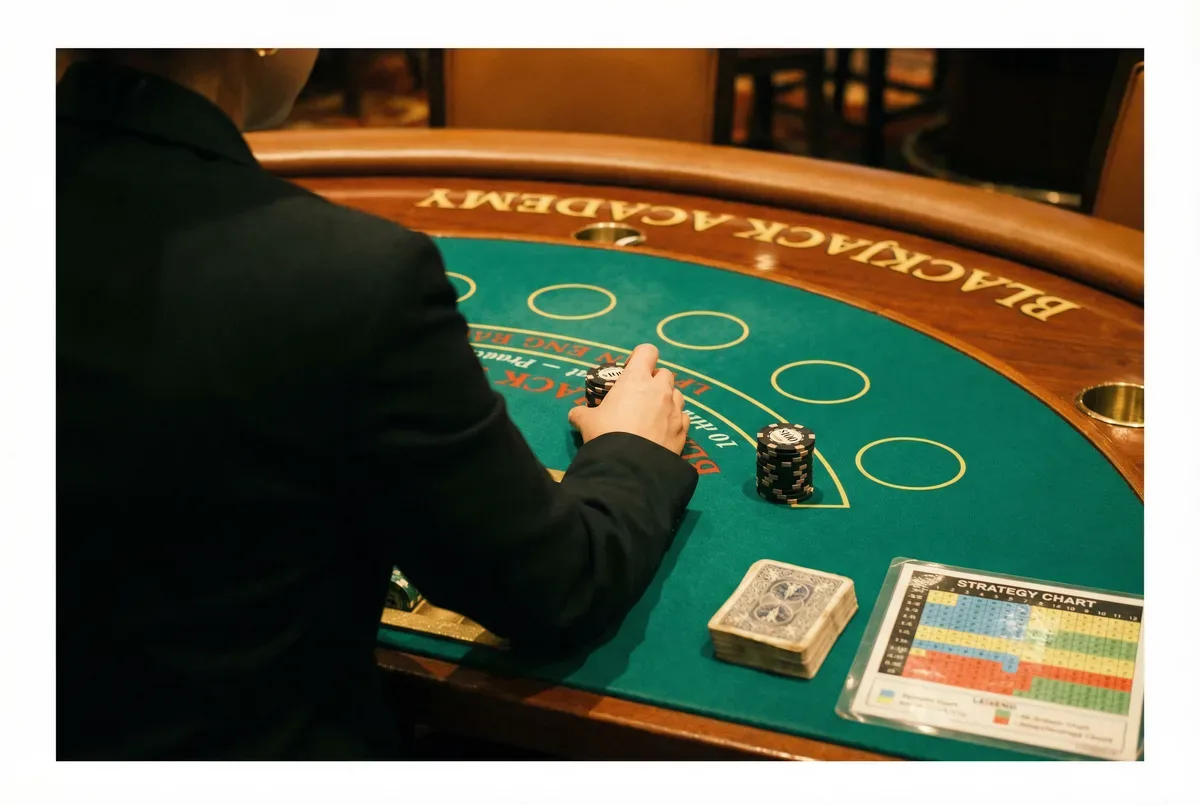
For a card counter, these probabilities are not fixed constants. They shift continuously as the composition of the remaining shoe changes with each dealt card. A count system is, at its mathematical core, a simplified tracking mechanism for the most impactful of these probability shifts: the changing density of high-value cards in the remaining shoe. Understanding the base probability tables gives the counter a concrete framework for why the count matters and exactly how much each count unit moves the numbers.
| Hand Total | Bust Probability | Cards That Bust |
|---|---|---|
| 12 | ||
| 31.0% | ||
| 10-A (any ten-value or ace over 9);13 | ||
| 38.5% | ||
| 9-A;14 | ||
| 46.2% | ||
| 8-A;15 | ||
| 53.8% | ||
| 7-A;16 | ||
| 61.5% | ||
| 6-A;17 | ||
| 69.2% | ||
| 5-A;18 | ||
| 76.9% | ||
| 4-A;19 | ||
| 84.6% | ||
| 3-A;20 | ||
| 92.3% | ||
| 2-A;21 | ||
| 100% | ||
| Any card |
What Is Dealer Bust Rates by Upcard?
Dealer bust probability by upcard is the single most important probability table in blackjack because it explains why standing on stiff hands against weak dealer upcards is correct even when your hand total is low. The dealer’s upcard is the primary information signal available to the player for estimating the probability that the dealer will bust before reaching 17, which is the threshold at which the dealer must stop drawing.
A dealer showing a 6 busts approximately 42% of the time across all possible hole cards and draw sequences. A dealer showing an ace busts only about 17% of the time under standard rules where the dealer hits soft 17, and even less roughly 11–12% under stand-on-soft-17 rules. This difference of nearly 30 percentage points explains why the correct play against a dealer 6 and the correct play against a dealer ace can be polar opposites for the same player hand total.
The 4, 5, and 6 upcards often called the dealer bust corridor represent the highest dealer vulnerability. These are the situations where blackjack basic strategy instructs the player to stand on totals as low as 12, decline doubling opportunities that seem attractive by hand total alone, and let the dealer’s structural disadvantage do the work. The numbers behind these decisions are not arbitrary: standing on 12 against a dealer 6 is correct because the dealer busts 42% of the time, which combined with the probability that a hit card busts the player’s 12 produces a better expected outcome from standing.
Dealer upcard 2
% bust rate
Dealer upcard 3
% bust rate
Dealer upcard 4
% bust rate
What Is Blackjack Probability and the Natural?
The probability of receiving a natural blackjack an ace plus any ten-value card on the initial two-card deal is approximately 4.75% per hand in a standard 6-deck game, or roughly once every 21 hands dealt. This figure represents the combined probability of receiving an ace as the first card and a ten-value as the second, plus the reverse sequence, calculated across the full deck composition at the start of a fresh shoe.
This number matters for two reasons. First, the 3:2 natural blackjack payout is the single largest source of the player’s advantage in a standard game significantly more valuable per occurrence than any other hand outcome. A game paying 6:5 on naturals reduces this value so severely that it erases most or all of the EV contribution from counting. Second, the probability of a natural rises measurably with the true count: a deck rich in tens and aces increases the frequency of both player naturals and dealer naturals, and the net effect favors the player because player naturals pay 3:2 while dealer naturals only recover the original bet.
At TC +4, the probability of a natural in a 6-deck game rises to approximately 5.5–6%, roughly a 20% relative increase over the base rate. Across a session where you are betting three to four times your minimum at TC +4, this increased natural frequency translates directly into material EV gain. This is one of the core mathematical mechanisms through which high positive counts generate player advantage not just better standing and hitting decisions, but a higher frequency of the most valuable hand outcome in the game.
How True Count Shifts Every Probability in the Table?
The true count is a compressed measure of deck composition, and every probability table in blackjack is a function of deck composition. This means that every bust probability, every dealer bust rate, and every natural probability listed in a standard table is a baseline figure calculated for a neutral count and all of those figures shift proportionally as the count moves.
At high positive true counts, the increased density of tens and aces raises player bust risk on stiff hands but simultaneously raises dealer bust risk because the dealer is also drawing from the same rich shoe. The net effect on player bust probability is partially offset by the structural asymmetry: the player sees both cards and makes a decision, while the dealer follows fixed rules regardless of hand composition. At TC +4 and above, the dealer bust rate from stiff totals increases by approximately 3–5 percentage points, which is the mathematical basis for standing more aggressively on 16 vs a dealer 10 as the count rises.
Every probability table in blackjack is a function of deck composition, not a fixed constant. True count is a compressed measure of composition change. When the count moves one unit, every probability in the table shifts and the shifts compound at high counts in the player's favor.
The Count-Composition Principle
Turning Probability Into Action at a Real Table
Understanding these probability tables changes how you experience counting decisions. When you stand on 16 vs a dealer 10 at TC +1, you are not following a rule you are recognizing that the increased ten density raises your bust risk on a hit while also slightly increasing the probability that the dealer holds a ten in the hole and will draw to a bust total. The index play is a concrete expression of a specific probability threshold that the table numbers identify.
Players who understand the underlying math make better in-game decisions because they can correctly evaluate unusual situations that no index chart explicitly covers: multi-card hands, composition-dependent decisions, and edge cases where the full table calculation and the simplified index number produce different optimal actions. The index is an approximation; the probability table is the reality it approximates.
Putting these numbers into practice requires a live environment that deals at genuine speed with a real multi-deck shoe not a training simulator that pauses for input. The live dealer tables at validate this count at a real table tonight in your next session run from a physical shoe at authentic casino pace, giving you the closest available environment to a real table for testing your probability-informed decisions. These games use real money, and no mathematical understanding substitutes for disciplined bankroll management every session carries genuine financial risk.
Frequently Asked Questions
When the dealer shows a 6, the most likely hole card is a ten-value, giving the dealer a 16 the worst possible drawing total. Drawing from 16 against a rich shoe produces frequent busts. When the dealer shows a 7, the most likely hole card gives the dealer 17, which is a standing total under all standard rules. The dealer never busts from 17 they stop drawing. This is the structural reason for the sharp cliff in dealer bust probability between 6 and 7.
At a hard 15, the player busts approximately 53.8% of the time on any draw. This is why hitting hard 15 against a dealer 10 or ace a play that basic strategy and index plays require feels counterintuitive: you bust more often than not on the hit. The correct decision is based on the comparison of expected outcomes, not the raw bust probability in isolation.
Each true count unit shifts all probabilities by a small but compounding amount. At TC +1 in a standard 6-deck Hi-Lo game, the overall house edge shifts by approximately 0.5% in the player's favor. The dealer bust rate from stiff totals increases by roughly 1–2 percentage points per true count unit at high counts, though the exact figure depends on the specific upcard and the remaining shoe composition.
Mathematical Risk Warning
Understanding blackjack probability tables improves decision quality but does not eliminate the inherent variance of the game. Card counting produces a statistical edge over large sample sizes individual sessions can and do produce significant loss
Blackjack Academy is an educational resource. All strategy is based on mathematical expectation. Always play within your means.

Written by
Mark AnurakProfessional card counter since 2009 · 500,000+ hands logged · Former Macau advantage player. Studied under Thorp, Griffin & Wong methodology. Full bio →
Learn More
Continue your education with these related lessons.
Why Index Numbers Are the Most Critical Tool in Every Counting Strategy
Index numbers are the true-count thresholds that tell you when to deviate from basic strategy. The Illustrious 18 capture the…

The Hi-Lo System Is the Most Powerful and Widely Used Card Count
The Hi-Lo system assigns +1, 0, or -1 to every card in the deck. With a 0.97 betting correlation, it…

What Card Counting Actually Is and Why Most Players Get It Wrong
Card counting is not memorization, not cheating, and not magic. It is a legal, mathematically grounded technique that shifts the…