
Online Blackjack vs Live Casino Which Gives You the Better Counting Edge
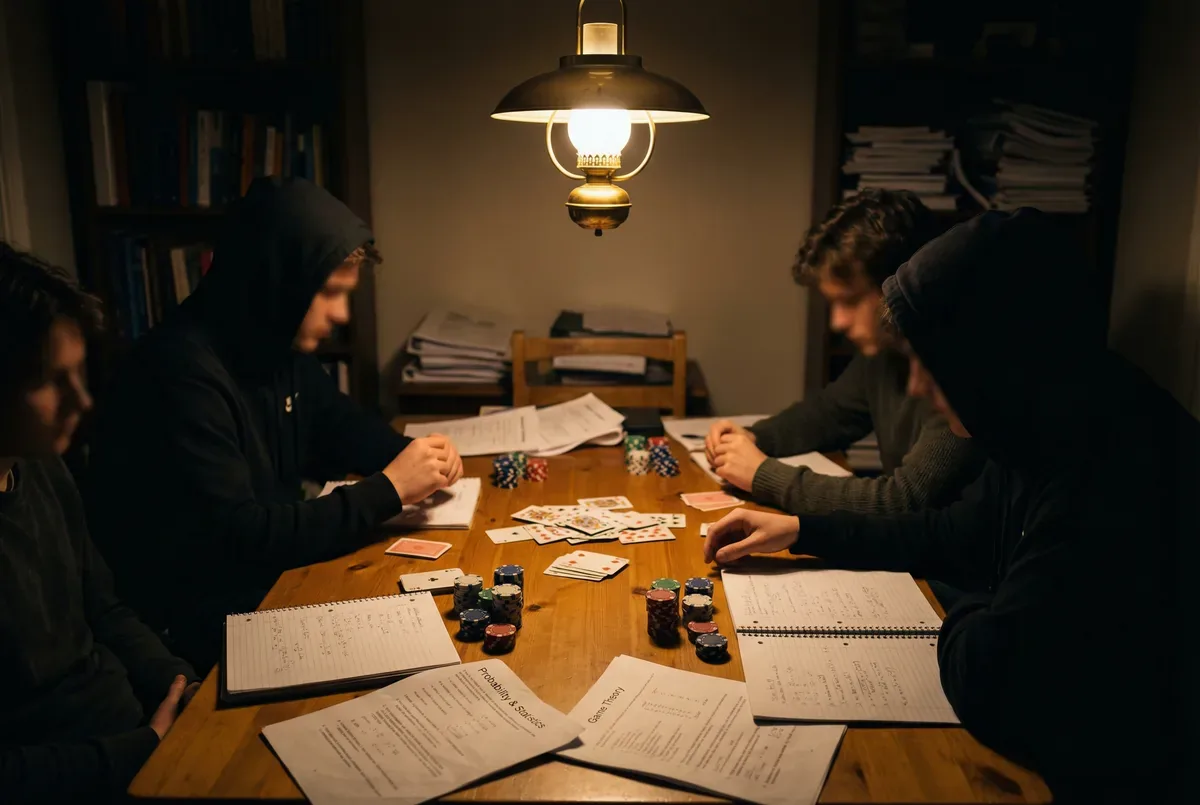
Learning to count cards effectively follows a four-stage progression: solo home drills, online live dealer practice, local casino testing, and finally destination casino play and skipping any stage is one of the most expensive mistakes a developing counter can make.
The Four-Stage Learning Progression for Card Counting
Most beginners want to compress this timeline. They drill Hi-Lo for two weeks at home, feel confident, and head straight to a Vegas casino. The result is predictable: casino conditions real dealer pace, background noise, other players, the physical sensation of chips and money introduce cognitive load that collapses a count that felt solid at the kitchen table. The four stages exist because each one adds a specific type of pressure that the previous stage cannot replicate.
The financial cost of skipping stages is not abstract. A counter who takes their first real-money counting sessions in a $25 minimum Vegas game before they are ready can easily lose several hundred dollars per hour of practice. The same practice, conducted in an online live dealer environment with a $5 minimum, costs a fraction of that while using a genuine shuffled shoe dealt by a real dealer.
Timeline
Stage 1
Home Drills: Practice Hi-Lo with a deck at home. Target: count a full deck in under 30 seconds with zero errors. No money, no pressure just mechanics.
Stage 2
Online Live Dealer: Move to a real shoe dealt by a live dealer. Low minimums, no social pressure, ability to pause between hands. Confirm the count holds under mild time pressure.
Stage 3
Local Casino: Test at a local or regional casino with $10–$15 minimums. Real environment, real noise, real pace. Keep sessions short. Observe floor behavior and heat signals.
Stage 4
Destination Casino: Apply full technique at target properties (Vegas, AC, tribal). Higher minimums, faster pace, more sophisticated surveillance. Only advance here after Stage 3 produces consistent results.
Why Online Live Dealer Is the Ideal Intermediate Step?
Online live dealer blackjack uses a genuine physical shoe dealt by a human dealer on camera making it the only online format where blackjack card counting against a real card sequence is possible.
This matters because RNG (random number generator) software blackjack, the standard digital version, and reshuffles between every hand, making a running count meaningless. A counter practicing on RNG software is not practicing counting; they are practicing blackjack basic strategy in an environment that looks like counting practice. The distinction is critical.
Live dealer solves this. The shoe is real, the dealing sequence is real, and the running count compounds across hands exactly as it does in a physical casino. The key advantages over a physical casino at this stage are: lower table minimums (often $1–$10), no social pressure from other players or pit staff, and the ability to step away between hands without consequences. A developing counter can pause, verify their count, and resume something that is impossible at a physical table without raising questions.
The limitations are real but manageable at Stage 2. Online live dealer games typically offer lower penetration than optimal physical casino games often 60 to 65 percent versus the 75 to 85 percent a good Vegas game provides. Bet limits are lower, which caps EV. And shuffle frequency is higher than you want for serious counting. These constraints are not problems at Stage 2; they become problems only if you try to run a serious advantage campaign in an online format that was designed for recreational play.
Online Live Dealer
Physical Casino
- $1–$10
- 60–65% (typical)
- None
- Yes between hands
- Minimal
- None
- $5–$30 (low minimums)
- Real counting valid
- $10–$25 (local) / $25+ (Vegas)
- 75–85% (good games)
- Moderate to high
- No
- Significant
- Real accumulates over time
- $50–$200+ (higher minimums, faster pace)
- Real counting valid
What a Physical Casino Adds That Online Cannot Replicate?
A physical casino introduces cognitive and environmental stressors that no online format can simulate and those stressors are precisely what will break an underprepared counter’s accuracy in real play.
The noise floor alone is a significant factor. A busy casino pit produces conversation from multiple tables, background music, slot machine audio, announcements, and dealer chatter all simultaneous. Maintaining an accurate Hi-Lo count through this environment requires a level of automaticity that only physical practice builds. Counters who have only drilled in silence discover that their count degrades sharply under actual casino conditions.
Dealer pace is another variable online cannot replicate precisely. Online live dealers work at a standardized pace optimized for remote viewing. Physical casino dealers, especially in busy pits, deal faster and with less deliberate card exposure. A counter relying on seeing each card clearly before the next is dealt will struggle at tables where the pace is brisk and multiple hands are in play simultaneously.
Floor awareness tracking who is watching you, reading heat signals, managing bet sizing in real time without any interface to lean on is a skill that only exists in a physical environment. This is what Stage 3 builds: the ability to manage all counting functions while simultaneously managing your behavior as a casino patron.
Cost per training hour (online live dealer, $5 min)
/ hr estimate
Cost per training hour (local casino, $15 min)
/ hr estimate
Cost per training hour (Vegas, $25 min)
/ hr estimate
What Is the Financial Cost of Learning?
The financial cost differential between learning online and learning at a physical casino is significant enough to affect how quickly a counter can develop their skill without depleting their playing bankroll.
At a local casino with $15 minimum bets, a one-hour practice session playing blackjack basic strategy with counting practice costs an average of $60 to $150 in expected losses, accounting for blackjack house edge and variance at that stake level. At a Vegas property with $25 minimums and a faster dealer pace, the same hour of deliberate learning costs $150 to $300. These are not theoretical losses; they are the realistic cost of building practice hands at real minimum bets.
Online live dealer with $5 minimums costs roughly $10 to $30 per equivalent hour of real-shoe practice. The shoe is genuine, the dealer is human, and the count is valid but the financial exposure is a fraction of physical casino play. Over 20 hours of structured practice, the cost difference between online and local casino learning runs to several hundred dollars at minimum. That differential is working bankroll preserved for actual advantage play sessions once the skill is proven.
Choosing the Right Environment for Your Current Stage
The correct environment for practice is always the least expensive one where you can confirm your skill holds not the most impressive one that signals commitment.
If your count breaks down at the online live dealer stage, you are not ready for a physical casino. If your count holds online but collapses under local casino conditions, you are not ready for Vegas. Each stage is a filter, not just a training venue, and each failed filter costs money which is why running through the stages in order is the economically rational approach.
For Stage 2 practice with a real shoe and real dealer pace, see this edge in live counted play tonight offers live-dealer sessions where you can test your count under mild time pressure at low stakes but note that even these sessions involve real-money wagers, and a count that is not yet reliable will produce real losses before it produces learning.
Frequently Asked Questions
No. Standard online blackjack uses a random number generator that reshuffles between every hand, making a running count meaningless. Card counting requires a genuine shoe where cards are dealt without reshuffling between hands. Only live dealer formats and physical casinos meet this requirement.
The primary limitations are lower penetration (typically 60–65% compared to 75–85% in good physical casino games) and lower bet limits. These factors reduce the achievable edge significantly. Online live dealer is excellent for learning and practice but is rarely viable for a serious advantage campaign.
At a local casino with $15 minimums, realistic practice costs $60–$150 per session hour. Online live dealer with $5 minimums costs roughly $10–$30 per equivalent hour of real-shoe practice. Home drills cost nothing. The four-stage progression is designed to minimize the expensive physical-casino phase until the skill is already proven at lower cost.
Before you test these plays at a real table, run them through our free blackjack simulator practice unlimited hands at zero cost until every move becomes automatic.
Mathematical Risk Warning
Even at low minimums, every live blackjack session involves real money. Card counting practice at any stage carries genuine financial risk. Only play with funds you can afford to lose while learning.
Blackjack Academy is an educational resource. All strategy is based on mathematical expectation. Always play within your means.

Written by
Mark AnurakProfessional card counter since 2009 · 500,000+ hands logged · Former Macau advantage player. Studied under Thorp, Griffin & Wong methodology. Full bio →
Learn More
Continue your education with these related lessons.

How to Count Cards Without Getting Caught Using Proven Cover Plays
Cover plays are deliberate actions that disguise card counting from casino surveillance. Learn what they cost, when to use them,…
Your Complete Card Counting Action Plan
A complete six-stage roadmap for learning card counting from zero knowledge to your first live casino session. Each stage has…
The Zen Count Is a Powerful Balanced Multi-Level System for Experts
The Zen Count is Arnold Snyder's balanced multi-level system that assigns finer card values than Hi-Lo to extract more edge…