
How the Red Seven Count Compares to Hi-Lo for Beginners
The Red Seven count is an unbalanced blackjack card counting system developed by Arnold Snyder and published in his book Blackbelt in Blackjack, designed specifically to remove the true count conversion step that makes balanced systems like Hi-Lo harder for beginners to execute under casino pressure.

What the Red Seven Count Is and How Arnold Snyder Designed It
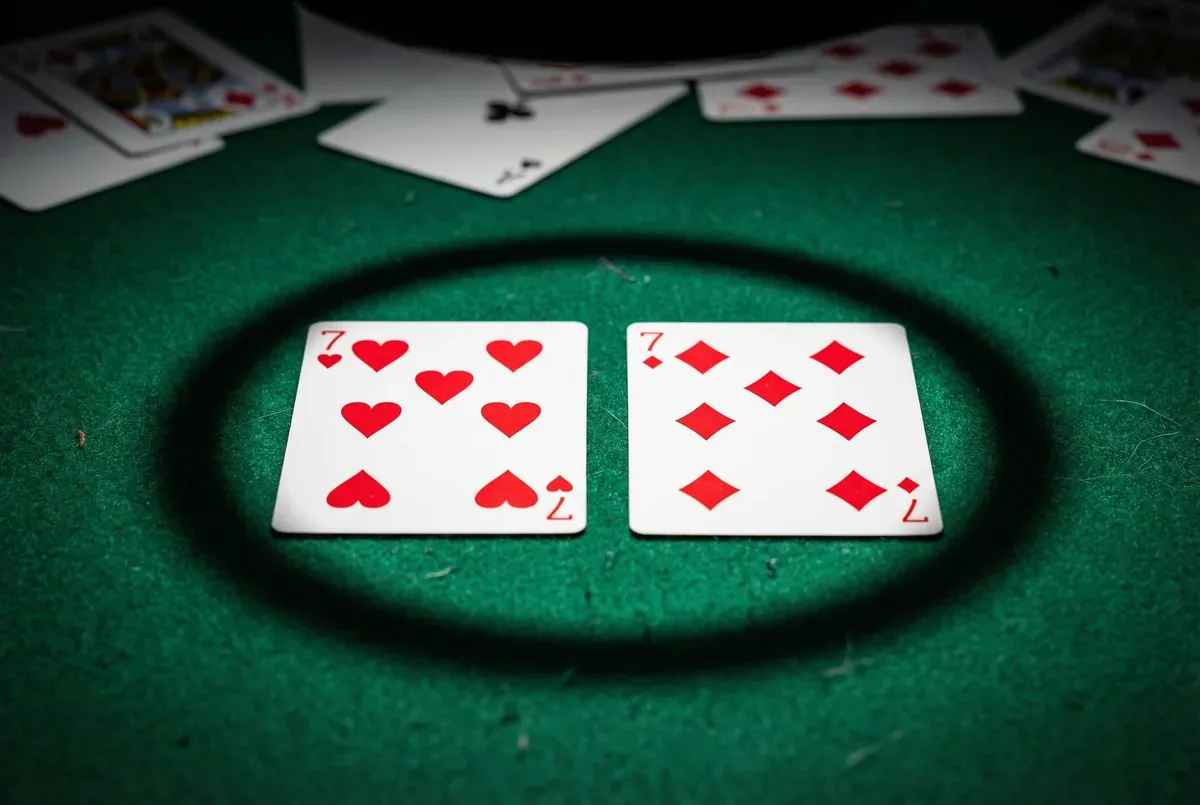
The card assignments in Red Seven are: 2s, 3s, 4s, 5s, 6s, and red 7s (hearts and diamonds) are counted as +1. Black 7s (spades and clubs) are counted as 0. Eights and nines are 0. Tens, face cards, and aces are -1. The asymmetric treatment of 7s by suit is the defining feature of the system and the reason it is called Red Seven.
Because the count includes more +1 cards than -1 cards in any standard deck, it does not return to zero after a full deck is counted down. This is the definition of an unbalanced system. If you count down a single deck using Red Seven values, you end at +2, not 0. This imbalance is intentional it eliminates the need to divide the running count by remaining decks to get a true count, because the count is calibrated to reach a trigger point (called the IRC, or Initial Running Count) at the correct betting threshold automatically.
- 2–6 and Red 7s → +1 each
- Black 7s, 8s, 9s → 0
- Tens, face cards, aces → -1
- 1-deck gamestart IRC at 0
- 2-deck gamestart IRC at -2
- 4-deck gamestart IRC at -4
- 6-deck gamestart IRC at -6
- 8-deck gamestart IRC at -8
How the Initial Running Count Replaces True Count Conversion?
The Initial Running Count the negative number you start from at the beginning of a shoe is the mechanism that makes Red Seven a viable unbalanced system rather than a sloppy one.
In Hi-Lo, a running count of +8 in a 6-deck game with 4 decks remaining translates to a true count of +2 a modest edge. In Red Seven, starting at -6 for a 6-deck game, a running count of +2 corresponds to roughly the same betting threshold without any division. The IRC functions as a built-in calibration that moves the count’s neutral point to match the deck composition, so when the running count crosses zero (or a positive pivot point), it already represents a favorable shoe state relative to the decks remaining.
The practical effect: a Red Seven counter in a 6-deck game starts counting at -6 and raises bets when the running count reaches approximately +2 to +4. No division. No mental arithmetic about remaining deck count. The trade-off is a modest reduction in precision the unbalanced structure means the count’s accuracy at specific count values is slightly lower than a properly converted Hi-Lo true count but the reduction in cognitive load is significant and real for newer counters.
Snyder’s design choice has proven durable: Red Seven is one of only a handful of systems from the 1980s that professional educators still recommend without reservation as an entry point for serious beginners.
Attribute
System
- Red Seven: Unbalanced
- KO: Unbalanced
What Is Red Seven vs KO?
The Knockout count (KO) and Red Seven are the two most recommended unbalanced systems for beginners, and they share the same core logic no true count conversion but differ in one key design decision: how sevens are handled.
KO counts all 7s as +1, making the assignment easier to memorize. Red Seven splits 7s by suit, which adds one layer of recall but produces a slightly more accurate count because it more precisely identifies which cards shift the count toward a player edge. In a 6-deck game with deep penetration, the difference in practical EV between KO and Red Seven is small measured in hundredths of a percent but Red Seven’s suit-based design performs more reliably at identifying true high-count conditions.
The honest comparison: KO is marginally easier to learn and marginally less accurate. Red Seven requires memorizing suit identification for 7s, which most players find manageable within a week of practice, and returns slightly better performance in multi-deck games. For single-deck games, neither system is the preferred choice Hi-Lo with its clean balance and straightforward true count conversion is better suited to the fast pace and small deck counts of single-deck play.
Red Seven EV (6-deck)
% over house at full edge
When to Graduate from Red Seven to Hi-Lo?
Red Seven is a legitimate long-term system, not a stepping stone that every player must abandon once they improve. Several professional players have used unbalanced systems throughout their careers without converting to Hi-Lo, citing the cognitive simplicity as a genuine advantage in high-distraction casino environments.
The case for switching to Hi-Lo is strongest when you play in games where bet-spread flexibility is high, deviation play is significant, and you have access to accurate index numbers for a wide range of playing decisions. Hi-Lo has the most comprehensive deviation charts of any system the Illustrious 18 and Fab 4 indices are calibrated to Hi-Lo true count values, and using them with an unbalanced system requires approximate conversions that introduce small errors.
The practical graduation signal: if you are consistently making correct betting and playing decisions with Red Seven across 30 or more practice shoes without errors, and you want to begin incorporating index plays beyond the basic pivot-based bet ramp, converting to Hi-Lo is worth the relearning cost. If you are happy with a simplified bet ramp and want to focus entirely on execution accuracy, Red Seven at the level of mastery will serve you well in 6-deck and 8-deck games for years.
Put Your Red Seven Skills Against a Real Shoe Today
Home practice with a deck and a timer will take you far, but the count does not mean anything until you hold it accurately while a real dealer runs cards at full casino speed and other players make decisions around you. The live dealer tables at test your count at a real money table immediately are the closest environment to a real casino you can access from home but the money on the table is real, so enter with a defined session limit and treat every hand as a live performance, not a drill.
Frequently Asked Questions
The split is intentional. In a standard deck, sevens sit right at the borderline between positive-count and neutral-count cards in terms of their impact on player edge. By counting red 7s as +1 and black 7s as 0, Snyder calibrated the unbalanced structure so the count's drift (the built-in positive bias) matches the expected favorable threshold across multi-deck games without true count conversion.
Red Seven is optimized for multi-deck games, particularly 6-deck and 8-deck shoes. In single-deck games, the count is less precise and the absence of true count conversion is less beneficial because the deck count changes quickly. Hi-Lo with a straightforward true count is the preferred system for single-deck play.
Red Seven is primarily a betting system rather than a deviation system. Its unbalanced structure makes it harder to correlate directly with the Hi-Lo index numbers used in deviation charts like the Illustrious 18. You can estimate pivot-based deviations, but for serious deviation play, converting to a balanced system like Hi-Lo gives you access to more accurate and well-documented indices.
Before you test these plays at a real table, run them through our free blackjack simulator practice unlimited hands at zero cost until every move becomes automatic.
Mathematical Risk Warning
Card counting does not guarantee winnings. All blackjack systems involve financial risk and significant variance. Never play with money you cannot afford to lose entirely.
Blackjack Academy is an educational resource. All strategy is based on mathematical expectation. Always play within your means.

Written by
Mark AnurakProfessional card counter since 2009 · 500,000+ hands logged · Former Macau advantage player. Studied under Thorp, Griffin & Wong methodology. Full bio →
Learn More
Continue your education with these related lessons.

How to Use Counting Software and Simulators to Sharpen Your
Counting software and simulators are the fastest path from theory to casino-ready accuracy. Learn how to configure tools like Casino…

When and Why Serious Counters Track Aces with the Ace Side Count
Hi-Lo counts Aces as -1, but Aces matter differently for betting than 10-value cards. The Ace side count tracks Aces…

How to Maximize Value From Every Casino Visit as a Counter
Every casino visit has a structure that either maximizes or wastes your counting edge. Learn pre-visit planning, the rotation strategy…