
Why Card Counting Is Legal but Casinos Hate It
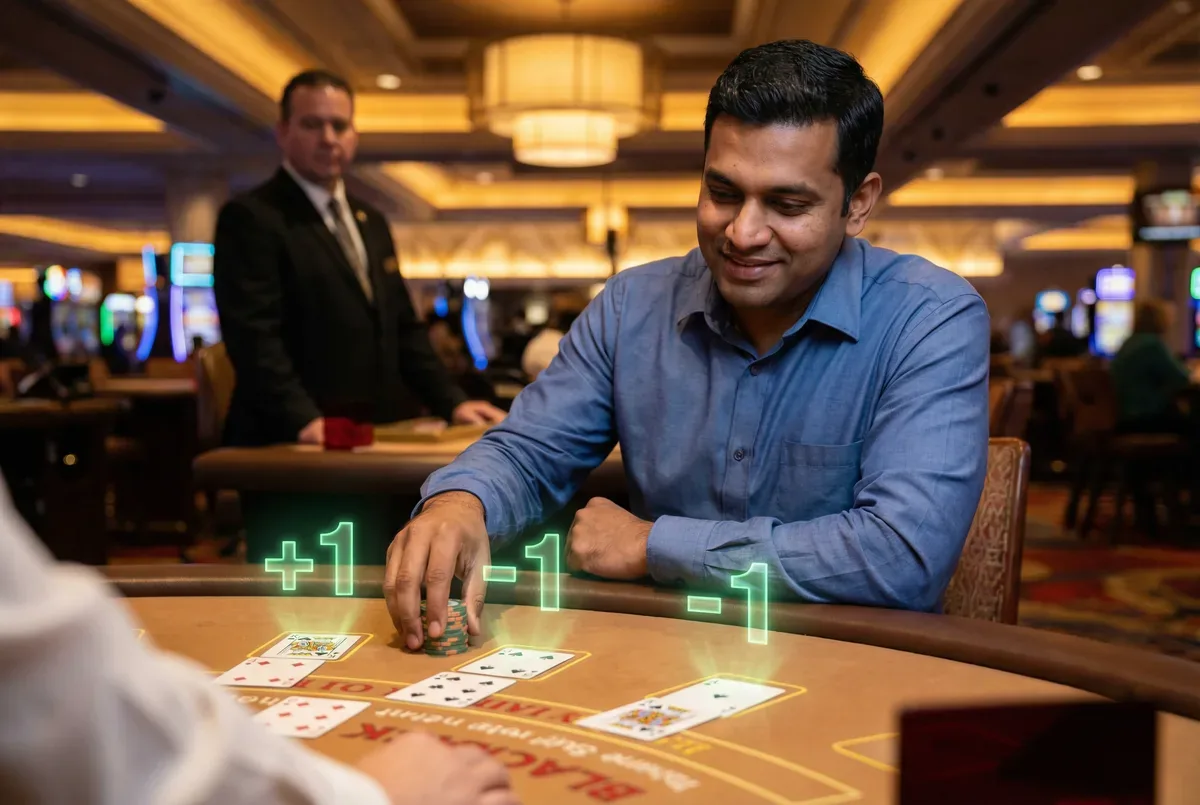
Card counting is not cheating. It involves no devices, no signals, no collusion, and no manipulation of the cards or equipment. It is a mental process tracking the composition of the remaining deck using information that is openly available to every player at the table. Courts have consistently upheld this distinction, and no US jurisdiction criminalizes counting with your memory.

Card Counting Is Legal Here Is Why
The legal framework is straightforward: cheating in Nevada is defined as using a device or technique that is not part of the ordinary game. Using your memory and performing arithmetic are part of ordinary cognition, not prohibited techniques. The Nevada Gaming Control Board and comparable regulatory bodies in other states have never classified blackjack card counting as a cheating offense. Players have faced no criminal penalties for counting with their minds alone.
Counting devices are a different matter entirely. Electronic devices that assist counting even a phone app running in your pocket are illegal in Nevada under NRS 465.075 and carry felony penalties. The law draws a clean line: your brain is legal, hardware is not. That line has remained consistent across decades of legal challenges by casinos and regulators alike.
- Legal statuscard counting is legal in all US jurisdictions
- Using only your mindprotected. Using devices: illegal in Nevada and most states.
- Casino rightprivate property can ask you to leave or restrict you
- Griffin Investigations (now defunct)shared counter database across casinos
- Back-offdealer asks you to stop playing blackjack, play other games
- Flat betcasino allows play only at table minimum (counting worthless)
- 86'dasked to leave the property entirely
- RFID chipsmodern casinos track bet patterns automatically
What Casinos Can and Cannot Do to Card Counters?
Casinos are private property. As a private business, they retain the right to refuse service to any patron for any non-discriminatory reason. Card counting is a legitimate basis for refusing service. This creates a situation where the activity is entirely legal yet can be met with restriction or removal a paradox that frustrates counters but has been upheld in every relevant court case.
The casino response follows a rough escalation ladder. The first level is a back-off: a floor supervisor or pit boss approaches and politely asks you to play other games poker, craps, slots but not blackjack. This is the most common response and the one that preserves goodwill. The second level is a flat-bet restriction: you may continue playing blackjack but only at a fixed minimum bet. This eliminates the value of counting entirely, since bet variation is how counting generates profit.
The third level is removal from the property being 86’d. The casino’s security staff will escort you out and note your information. If you return after being 86’d, you are trespassing, which is a criminal offense. Casinos occasionally share information about known counters with affiliated properties, though Griffin Investigations the industry database that systematized this practice shut down in 2005. Modern information sharing is less formalized but still occurs through industry networks.
How Casinos Detect Card Counters at the Table?
Casinos cannot see your count. They cannot read your mind or access your running total. What they can observe is your behavior, and certain behaviors are strongly correlated with counting. The most reliable detection signal is bet variation: a player who consistently bets minimum during neutral and negative shoes and escalates to large bets when the shoe turns positive is demonstrating the exact pattern that counting produces.
A second major signal is table departure at negative counts. Counters who stand up and leave whenever the count drops sharply are exhibiting a statistically improbable pattern. Recreational players do not correlate their departure timing with card distribution. When surveillance or a floor supervisor notices this correlation repeatedly, it flags the player for closer scrutiny.
Modern surveillance has added technological layers. RFID chips allow casinos to track the precise value of every bet placed at every table, automatically flagging unusual spread patterns. Software tools analyze win rates and bet sizing across thousands of hands to identify statistical outliers. A player whose results align too well with what a counter should produce winning disproportionately on large bets, losing on small bets will surface in algorithmic review even if no human noticed the tell in real time.
Common Myth
“Card counting is cheating and you can be arrested”
Movies depict counters being dragged to back rooms. The cheating framing is a casino-promoted misconception.
The Reality
Card counting is using your mind protected activity. Casinos can ask you to stop, restrict your bet size, or ban you from their property, but they cannot arrest you for counting. Only cheating devices are illegal.
Banned from casino: lose access to that venue. Arrested: impossible if using only your memory. Counter's only legal risk is trespass if they return after being 86'd.
How to Reduce Detection Risk Without Compromising the Count?
Cover play is the counter’s response to the detection problem. The goal is to produce the same betting advantages a count generates while appearing to behave like a recreational player who simply runs hot. This is a performance as much as a skill, and the counters who last longest in live casinos are the ones who blend most effectively.
Bet spread management is the first cover tool. Rather than jumping from table minimum directly to maximum bet when the count rises, spread bets gradually across two or three rounds. A move from 1 unit to 3 units to 6 units draws far less attention than a jump from 1 unit to 8 units in a single hand. The gradual spread costs a small fraction of EV but significantly reduces the behavioral signature that triggers heat.
Session length and table rotation are also valuable. Counters who stay at a single table for hours give surveillance enough data to build a pattern. Moving to different tables or different properties after an hour limits the observation window available to any single floor team. Playing across multiple visits at different times of day further dilutes the pattern in the casino’s records.
The best defense against detection is not acting like a counter. Counters get caught not because casinos see the count they can't but because counters bet large suddenly, leave tables at negative counts, or show tells under pressure. Flat betting through bad shoes, taking occasional drinks, chatting with dealers, and spreading bets gradually rather than jumping max all reduce the heat significantly. The goal is to look like a lucky recreational player, not a professional.
Playing a Counted Shoe With Full Understanding of the Risk
Every counter enters a casino knowing that their access is conditional. The legal protection is real you cannot be arrested but the social and business contract with the casino is fragile. Accepting that reality is part of the discipline. Counters who become emotional about back-offs or who argue with floor staff when restricted are compounding a business loss with a behavioral display that guarantees future heat at that property.
The practical approach treats casino access as a finite resource to be managed deliberately. You protect your edge by playing correctly. You protect your access by covering your behavior. When a casino back-off comes and it eventually will at any venue you play regularly accept it professionally, leave without incident, and move to the next property. The game is available in many places. Any single casino is replaceable.
Before walking into your first live counted shoe with real money at stake, an online live dealer table offers a lower-stakes environment to test your timing, cover behavior, and composure under genuine conditions. The live blackjack environment at count legally at a real-money live dealer game uses a real human dealer and a physical multi-deck shoe and because real money is wagered, the psychological pressure of maintaining your count while managing bets is genuine. It is not a casino floor, but it is meaningfully closer to one than any practice deck at home.
Frequently Asked Questions
No. Card counting using only your memory is legal in all US jurisdictions. Courts have upheld the distinction between mental skill and cheating devices. Only electronic counting devices are illegal in Nevada they carry felony penalties. Casinos can restrict or remove counters, but they cannot have them arrested for using their minds.
A back-off means a floor supervisor has identified you as a likely card counter and is asking you to stop playing blackjack, either permanently at that property or for the current session. The correct response is to comply without argument, leave professionally, and not return to that table or property. Arguing or returning after being 86'd risks a trespass charge.
Casinos detect counters through behavioral patterns rather than the count itself. The strongest signals are bet variation consistently low bets in neutral shoes and high bets in positive shoes and table departure correlated with negative counts. Modern casinos also use RFID chip tracking and software that analyzes bet spreads and win rates across thousands of hands automatically.
Before you test these plays at a real table, run them through our free blackjack simulator practice unlimited hands at zero cost until every move becomes automatic.
Use our free blackjack calculator to model the exact expected value for any rule combination or hand situation before you sit down.
Card Counting Does Not Eliminate Financial Risk
A positive count shifts the long-run edge in your favor but cannot prevent losing sessions. Short-term variance remains high even with a significant true count advantage. Casino access can be restricted at any time, limiting your ability to recoup losses. Always play within a bankroll you can afford to lose entirely.
Card counting is a long-run statistical advantage. It does not guarantee winning sessions or protect against short-term variance losses.

Written by
Mark AnurakProfessional card counter since 2009 · 500,000+ hands logged · Former Macau advantage player. Studied under Thorp, Griffin & Wong methodology. Full bio →
Learn More
Continue your education with these related lessons.

Don Schlesinger’s Blackjack Attack and Its Most Powerful Counting Lessons
An in-depth look at Don Schlesinger's Blackjack Attack: its contributions to card counting through the Illustrious 18, SCORE methodology, and…
How to Size Your Bets to Survive Using Risk of Ruin Calculations
Risk of ruin is the probability that variance wipes out your entire bankroll before your edge can assert itself. Learn…
The Powerful Big Player Technique for Spreading Bets Without Heat
The Big Player technique lets card counters spread bets dramatically without triggering casino heat by entering tables only at positive…