

The Complete Basic Strategy for 6-Deck Blackjack
Basic strategy is not one universal chart. It is a family of charts, each calculated for a specific set of game conditions number of decks, dealer hitting rules on soft 17, doubling restrictions, and surrender availability. The 6-deck game is the most common format in both live and online blackjack, making its chart the standard reference for most players. But the rules differ meaningfully from single-deck in ways that change the correct action on a meaningful number of hands.
Why 6-Deck Basic Strategy Differs From Single-Deck
The core difference comes from removal effects. In a single-deck game, each card dealt changes the composition of the remaining deck by a large percentage. When you hold a pair of 5s in a single-deck game, you have removed two of four 5s from the deck a 50% reduction of that rank. This shifts probabilities enough to change several strategy decisions. In a 6-deck game, removing two 5s from 24 available changes the remaining composition by only 8.3%. The per-card impact of removal is diluted, making 6-deck strategy more stable across hands but slightly less favorable on certain doubles and splits.
The practical changes from single-deck to 6-deck include: hard 9 doubles against dealer 3–6 in 6-deck (versus 2–6 in single-deck); soft 18 doubling range narrows slightly; some pair splits that are correct in single-deck become incorrect in 6-deck. The blackjack house edge with perfect 6-deck blackjack basic strategy is approximately 0.50% in S17 (dealer stands on soft 17) games and approximately 0.65% in H17 (dealer hits soft 17) games. Using a single-deck chart in a 6-deck game will cost you roughly 0.1–0.2% additional edge through incorrect decisions.
- Hard 8 and belowAlways hit.
- Hard 9Double vs dealer 3-6. Hit all others.
- Hard 10Double vs dealer 2-9. Hit vs 10 and Ace.
- Hard 11Double vs dealer 2-10. Hit vs Ace (H17 multi-deck).
- Hard 12Stand vs dealer 4-6. Hit all others.
- Hard 13-16Stand vs dealer 2-6. Hit vs dealer 7-Ace.
- Hard 17+Always stand.
What Are the Complete Hard Total Strategy for 6-Deck Games?
Hard totals are the most frequently encountered hands in blackjack and the section of the chart that applies to the largest share of decisions. A hard hand contains no Ace, or contains an Ace that must be counted as 1 to avoid busting. The 6-deck hard total chart covers totals from 8 and below through 17 and above, and the rules are internally consistent once you understand the underlying logic: stand when the dealer is likely to bust, hit when you need to improve to beat a dealer who will likely complete a high total.
Hard 8 and below: always hit. Your total is too low to stand regardless of what the dealer shows. Hard 9: double against dealer 3 through 6 the dealer’s bust probability in this range is high enough that putting two bets on the table is correct. Hit against all other dealer upcards. Hard 10: double against dealer 2 through 9. Your two-card total of 10 is an extremely strong doubling hand any 10-value card gives you 20 and the dealer can only outplay you if showing a 10 or Ace. Against those two, hit. Hard 11: double against dealer 2 through 10 in S17 games. In H17 games, the Ace becomes a hit rather than a double because the dealer’s additional hitting action increases their probability of a strong total.
Hard 12 is where new players make consistent errors. Stand against dealer 4, 5, and 6 these are the three upcards where the dealer’s bust rate is highest, making passive play more valuable than risking a bust on a hit. Against dealer 2 and 3, the bust rate drops enough that hitting hard 12 is correct despite the risk of busting. Against dealer 7 through Ace, always hit. Hard 13 through 16 follow a clean rule: stand against dealer 2 through 6, hit against dealer 7 through Ace. Hard 17 and above stands against every dealer upcard without exception the risk of busting outweighs any potential improvement.
What Are the Complete Soft Total Strategy for 6-Deck Games?
Soft totals are hands containing an Ace counted as 11. They are uniquely valuable because they cannot bust on the next card if the new card would push you over 21, the Ace reverts to 1. This characteristic makes soft hands ideal doubling candidates when the dealer is vulnerable, because you can double your bet without the risk of an immediate bust. The 6-deck soft total chart is organized by the non-Ace card and runs from soft 13 (Ace-2) through soft 19 (Ace-8).
Soft 13 and soft 14 (Ace-2 and Ace-3): double against dealer 5 and 6. Hit all other upcards. Soft 15 and soft 16 (Ace-4 and Ace-5): double against dealer 4, 5, and 6. Hit all others. Soft 17 (Ace-6): double against dealer 3 through 6. Hit all others importantly, never stand on soft 17. The dealer’s standing rule requires them to stand on hard 17 and take a card on soft 17 in H17 games, but your soft 17 is a flexible hand that should always be improved. Soft 18 (Ace-7) is the most complex soft hand: double against dealer 3 through 6, stand against dealer 2, 7, and 8, and hit against dealer 9, 10, and Ace.
Soft 19 (Ace-8) and soft 20 (Ace-9): always stand. These are strong enough totals that no action improves their expected value. Many players correctly stand on soft 20 but mistakenly try to double soft 19 in imitation of the soft 18 doubling rule do not. Soft 19 stands against all dealer upcards in 6-deck games. The soft total section of the chart is worth careful study because soft hands appear frequently and the correct actions are less intuitive than hard total rules.
- Soft 13-14 (A-2, A-3)Double vs dealer 5-6. Hit all others.
- Soft 15-16 (A-4, A-5)Double vs dealer 4-6. Hit all others.
- Soft 17 (A-6)Double vs dealer 3-6. Hit all others.
- Soft 18 (A-7)Double vs 3-6. Stand vs 2, 7, 8. Hit vs 9, 10, A.
- Soft 19+ (A-8, A-9)Always stand.
- A-AAlways split.
- 2-2 and 3-3Split vs dealer 2-7.
- 4-4Split vs dealer 5-6 with DAS only.
- 5-5Never split treat as hard 10 and double.
- 6-6Split vs dealer 2-6.
- 7-7Split vs dealer 2-7.
- 8-8Always split.
- 9-9Split vs 2-6 and 8-9. Stand vs 7, 10, Ace.
- 10-10Never split.
What Are the Complete Pair Splitting Strategy for 6-Deck Games?
Pair splitting in 6-deck blackjack follows rules that range from absolute always or never, regardless of dealer upcard to conditional, depending on what the dealer shows and whether the table allows doubling after splitting (DAS). Understanding which pairs are absolute and which are conditional is the fastest path to mastering this section of the chart.
Absolute rules first. Aces always split every 6-deck chart agrees, because starting two hands each with an Ace is more valuable than playing soft 12. 10-10 never splits a total of 20 is one of the strongest possible hands, and splitting it creates two inferior starting hands. 5-5 never splits two 5s make a hard 10, which is an excellent doubling hand. Splitting them creates two weak 5 hands. 8-8 always splits hard 16 is the worst possible hand to play, and starting two 8-hands gives you a chance to reach 18 on each.
Conditional pair rules: 2-2 and 3-3 split against dealer 2 through 7, hit against 8 through Ace. 4-4 splits only against dealer 5 and 6 when DAS is available this is one of the most rules-dependent cells in the entire chart. Without DAS, 4-4 hits against all upcards. 6-6 splits against dealer 2 through 6. 7-7 splits against dealer 2 through 7. 9-9 splits against dealer 2 through 6 and 8 through 9 stands against dealer 7, 10, and Ace. The dealer 7 exception for 9-9 surprises many players: against a dealer 7, your 18 is likely to win, so standing and keeping the sure total is better than splitting into two hands that might not reach 18.
Dealer Shows
Your Hand
Dealer shows 2. You have soft 13 (Ace-2). What does 6-deck basic strategy say?
Soft 13 (Ace-2) against dealer 2: hit. The 6-deck chart shows that soft 13 only doubles against dealer 5 and 6. Against dealer 2, 3, and 4, the dealer's bust probability is insufficient to make doubling soft 13 profitable the hand is too weak and the dealer too likely to complete a strong total. Many players double here by mistake, treating any weak dealer upcard as a doubling trigger. The doubling range for soft 13 is narrow: 5 and 6 only. Against all other upcards, hit.
Applying the 6-Deck Chart in a Live Game
The 6-deck chart covers the vast majority of online live blackjack games. Most major live dealer platforms Evolution, Playtech, Pragmatic Play Live offer standard 6-deck games with S17, DAS allowed, and late surrender on select tables. Before opening a table, confirm the rule set in the game information panel and match it to the correct chart variant. S17 (dealer stands on soft 17) is more favorable to the player and is the baseline for the 0.50% blackjack house edge figure. H17 games add approximately 0.15% to the blackjack house edge and change a small number of strategy decisions, primarily around doubling on soft totals.
The most important practical discipline when applying the chart is resisting instinct on the hands that feel wrong. Hitting hard 16 against a dealer 10 feels like an invitation to bust. Splitting 8-8 against a dealer Ace feels like throwing money away. Hitting soft 18 against a dealer Ace feels absurd when you already have 18. All three of these actions are correct in 6-deck blackjack basic strategy, and all three feel counterintuitive to players who have not internalized the underlying EV math. The chart was built specifically to override these instincts with calculated probability.
Put the complete 6-deck chart to work in real conditions at the live tables on apply this strategy at a live table tonight but go in with eyes open: real money is at stake on every decision, and a single session of deviating from blackjack basic strategy on a handful of hands can cost several times what the blackjack house edge alone would take. The chart is the floor. Play every hand to it.
Frequently Asked Questions
The house edge for a standard 6-deck game with the dealer standing on soft 17 (S17) and basic strategy played perfectly is approximately 0.50%. If the dealer hits soft 17 (H17), the house edge rises to approximately 0.65%. These figures assume standard rules: blackjack pays 3-to-2, doubling on any two cards is allowed, and splitting is permitted. Any rule restriction blackjack paying 6-to-5, no re-splitting adds to the house edge.
The most notable differences are: hard 9 doubles against dealer 3-6 in 6-deck versus dealer 2-6 in single-deck; some soft total doubling ranges narrow in 6-deck; a few pair splits that are correct in single-deck become incorrect in 6-deck. Using a single-deck chart in a 6-deck game will cost approximately 0.1-0.2% additional house edge through incorrect decisions. Always use the chart that matches the specific game you are playing.
Hit soft 18 against a dealer Ace. The dealer's probability of completing a total above 18 is high enough that standing on 18 is not the optimal play. This is one of the most counterintuitive cells in the entire chart most players instinctively stand on 18. The 6-deck chart is explicit: hit soft 18 against dealer 9, 10, and Ace. Against dealer 2, 7, and 8, stand. Against dealer 3-6, double.
Before you test these plays at a real table, run them through our free blackjack simulator practice unlimited hands at zero cost until every move becomes automatic.
Use our free blackjack calculator to model the exact expected value for any rule combination or hand situation before you sit down.
Perfect Strategy Reduces the Edge It Does Not Eliminate It
The 6-deck basic strategy chart is the best tool available for a non-counting player. At 0.50% house edge, the math still works against you over time. Treat every session budget as money you are prepared to lose completely.
Real money gambling involves financial risk. Blackjack Academy content is for educational purposes only. Never gamble with money you cannot afford to lose.

Written by
Mark AnurakProfessional card counter since 2009 · 500,000+ hands logged · Former Macau advantage player. Studied under Thorp, Griffin & Wong methodology. Full bio →
Learn More
Continue your education with these related lessons.
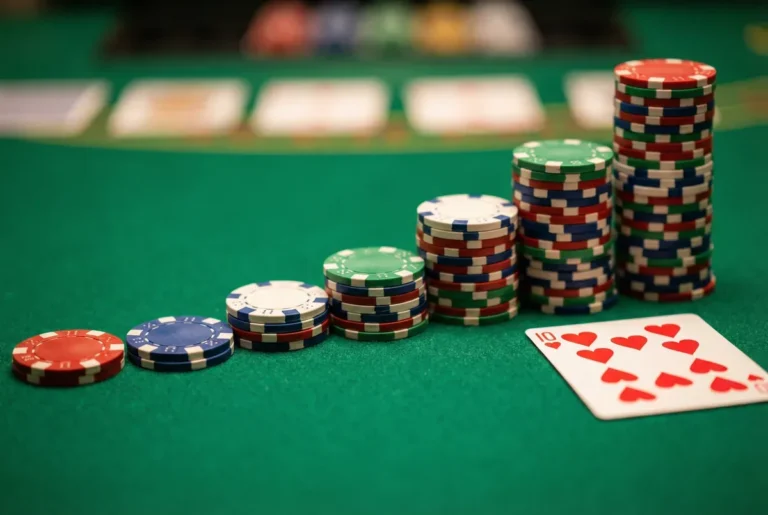
The Real Numbers Reveal Why Fibonacci Betting Loses to Basic Strategy
The Fibonacci betting system changes how much you bet not what the house edge is. Over 100,000 simulated hands, it…
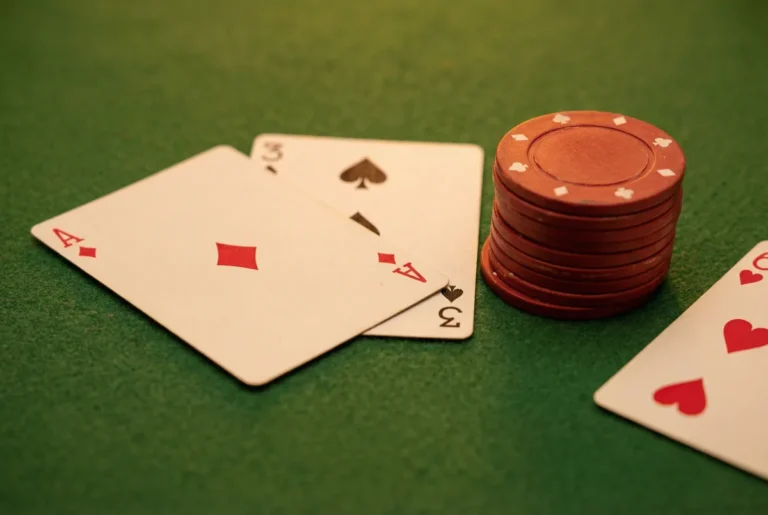
Doubling Soft 13 Through 18 Against a Dealer 5 or 6
Most players double hard 10 and 11 without hesitation but miss the six soft doubles against a dealer 5 or…
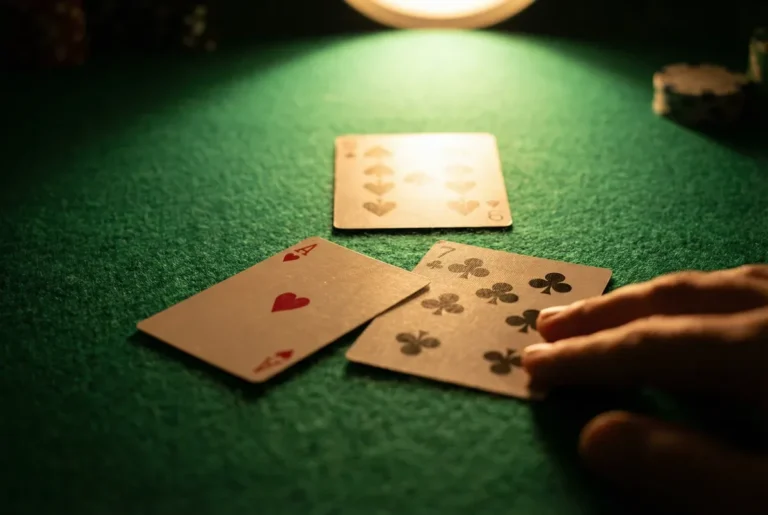
The Real Math Behind Splitting Pairs and Why It Boosts Your Edge
The EV math behind every pair splitting decision in blackjack which pairs always split, which never split, and the conditional…