
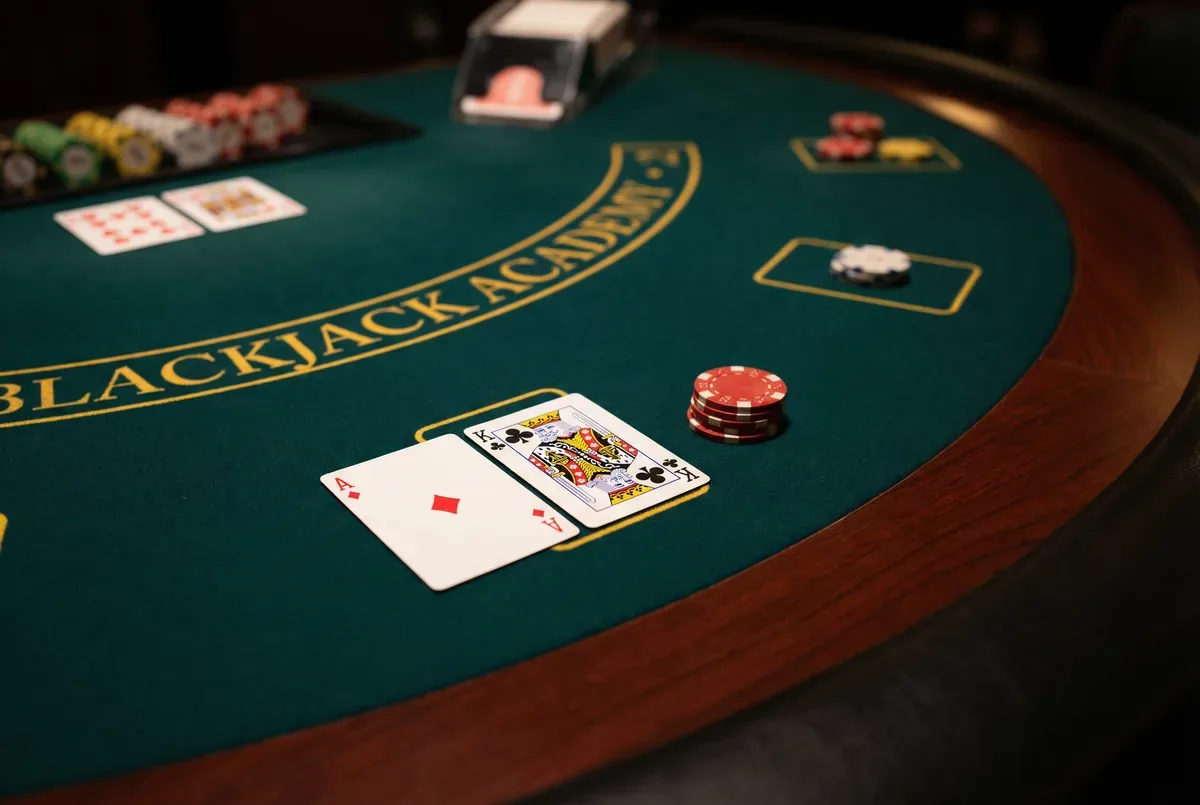
Understanding the True Cost of 6 to 5 Blackjack
The 6:5 blackjack payout is the most expensive rule variation a recreational player is likely to encounter in a modern casino. It looks minor on paper a natural blackjack pays $30 instead of $37.50 on a $25 bet. In practice, it adds 1.39 percentage points to the blackjack house edge, erasing the entire benefit of learning blackjack basic strategy and then charging an additional premium on top. No other single rule change in blackjack comes close to this level of damage to player expectation.
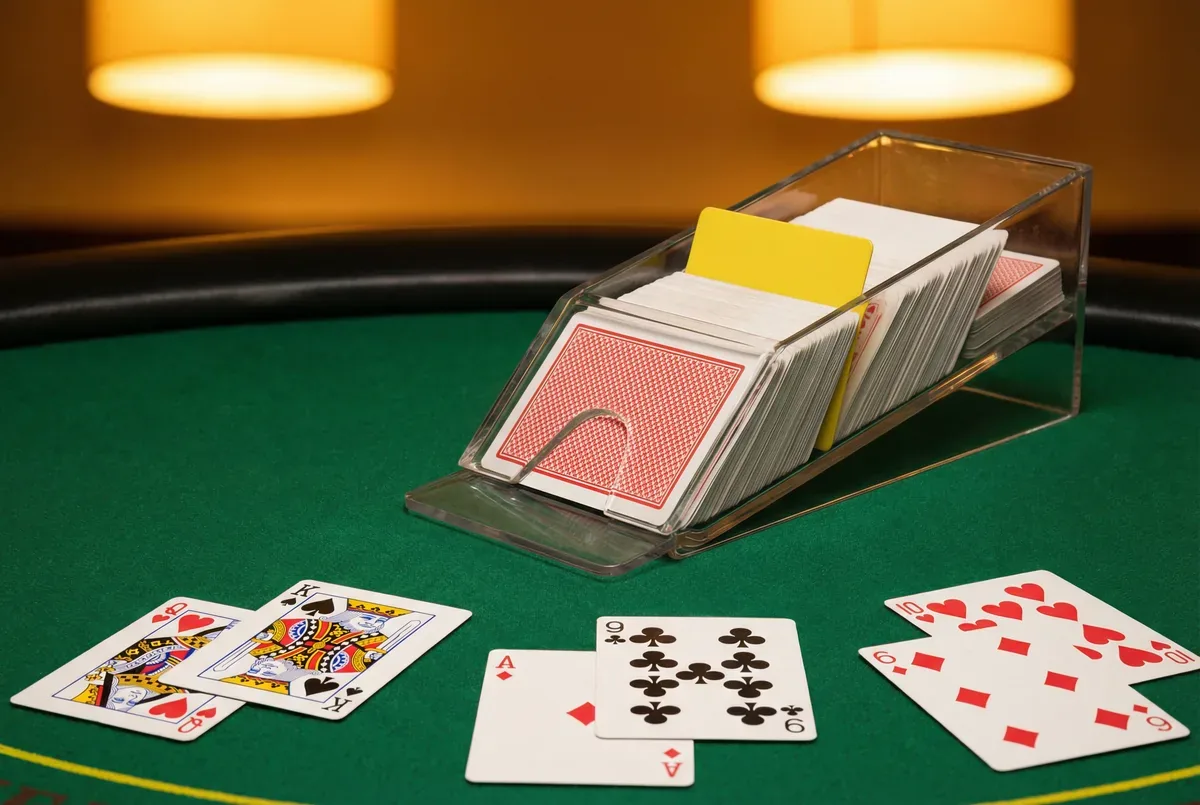
The 6:5 payout is increasingly common in single-deck games and some pitch games at major casino properties, marketed as a way to offer single-deck play while protecting the casino’s margin. Understanding exactly what that payout costs in percentage terms and in real dollars per session is the clearest argument you can make for walking past a 6:5 table without sitting down.
6:5 Payout Rule Explained
The 6:5 payout rule means that a natural blackjack an ace plus any 10-value card on the initial two-card deal pays six chips for every five wagered. At a $25 bet, that is $30. The standard payout is 3:2, meaning three chips for every two wagered $37.50 on a $25 bet. The difference per blackjack is $7.50.
Natural blackjacks occur at a frequency of approximately 4.8% of hands in a standard game. That is roughly one blackjack every 21 hands. Over an 80-hand session, a player expects to receive about four blackjacks. Each one pays $7.50 less under 6:5 rules. The cumulative session deficit from the payout rule alone is approximately $30 before any other factor enters the calculation.
The 6:5 rule is found most often on single-deck games in Las Vegas and other major casino markets. Casinos use it specifically because single-deck blackjack has favorable base rules lower blackjack house edge from reduced decks and 6:5 is the mechanism that recaptures and then amplifies that advantage for the house. It also appears occasionally on multi-deck games, though this is less common. The game type does not matter: any game paying 6:5 on blackjack is a game worth avoiding.
Common Myth
“6:5 is almost the same as 3:2 it barely matters”
Players see 6:5 and hear 3:2 and think the difference is small. At $25 bet, 3:2 pays $37.50 on blackjack; 6:5 pays $30. The difference per blackjack is $7.50.
The Reality
6:5 adds 1.39% to house edge dwarfing the combined effect of all other blackjack rule variations. Even the best 6:5 game (S17, DAS, surrender, 1 deck) has higher house edge than the worst 3:2 game.
6:5 expected loss at $25 avg, 80 hands: $38.20 vs 3:2: $10. The payout rule alone costs $28.20 more per session.
What Is 6?
The blackjack house edge penalty from 6:5 is 1.39 percentage points. This is calculated directly from the blackjack frequency and the payout differential. Blackjack occurs approximately 4.8% of the time for the player. The difference between 3:2 (1.5) and 6:5 (1.2) is 0.3 units per blackjack. Multiplying: 0.048 × 0.3 = 0.0144, or 1.44% commonly cited as 1.39% after more precise probability weighting.
To put that in context: a six-deck shoe game with standard rules (S17, DAS, no surrender) has a blackjack house edge of approximately 0.44% with perfect blackjack basic strategy. Adding 6:5 to that game takes the edge to approximately 1.83%. A game that rewarded blackjack basic strategy study with near-even play now carries an edge comparable to roulette despite using the same strategy and the same decisions.
All the rule variations players worry about H17 vs S17 (0.2%), no resplit aces (0.08%), no double after split (0.14%), single deck vs six deck combined do not approach the 1.39% cost of 6:5. It is the single most impactful rule in the game, and it flows entirely from the payout on one hand type. Basic strategy cannot compensate because it only affects how you play hands. It has no mechanism to recover money the casino takes directly from the payout structure.
| Payout | Per $25 Bet | Per 80 Hands (4 BJs avg) |
|---|---|---|
| 3 | 2 payout | |
| +$37.50 | ||
| +$150 | ||
| 3 | 2 is the standard every blackjack collects full value;6 | |
| +$30.00 | ||
| +$120 | ||
| 6 | 5 surrenders $7.50 per blackjack back to the house;Difference per blackjack | |
| -$7.50 | ||
| -$30 | ||
| Compounding over thousands of hands becomes hundreds of dollars |
How 6:5 Changes the Dollar Cost of a Real Session?
At $25 average bet over an 80-hand session, the expected loss calculation is straightforward. Under standard 3:2 rules with blackjack basic strategy (0.5% combined edge): expected loss = 0.005 × $25 × 80 = $10. Under 6:5 rules where only the payout changes: expected loss = 0.0189 × $25 × 80 = $37.80. The 6:5 rule alone increases expected session loss by approximately $28 on a modest $25 bet.
Scale to $50 average bet: 3:2 session expected loss ≈ $20. 6:5 session expected loss ≈ $75.60. The gap widens directly with bet size because the payout penalty is proportional to the wager. Higher-stakes recreational players take a larger absolute hit per session without any change in strategy or decision-making.
Over a year of monthly casino visits, each 80-hand session at $25: cumulative additional cost of 6:5 vs 3:2 = approximately $336 per year at that modest stake. This is money paid not for variance variance is symmetric and averages out but for a structural mathematical disadvantage baked into the payout structure. It never averages out. It compounds with every blackjack dealt.
Why 6:5 Tables Are Impossible to Beat With Any Strategy?
Basic strategy is the optimal response to any given hand composition given the dealer’s upcard. It minimizes the blackjack house edge derived from player decisions. But blackjack basic strategy has no control over the payout structure. When the casino pays $30 instead of $37.50 on a natural blackjack, no decision you make on any hand can recover that $7.50. It is extracted before strategy enters the equation.
Card counting also cannot rescue a 6:5 game. A card counter’s edge comes from bet spreading during high-count situations and from strategy deviations that the count enables. The highest-count situations also favor player blackjacks, which means the payout penalty is most damaging precisely when the count-based edge is most valuable. The 1.39% payout penalty reduces or eliminates the counting edge in most shoe and pitch game configurations that use 6:5.
There is no combination of surrender availability, double-after-split permissions, and resplit rules that rebuilds the 1.39% that 6:5 removes. The math is closed. A player at a 6:5 table with the best possible supporting rules still faces a higher blackjack house edge than a player at the worst 3:2 table in the casino. The payout rule is the dominant variable.
Every blackjack table in a casino has the payout printed on the felt. Before sitting, find the payout line it reads either '3 to 2' or '6 to 5'. If it reads 6 to 5, stand up. There is no strategy, no rule combination, and no session budget that makes a 6:5 game worth playing for a basic strategy player. The 1.39% penalty erases every advantage you built by learning basic strategy and then some.
Identifying the Payout Ratio Before Sitting Down
The payout ratio is printed on the blackjack table felt in virtually every casino. Look for text that reads “Blackjack pays 3 to 2” or “Blackjack pays 6 to 5.” It appears near the dealer position, often alongside other rule notices like whether the dealer hits or stands on soft 17. The text is always present because the payout is a regulated disclosure in most jurisdictions. It takes three seconds to read before sitting down.
In single-deck games, 6:5 is almost universal at major casino properties. The single-deck format is used as a marketing lure one deck sounds like player-favorable rules while the 6:5 payout neutralizes any advantage the lower deck count would provide. If you see a single-deck game, assume 6:5 until you verify otherwise. Genuine single-deck games paying 3:2 still exist but are increasingly rare and tend to carry tighter bet limits and stricter rules to compensate.
If you want to experience live blackjack before betting real money on a table you have not yet vetted for payout rules, a live dealer session online lets you confirm the payout structure in the game interface before a dollar is at risk though real money is still on the line during live dealer play, so always set a session limit before joining a table.
Frequently Asked Questions
The 6:5 payout adds 1.39 percentage points to the house edge compared to 3:2. At a $25 average bet over an 80-hand session, this translates to approximately $28 in additional expected losses. The cost scales directly with bet size. Over a year of monthly sessions, the cumulative difference at $25 average bet reaches approximately $336 in additional losses relative to a 3:2 game.
No. Card counting derives its edge from favorable counts and bet spreading. The 6:5 payout penalty is most damaging precisely during high-count situations when the player blackjack frequency increases. The 1.39% payout penalty reduces or eliminates the counting advantage in most 6:5 configurations. No counting system or strategy adjustment can recover money the casino takes directly from the payout structure.
The payout is printed on the table felt, typically near the dealer position. It reads either 'Blackjack pays 3 to 2' or 'Blackjack pays 6 to 5.' Check this before sitting down the disclosure is a standard part of table signage in regulated casinos. Single-deck games are the most common location for 6:5 rules, though it can appear on any table format.
Before you test these plays at a real table, run them through our free blackjack simulator practice unlimited hands at zero cost until every move becomes automatic.
Never Sit at a 6:5 Table
Use the Blackjack Calculator to compare house edge across different rule combinations before your next session.
Blackjack Academy is an educational resource. All expected value figures are based on mathematical modeling of standard blackjack rules. Even at 3:2 tables, the house edge means expected long-term losses for basic strategy players. Always set a session budget before wagering real money.

Written by
Mark AnurakProfessional card counter since 2009 · 500,000+ hands logged · Former Macau advantage player. Studied under Thorp, Griffin & Wong methodology. Full bio →
Learn More
Continue your education with these related lessons.
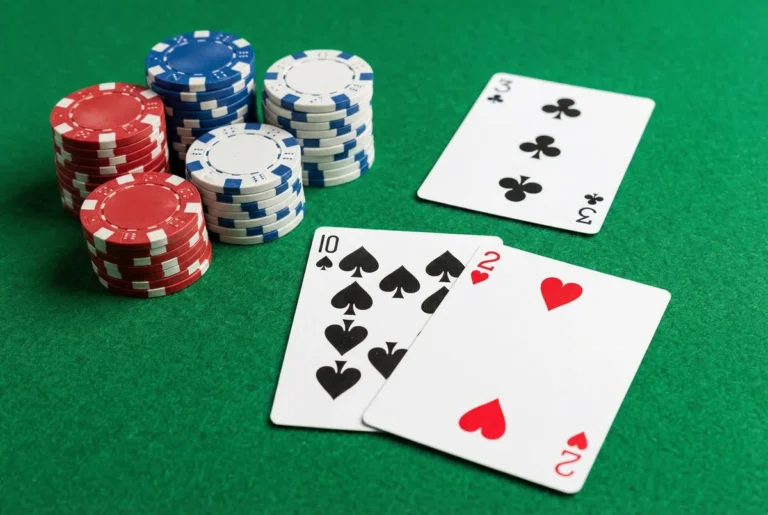
Why You Must Hit Hard 12 Against a Dealer 2 or 3
Hard 12 against a dealer 2 or 3 is the most misplayed hand in blackjack. Most players stand, but the…
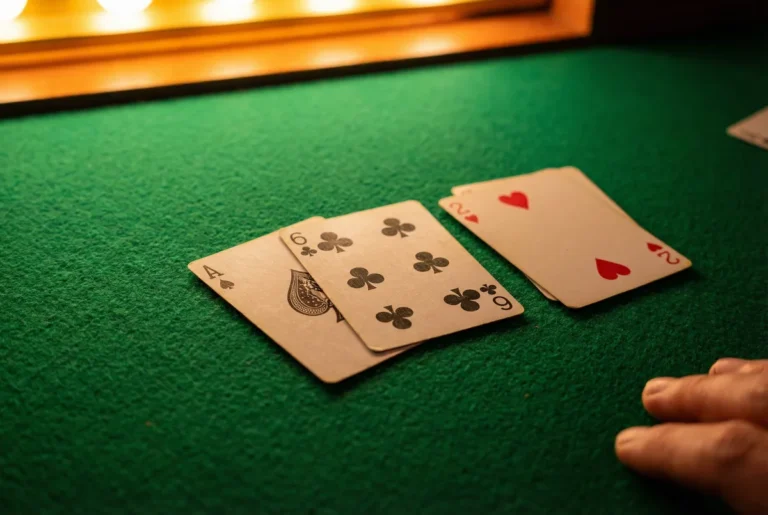
Why You Always Improve an Ace 6 by Hitting Soft 17
Soft 17 (Ace-6) is the one hand where staying put always leaves money on the table. Hitting or doubling produces…
Doubling Soft 13 Through 18 Against a Dealer 5 or 6
Most players double hard 10 and 11 without hesitation but miss the six soft doubles against a dealer 5 or…