

Proven Ways to Use a Blackjack Strategy Calculator for Perfect Accuracy
- Blackjack Strategy Calculator Actually Compute: Explained
- How to Use a Strategy Calculator to Find Optimal Play?
- How the Calculator Handles Multi-Deck Games and Rule Variations?
- What a Calculator Cannot Do and Where Human Judgment Is Still Required?
- How to Verify Calculator Results With a Live Session
A blackjack strategy calculator is not an approximation tool it is an exact computation of expected value for every possible action on every possible hand, given a specific set of rules. Input your game’s deck count, payout ratio, dealer rule, DAS availability, and surrender option, and the blackjack calculator outputs the exact blackjack house edge and the optimal decision for every player total versus every dealer upcard. No guessing about whether hard 9 doubles against dealer 2 in your specific game the blackjack calculator answers precisely, adjusted for your actual rule set. It converts what would otherwise require memorizing multiple chart variants into a single pre-session lookup.
Pro Tip
How to Use a Calculator Before Every Session
Open the calculator before you sit. Enter your game’s specific rules: deck count, payout ratio (3:2 or 6:5), dealer rule (H17 or S17), DAS, surrender availability. Read the house edge output this is your expected session loss rate. Then review any hand decisions the calculator flags as rule-dependent. These are the cells where your rule set differs from standard 6-deck basic strategy. Note them before your first hand.
Blackjack Strategy Calculator Actually Compute: Explained
A strategy calculator iterates over the complete decision tree for every hand combination under a given rule set. For each player total versus each dealer upcard, it computes the expected value of standing, hitting, doubling, splitting, and surrendering wherever each is available. It accounts for the exact number of decks (which affects hole card probabilities), the dealer rule (which affects dealer completion distributions), the DAS availability (which affects split hand EV), and surrender (which adds a -0.50 EV option for eligible hands). The output is a complete strategy matrix: the highest-EV action for every cell, and the blackjack house edge that results from applying this matrix consistently.
The calculation is deterministic it does not use random sampling or simulation. For any specific rule set, the EV values are exact within the rounding precision of floating-point arithmetic. This is why strategy calculators agree with published blackjack basic blackjack strategy charts: they are computing the same underlying probability distributions through the same mathematical methods. The chart is the output of repeated calculator runs across all rule set combinations, summarized into the format most useful for memorization and play.
How to Use a Strategy Calculator to Find Optimal Play?
The primary use case is rule-set verification: confirming that your memorized strategy is optimal for the specific game in front of you. Enter the table’s rules and compare the blackjack calculator’s output to your chart. If the outputs match, your chart is correct for this game. If they diverge on specific hands soft 19 vs dealer 6 in single-deck, for example the blackjack calculator tells you the correct action for your specific game. The divergences are typically concentrated in soft double decisions, pair splits at the edges of the range, and surrender decisions. These are the cells worth noting before your session.
The blackjack house edge output is the second primary use: knowing your expected session loss rate before placing a chip. A 0.42 percent blackjack house edge at a $25 table for 80 hands is approximately $8.40 in expected session loss. A 1.82 percent blackjack house edge at the same table is approximately $36.40. the blackjack calculator makes this calculation immediate and exact you do not need to estimate or look up tables. The number tells you whether the table is worth sitting at and what to budget for the session.
Dealer Shows
Your Hand
Dealer shows 3. You have soft 14 (Ace-3). Hit or double?
Soft 14 against dealer 3: hit. Doubling soft 14 (Ace-3) is correct against dealer 4, 5, and 6 not dealer 3. Against dealer 3, the dealer busts only 37% of the time, insufficient for the doubled wager to produce positive EV over hitting. A strategy calculator confirms this precisely: soft 14 vs dealer 3 is a hit in all standard multi-deck charts. The doubling range for Ace-3 is dealer 4-6 only.
How the Calculator Handles Multi-Deck Games and Rule Variations?
the blackjack calculator handles rule variations by adjusting the underlying probability distributions. Deck count changes the probability that any specific card appears on the next draw, which shifts EV values in composition-sensitive decisions. DAS changes the split hand EV by allowing each split hand to double increasing split equity for eligible pairs. Surrender adds a fixed -0.50 EV option that is optimal whenever the best alternative exceeds -0.50 (hard 15 and 16 against strong upcards, hard 17 against Ace). Each rule parameter adjusts a different subset of cells in the strategy matrix.
The most important rule variation for calculator accuracy is the payout ratio. A 6:5 payout adds 1.39 percent to blackjack house edge regardless of all other rules. a blackjack calculator that inputs 6:5 payout shows this cost immediately the blackjack house edge output includes the payout penalty before any strategy decision is made. A player who sees a blackjack house edge above 1.5 percent on the blackjack calculator output for a supposedly favorable game should immediately verify the payout ratio entered. The 6:5 penalty is so large it dominates all other rule factors combined.
What a Calculator Cannot Do and Where Human Judgment Is Still Required?
A strategy calculator cannot evaluate physical table conditions, observe actual game speed, or account for specific promotional rules that appear only in-house. It computes optimal strategy for a defined rule set if the rules you enter differ from the actual blackjack table rules, the output is wrong for your game. This makes pre-session rules verification critical: the blackjack calculator is only as accurate as the inputs you provide. A table with a hidden restriction (resplit limits, non-standard surrender conditions, mid-shoe entry rules) may produce a different actual blackjack house edge than the blackjack calculator output.
- 1Step 1: Open calculator before opening the live lobby
- 2Step 2: Enter deck count from the game info panel
- 3Step 3: Enter payout ratio 3:2 or 6:5 from the felt or rules
- 4Step 4: Enter dealer rule H17 or S17
- 5Step 5: Enter DAS and surrender availability
- 6Step 6: Read house edge confirm it matches your target threshold
- 7Step 7: Note any strategy divergences from your standard chart
- 8Step 8: Sit every decision already answered before first card
How to Verify Calculator Results With a Live Session
Calculator results are theory live session results are variance around that theory. The way to verify alignment is not to compare session wins and losses (variance overwhelms any meaningful comparison in the short run) but to verify that your decisions match the blackjack calculator’s optimal matrix on every hand. If your decisions match, the blackjack calculator is confirmed correct for your game. If results diverge significantly from expectation over hundreds of hands, investigate whether the rules were entered correctly. Open the live lobby now, run the blackjack calculator protocol with real game rules before placing any real money, and confirm your blackjack house edge before your first chip. Set your session budget to reflect the calculated expected loss.
Frequently Asked Questions
A strategy calculator computes the exact expected value of every action on every hand under a specific rule set, then outputs the optimal decision matrix and the resulting house edge. Input your game's deck count, payout ratio, dealer rule, DAS, and surrender options. Output: exact house edge and a rule-adjusted strategy matrix showing the correct play for every hand combination.
Yes. The calculator adjusts probability distributions for deck count (affects composition-sensitive decisions), dealer rule (affects dealer completion rates), DAS (affects split equity), surrender (adds -0.50 EV option), and payout ratio (most impactful single factor). The output strategy matrix is specific to the exact combination of rules entered.
No it complements it. Use the calculator pre-session to verify your chart is correct for the specific game and to calculate house edge. Use the strategy card or memorized chart during play. The calculator is a preparation tool; the chart is the execution tool. At the table, you cannot run calculations in real time you need the output already memorized or on the card.
Before you test these plays at a real table, run them through our free blackjack simulator practice unlimited hands at zero cost until every move becomes automatic.
Run the Calculator Before Every Session
Enter your table rules deck count, payout, dealer rule, DAS, surrender and the calculator outputs exact house edge and any rule-adjusted strategy decisions. One calculation changes every hand in the session.
Blackjack Academy is an educational resource. All strategy is based on mathematical expectation. Always play within your means.

Written by
Mark AnurakProfessional card counter since 2009 · 500,000+ hands logged · Former Macau advantage player. Studied under Thorp, Griffin & Wong methodology. Full bio →
Learn More
Continue your education with these related lessons.
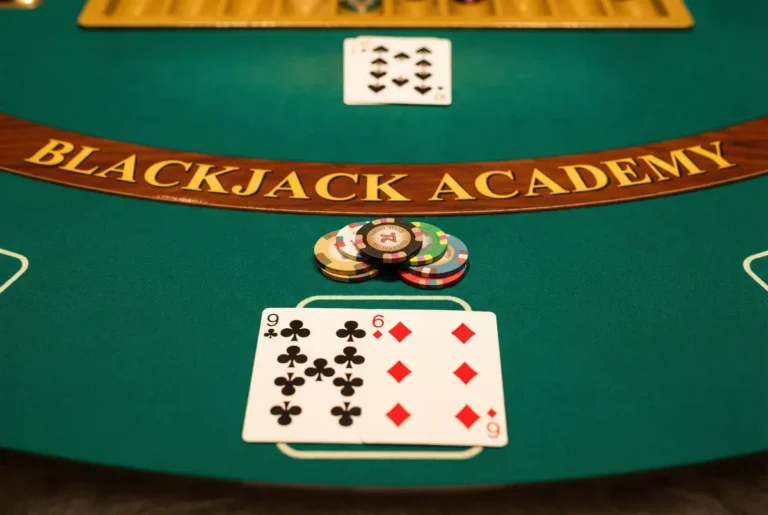
How to Minimize Losses on Hard 15 and Hard 16
Hard 15 and hard 16 are the two worst hands in basic strategy. Here is how to make every decision…
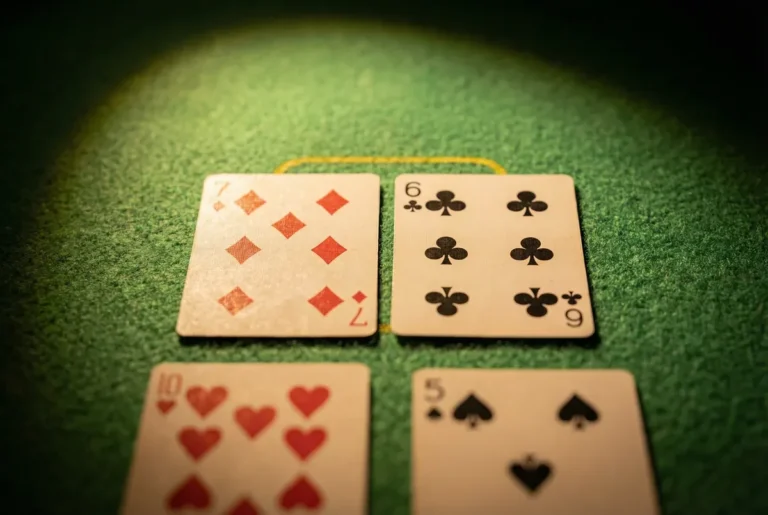
How to Memorize Basic Strategy Faster
The fastest methods for memorizing blackjack basic strategy chunking by hand category, color-coded chart technique, realistic time estimates, and practice…
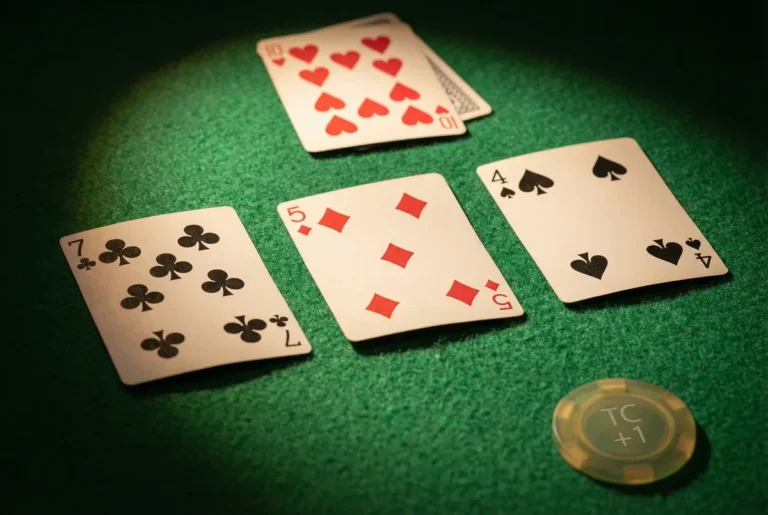
Composition-Dependent Basic Strategy and When It Gives You Real Edge
Composition-dependent basic strategy goes beyond your hand total the specific cards you hold can change the correct play. The multi-card…