Why Casinos Let You Use a Strategy Cheat Sheet at the Table
Casinos permit strategy cards at blackjack tables because the math is on their side regardless. A player with a perfect strategy card at a 0.5 percent blackjack house edge table produces approximately $0.50 in expected profit per $100 wagered for the house. A player making average errors without a card at a 2 to 3 percent blackjack house edge produces $2 to $3 per $100. The casino’s preference, all else equal, is for more hands played and a player consulting a card slows the table. But allowing it eliminates any complaint about fair play, keeps recreational players comfortable, and the blackjack house edge survives intact. Understanding why the card is allowed helps you use it without guilt and then work past it.
Note
What a Strategy Card Actually Does
A strategy card reduces your house edge to the theoretical minimum for your rule set. It does not give you an edge over the house. Blackjack with perfect strategy at a 6-deck 3:2 S17 DAS table still carries a house edge of approximately 0.42%. The card captures that edge no more. Anything left uncaptured is a strategy error or a suboptimal rule set.
Why Casinos Allow Strategy Cards at Blackjack Tables
The blackjack house edge in blackjack comes from the rules of the game, not from player ignorance. A player who uses a perfect strategy card still faces a dealer who acts after the player meaning any player bust is an automatic loss regardless of the dealer’s subsequent hand. This structural edge persists regardless of player strategy. Card counting is different: it shifts the edge to the player under certain conditions by tracking deck composition. Strategy cards do not count they only optimize decisions given incomplete information. Casinos correctly identify strategy cards as harmless to their expected revenue.
Some casinos sell laminated strategy cards in their gift shops for a few dollars. This is not altruism it is recognition that the margin is safe. A card-perfect player at a 6-deck 3:2 S17 table is still an expected losing player at $0.42 per $100 wagered. Over 80 hands at $25 per hand, the expected session loss is approximately $8.40. Without the card, the same player might lose $20 to $40 from errors. The card is worth roughly $12 to $32 per session to the player. To the casino, it costs nothing in edge only in speed of play and some minor friction from slower decisions.
How a Strategy Card Compares to Having the Full Chart Memorized?
A strategy card and a memorized chart produce identical EV when applied correctly. The difference is speed and confidence. A player consulting a card on every borderline decision takes 3 to 8 seconds per look which at a busy table creates mild social friction. A player with the chart memorized makes the same decision in under a second. The memorized chart also protects against misreading the card under pressure: a player who is tired, distracted, or in a losing session can misread a small printed card. Memorization eliminates that error mode entirely.
The practical recommendation is to use a card until the chart is memorized, then discard the card permanently. The card is a training tool, not a permanent crutch. A player who still needs to consult a card on hard 16 after 500 hands of practice has a memorization gap that practice should have closed. Use the card at the table no shame in it but treat it as a temporary aid with a deadline for retirement.
Dealer Shows
Your Hand
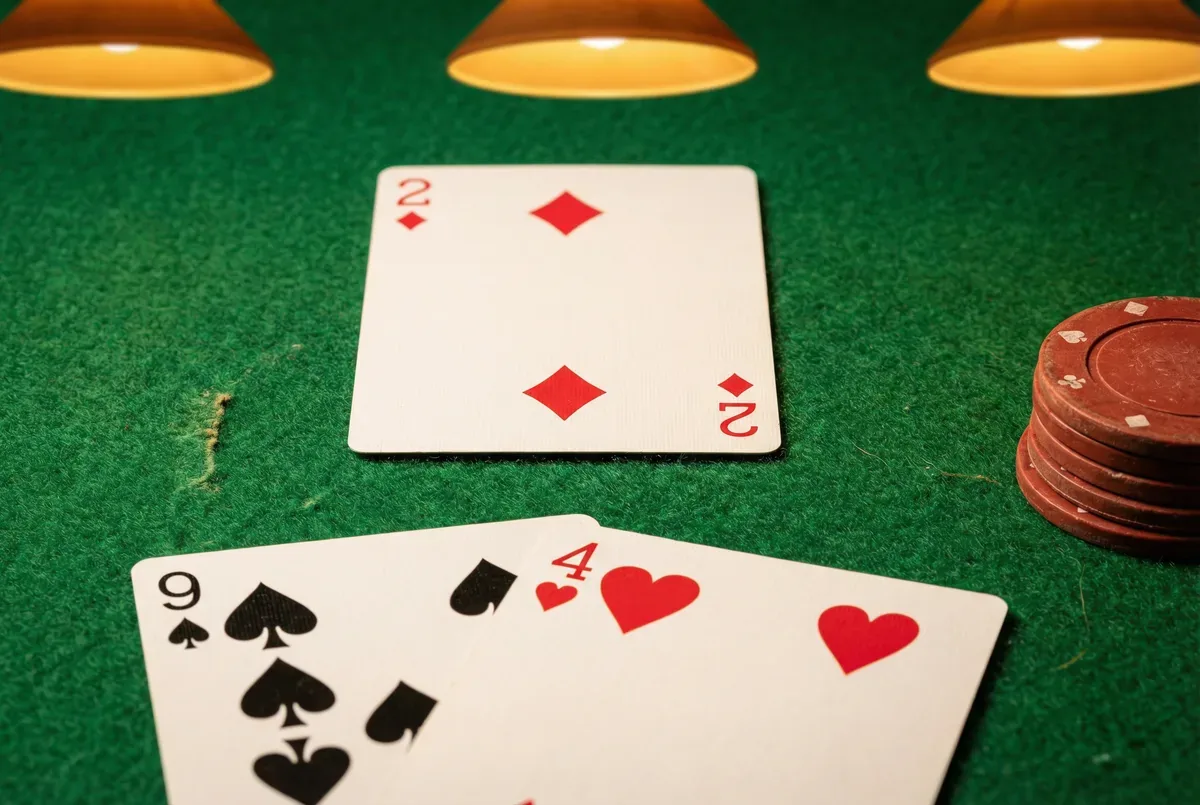
Dealer shows 9. You have soft 16 (Ace-5). Hit or double?
Soft 16 against dealer 9: hit. Doubling soft 16 is only correct against dealer 4, 5, and 6 where the dealer bust probability is high enough. Against dealer 9, the dealer completes a strong hand frequently doubling soft 16 is a loss-amplifier, not a gain-multiplier. Hit and accept the result. This is a hand worth checking on a strategy card until the pattern becomes automatic: soft doubles only against weak dealer upcards.
How to Use a Strategy Card Without Slowing the Table Down?
Pre-study is the key technique for efficient card use. Before sitting at a table, review the 15 to 20 hardest decisions from memory: hard 16 against dealer 7 through Ace, soft doubles, 7-7 and 8-8 splits against strong upcards, 9-9 splits. These are the decisions where card consultation adds the most value and the decisions most likely to generate social pressure if slowed. At the table, consult the card only when genuinely uncertain not as a ritual check on every hand. A player who consults a card on hard 19 against dealer 5 is slowing the table without benefit. Reserve card use for the genuinely ambiguous cells.
The physical form of the card matters. A small laminated pocket card that fits in one hand takes under three seconds to find and read. A phone app that requires unlocking, loading, and scrolling takes 15 to 30 seconds. Casino floors typically allow physical cards without comment; phone use may be flagged by floor staff as a potential distraction. Use the format that minimizes lookup time and eliminates friction.
What a Strategy Card Cannot Do?
A strategy card cannot evaluate blackjack table rules for you, tell you which game to sit at, or warn you about 6:5 payout tables. The card assumes you are already at a game with favorable rules. A player with a perfect strategy card at a 6:5 single-deck game still faces a blackjack house edge of approximately 1.54 percent the card cannot recover the payout disadvantage. The rules evaluation must happen before you sit. The card optimizes decisions within a given rule set; it does not compensate for a poor rule set.
- 1Free play 50 hands without card count any uncertain decisions
- 2If zero uncertain decisions: retire the card for that session
- 3If 1-3 uncertain: practice only those specific hand types
- 4If 4+: continue card use and targeted practice
- 5Target: 200 consecutive hands with zero card consultations
- 6Once reached: the chart is internalized card no longer needed
How to Graduate From Card-Dependent to Automatic Execution
Moving from card-dependent to automatic chart execution is a practice milestone, not a talent threshold. The path is targeted: identify which 10 to 15 cells require card consultation most often, practice those hand types in isolation until the response is automatic, then test across 200 free-play hands without the card. Open the live lobby and use this session to test your current memory without the card real money, $5 minimum table, 30 hands, note every moment of hesitation. Budget your session before opening the lobby. Each hesitation is a hand type to add to tomorrow’s targeted practice.
Frequently Asked Questions
Yes. Most casinos allow strategy cards at blackjack tables. Casinos permit them because basic strategy still leaves a positive house edge (approximately 0.42-0.5% at favorable tables). Using a card does not give the player an edge it only minimizes the house edge to its theoretical floor. Some casinos even sell them. Physical pocket cards are generally allowed without comment; phone apps may attract attention from floor staff.
No. A strategy card optimizes your decisions within a given rule set but does not overcome the structural house edge from dealer-acts-last rules. At a 6-deck 3:2 S17 DAS table, perfect strategy produces approximately 0.42% house edge. At a 6:5 table, no strategy card can recover the 1.39% payout penalty. The card captures the theoretical minimum edge you must first find a table with favorable rules.
Both, sequentially. Use a card at the table until the chart is internalized. A card and a memorized chart produce identical EV the difference is speed and error resistance. Set a practice milestone: 200 consecutive free-play hands with zero uncertain decisions. Once reached, retire the card. The card is a training aid with a graduation date, not a permanent solution.
Before you test these plays at a real table, run them through our free blackjack simulator practice unlimited hands at zero cost until every move becomes automatic.
Use our free blackjack calculator to model the exact expected value for any rule combination or hand situation before you sit down.
Know the Rules Before the Card Matters
A strategy card optimizes decisions but only at a table with favorable rules. The live lobby shows every table rule before you sit. Check payout, dealer rule, and DAS first. Then use the card.
Blackjack Academy is an educational resource. All strategy is based on mathematical expectation. Always play within your means.

Written by
Mark AnurakProfessional card counter since 2009 · 500,000+ hands logged · Former Macau advantage player. Studied under Thorp, Griffin & Wong methodology. Full bio →
Learn More
Continue your education with these related lessons.
Complete Late Surrender Guide for Blackjack Hands You Should Never Play
Late surrender is one of the most underused rules in blackjack. Know exactly which hands to surrender hard 16 vs…
Hitting 12 Through 16 Against a Dealer 7 Through Ace
Stiff hands against strong dealer upcards are the most painful spots in blackjack. Learn exactly when to hit 12 through…
How Much the No Double After Split Rule Costs You
Playing without Double After Split costs 0.14% of your expected edge but the real damage comes from not adjusting your…