
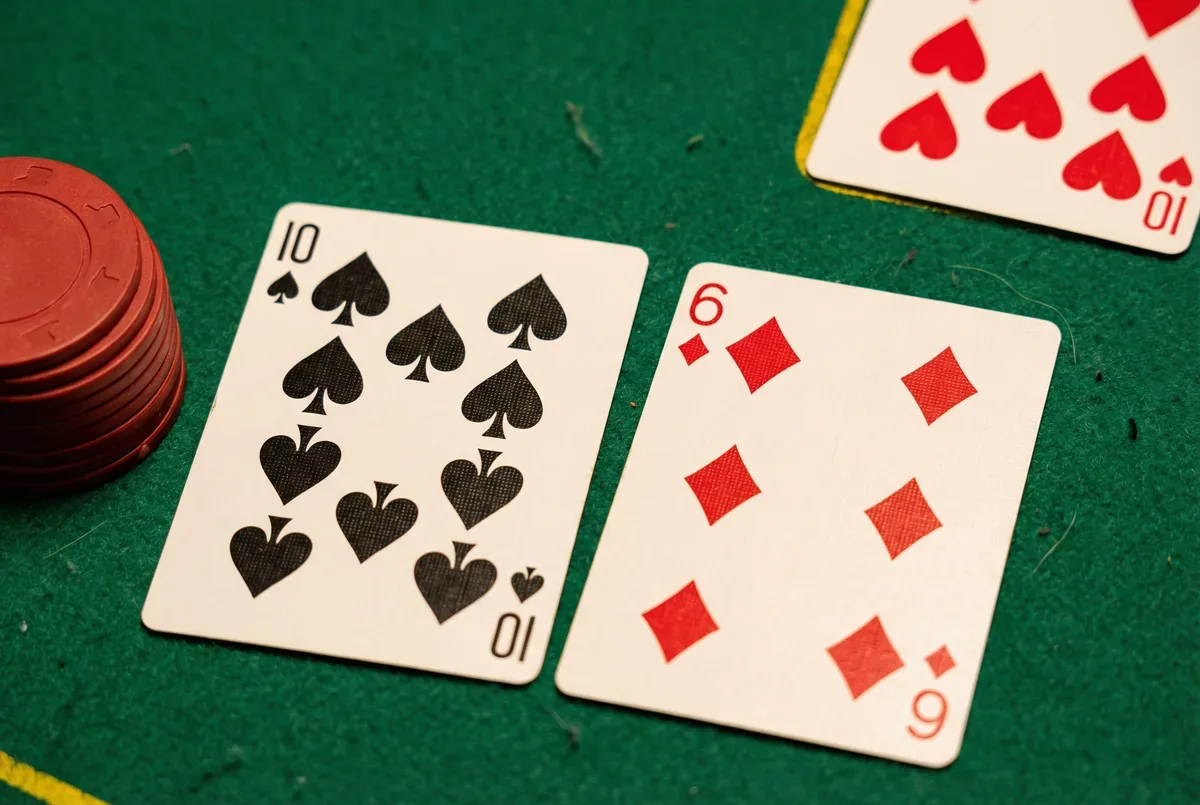
Why Hitting 16 Against a 10 Is Better Than Standing
- Exact Probabilities for Hard 16 Against Dealer 10
- When Surrender Is Available, Hard 16 Has a Better Option Than Hitting?
- Why 8-8 Against Dealer 10 Is a Split Decision, Not a Hard 16 Decision?
- What Is the Number of Cards in Your Hard 16 Change the Correct Action?
- How to Execute the Hard 16 Decision Correctly at a Live Table
Hard 16 against a dealer 10 is the hand that recreational players get wrong more often than any other and the reason is simple: it feels like two bad options with no good answer. That feeling is correct. Both hitting and standing on hard 16 produce negative expected value. The question is not whether you will win you probably won’t it is which action loses less. Hitting costs approximately 6 cents per dollar less than standing. Over a session where this hand appears five to seven times, that gap is real and quantifiable. The player who stands is not playing safe they are choosing the more expensive of two losing options.
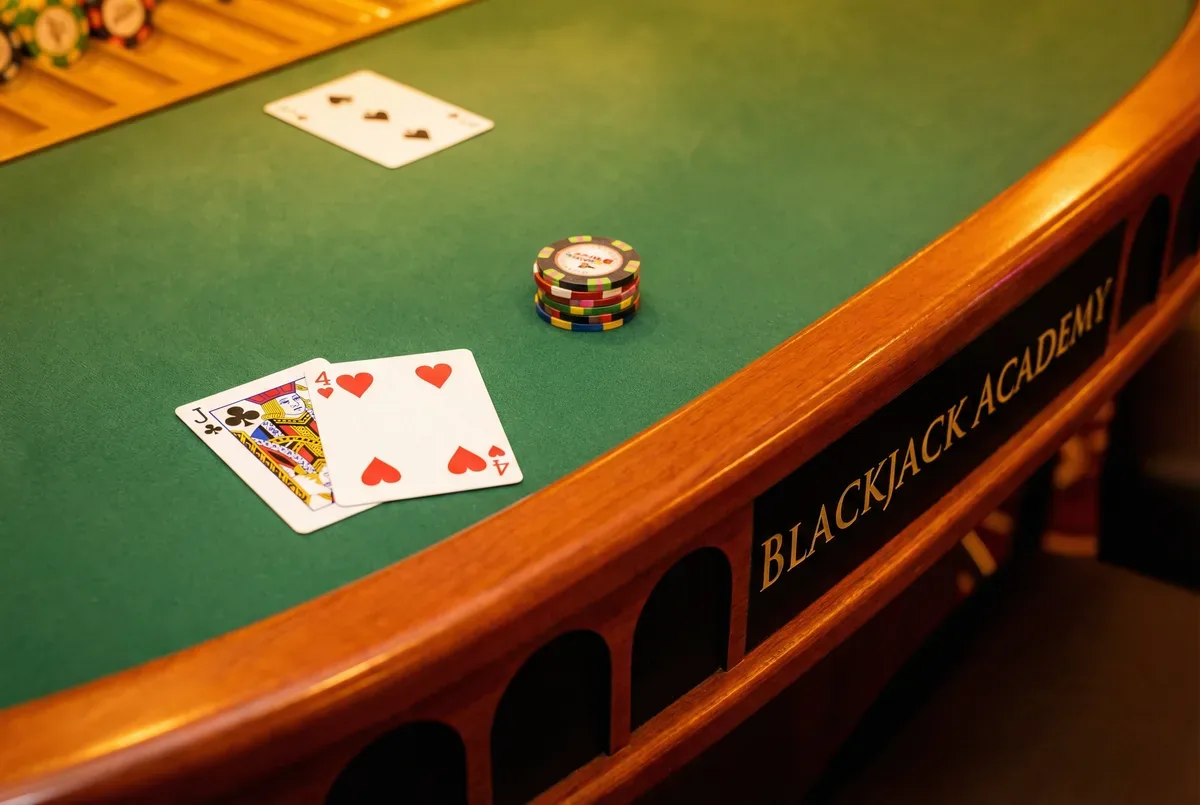
Dealer Completion Rate When Showing a 10
Dealer makes 17-21 approximately 77% of hands standing on 16 wins only from the remaining 23% (dealer bust)
Exact Probabilities for Hard 16 Against Dealer 10
When the dealer shows a 10, they make a completed hand of 17 through 21 approximately 77 percent of the time. They bust approximately 23 percent of the time. A player standing on hard 16 wins only when the dealer busts roughly 23 percent of the time. Every other outcome is a loss. Hitting hard 16 produces a different distribution: the player busts approximately 62 percent of the time. But the 38 percent of surviving hit totals 17 through 21 can beat the dealer’s completed hand, beat on the dealer’s bust, or push. That additional equity is what creates the 6-cent per dollar advantage of hitting over standing. The bust rate on hitting looks worse than it is because it ignores the equity in the surviving hands.
The EV of standing on hard 16 against dealer 10 is approximately -0.54 per dollar wagered. The EV of hitting hard 16 against dealer 10 is approximately -0.48 per dollar wagered. Neither is positive this is a losing hand regardless. But -0.48 loses approximately $1.50 less per $25 bet than -0.54. Over five occurrences per session, the hitting strategy saves approximately $7.50 in expected loss at $25 per hand. The chart doesn’t promise winning results on this hand. It promises the least bad result from the options available.
When Surrender Is Available, Hard 16 Has a Better Option Than Hitting?
Late surrender is the optimal play for hard 16 against dealer 9, 10, and Ace where available. Surrender recovers exactly 50 percent of the bet the EV is -0.50 per dollar. Hitting hard 16 against a 10 has EV of approximately -0.48. Surrendering against a 10 costs approximately 2 cents per dollar more than hitting in a multi-deck game meaning hitting is very slightly better than surrender against a 10 in standard conditions. Against dealer 9 and Ace, surrender becomes the better play by a larger margin. Always confirm whether the table offers late surrender before your first hand and confirm the correct action for each upcard separately.
Single-deck changes this calculation. In a single-deck game, hard 16 composition matters more: a three-card 16 (8-5-3, for example) changes the correct action versus a two-card 16 because the small cards removed from the deck affect the distribution of remaining cards. Composition-dependent strategy for single-deck hard 16 is a meaningful improvement over total-dependent strategy. In multi-deck games, the composition effect is negligible total-dependent strategy (hit hard 16 vs dealer 10) applies identically regardless of card composition.
Dealer Shows
Your Hand
Dealer shows 10. You have 8-8 (total 16). Split or something else?
8-8 is a pair, not a hard 16 decision split is the correct play. Two 8s against a dealer 10 is the most psychologically difficult split in basic strategy. Splitting into two separate hands starting at 8 each produces better expected value than playing hard 16. Each 8 can draw a 10 for 18, or accept a double on 9, 10, 11. Standing on 16 or hitting produces worse EV than splitting. Always split 8s regardless of the dealer's upcard.
Why 8-8 Against Dealer 10 Is a Split Decision, Not a Hard 16 Decision?
The most common confusion about hard 16 is applying the hit/stand decision to a pair of 8s. Hard 16 from two 8s is not a hitting decision it is a splitting decision. Splitting 8-8 against a dealer 10 is mathematically correct in all standard rule sets because each hand starting at 8 produces significantly better EV than playing the combined total of 16. The new totals after drawing a card to each 8 include 17 (if a 9 appears), 18 (if a 10 appears), 19 (if an Ace appears), and double-eligible totals of 9, 10, or 11. Standing on hard 16 from a pair of 8s is the most expensive mistake in pair strategy, costing approximately 10 cents per dollar versus splitting.
Pair-of-8s decisions get confused with hard 16 decisions because the total is the same. The key rule: always check whether you have a pair before applying the hard total decision. If you have 8-8, go to pair strategy split. If you have 9-7, go to hard total strategy hit. The chart uses both charts simultaneously, and mixing them is a compounding error that affects two of the most common difficult hands in the game.
You are three hands into a session at a 6-deck 3:2 table. You have lost the first two hands. Your current hand: 9 and 7 against a dealer 10. Every instinct says to protect what you have and stand the dealer has a strong card, and you don’t want to bust a third straight hand. The chart says hit. The session history is irrelevant. The deck has no memory. The EV of hitting is -0.48. The EV of standing is -0.54. The session loss doesn’t change the hand’s EV. Hit.
What Is the Number of Cards in Your Hard 16 Change the Correct Action?
In multi-deck games, no total-dependent strategy applies regardless of whether hard 16 comes from two cards or five. The composition effect is diluted across a large shoe and does not produce meaningful EV differences. In single-deck play, a multi-card 16 such as 8-5-3 or 7-5-4 changes the action in specific cases: the small cards removed from a single deck shift the remaining distribution enough that standing becomes correct on certain three-card 16 combinations. This is composition-dependent strategy, and it applies only at single-deck games. Standard multi-deck blackjack basic strategy is: hit hard 16 against dealer 7 through Ace, regardless of how many cards form the total.
The practical rule for multi-deck players: never count your cards to form a strategy decision. Hard 16 is hard 16. Two cards, three cards, four cards the total is what matters. The only variable that changes the action is the presence of surrender (changes to surrender vs Ace), the deck count (single-deck requires composition-dependent adjustment), or a pair of 8s (changes to split). All other hard 16 situations resolve identically: check for surrender, check for pair, then hit.
How to Execute the Hard 16 Decision Correctly at a Live Table
Hard 16 against a dealer 10 requires a specific mental reset before each occurrence: confirm whether you have a pair (8-8 → split), confirm whether surrender is available (surrender vs Ace; hit vs 10 in most multi-deck games), then apply the hit rule without hesitation. The hesitation is the error the moment you pause and consider the session, the previous hand, or the dealer’s apparent strength, you introduce the deviation reflex. Before your next live session with real money at stake, open the live lobby and find a table where you will practice executing this decision without pause confirm your budget first, then commit to zero hesitations on hard 16.
Frequently Asked Questions
Hit. The EV of hitting hard 16 against dealer 10 is approximately -0.48 per dollar about 6 cents per dollar better than standing at -0.54. The dealer makes a hand of 17-21 approximately 77% of the time regardless of the player's action. Standing wins only when the dealer busts (~23% of hands). Hitting provides equity from surviving totals that can beat the dealer. If the table offers late surrender, surrender against Ace is correct; hitting vs 10 is marginally better than surrendering in multi-deck.
Bust fear. Hitting hard 16 busts approximately 62% of the time, which feels like near-certain loss. Standing feels like giving yourself a chance to win if the dealer busts. The psychology reverses the correct action: standing wins only 23% of the time (dealer bust rate), while hitting creates additional equity from surviving hands. The chart corrects this perceptual error hitting is less costly than standing over any sample large enough for EV to matter.
No. 8-8 is a pair split decision, not a hard total decision. Split 8-8 against dealer 10 always. Each new hand starting at 8 produces significantly better EV than playing hard 16. The most expensive error in pair strategy is treating 8-8 as a hard 16 and standing or hitting instead of splitting. Always check for pairs first before applying hard total strategy.
Before you test these plays at a real table, run them through our free blackjack simulator practice unlimited hands at zero cost until every move becomes automatic.
Use our free blackjack calculator to model the exact expected value for any rule combination or hand situation before you sit down.
Practice the Hard 16 Decision Before It Costs You
This hand appears five to seven times per session. The difference between hitting and standing is $7-10 in expected loss at a $25 table. Run the live simulator with a set budget and commit to zero deviations on hard 16.
Blackjack Academy is an educational resource. All strategy is based on mathematical expectation. Always play within your means.

Written by
Mark AnurakProfessional card counter since 2009 · 500,000+ hands logged · Former Macau advantage player. Studied under Thorp, Griffin & Wong methodology. Full bio →
Learn More
Continue your education with these related lessons.
Hitting 12 Through 16 Against a Dealer 7 Through Ace
Stiff hands against strong dealer upcards are the most painful spots in blackjack. Learn exactly when to hit 12 through…

The Complete Basic Strategy for 6-Deck Blackjack
The complete basic strategy for 6-deck blackjack hard totals, soft totals, and pair splitting with house edge, key rules differences…

Winning More Money with 3 to 2 Payouts vs Even Money
Taking even money when you have a natural and the dealer shows an Ace feels safe but it costs you…