
Why Single Deck Strategy Is the Most Powerful Way to Play
Single-deck blackjack with optimal rules produces a blackjack house edge as low as 0.15 percent. That number requires 3:2 natural payouts, a dealer who stands on all 17s, and Double After Split. It is the thinnest edge available in any standard casino game configuration, and casinos know it. Single-deck games rarely offer all three of those conditions simultaneously they pair lower deck counts with restrictive rules to defend their hold percentage. But genuine single-deck 3:2 games exist, and players who find them and execute perfect single-deck strategy hold the best mathematical position possible at a live blackjack table.
Single-Deck House Edge (3:2, S17, DAS)
%
Edge Advantage Over 6-Deck
% better
H17 Penalty (single deck)
% added
Why Single-Deck Blackjack Have the Lowest House Edge
The blackjack house edge in blackjack falls as deck count decreases because fewer decks amplify the effect of every card dealt. When a 52-card deck loses an Ace to play, 25 percent of the deck’s Aces are gone affecting probabilities for every subsequent hand. In an 8-deck shoe, one removed Ace represents less than 3 percent of the deck’s Aces. This composition sensitivity benefits players on multiple levels: natural blackjack frequency is higher, doubling on strong totals is more reliable, and the overall distribution of outcomes shifts slightly in the player’s favor.
The single-deck edge advantage versus a 6-deck game is approximately 0.34 percent under identical rules. Add S17 versus H17 (0.22 percent), DAS (0.14 percent), and late surrender (0.08 percent), and the total rule package separates a 0.15 percent blackjack house edge game from a 2 percent blackjack house edge game entirely on paper configuration. No game on a casino floor is this sensitive to rule quality per deck count. Single-deck is the configuration where rules matter most.
How Does Strategy Decisions Are Unique to Single-Deck Play?
Single-deck strategy diverges from multi-deck in a specific set of decisions concentrated in hard doubles, soft doubles, and pair splits. Hard 8 becomes a double against dealer 5 and 6 in single-deck a hit in 6 and 8-deck games. Hard 7 against dealer 10 becomes a stand in some single-deck configurations where multi-deck strategy hits. Soft doubles expand: Ace-2 through Ace-5 gain doubling range against additional dealer upcards. Pair splits also shift: several marginal splits become correct in single-deck that are incorrect in multi-deck.
The most important concept for single-deck play is composition-dependence: because deck composition changes significantly with each hand, the correct strategy for a three-card hard 16 differs from a two-card hard 16 in single-deck. A player holding 8-8 (a pair) uses pair strategy. A player holding 9-4-3 (three cards totaling 16) should factor the removed small cards into their decision in ways multi-deck strategy ignores. Single-deck play is the context where composition-dependent strategy produces meaningful results.
Dealer Shows
Your Hand
Single-deck game. Dealer shows 6. You have hard 8 (3, 5). Double or hit?
In single-deck play, doubling hard 8 against dealer 6 is correct. Dealer 6 busts 42% of the time, and the single-deck composition effect makes the double more favorable than in multi-deck games. In a standard 6 or 8-deck game, hitting hard 8 is the correct play. Always confirm deck count before your session to use the right chart.
What Traps Do Casinos Use to Neutralize Single-Deck Advantage?
The most common single-deck trap is the 6:5 natural payout. A single-deck game that pays 6:5 instead of 3:2 converts a 0.15 percent blackjack house edge game into a 1.54 percent blackjack house edge game worse than most 6-deck 3:2 games on the floor. Casinos deploy 6:5 single-deck games precisely because recreational players see “single deck” as a signifier of quality and sit down without reading the payout ratio. The felt tells the truth: always read it first.
The second common trap is the H17 dealer rule on single-deck tables. A dealer who hits soft 17 adds 0.22 percent to blackjack house edge eliminating most of the single-deck advantage versus a 6-deck S17 game. The third trap is frequent reshuffles: some single-deck casinos shuffle after every hand or after 50 percent penetration, reducing the composition effect and eliminating counting opportunity. Check reshuffle frequency before your first hand.
How to Evaluate Whether a Single-Deck Game Is Worth Playing?
The single-deck evaluation checklist is four items: payout ratio (must be 3:2), dealer rule (S17 strongly preferred), DAS availability, and reshuffle frequency. A single-deck game that fails the payout ratio test is worse than most multi-deck games regardless of any other rule. A single-deck H17 no-DAS game is marginally better than a 6-deck H17 no-DAS game not meaningfully so. Only a single-deck game that passes all four checks delivers the full 0.15 percent blackjack house edge advantage.
On casino floors, genuine single-deck 3:2 S17 DAS games are found primarily in higher-limit areas. Some regional markets offer them at more accessible limits. Online, live-dealer single-deck games are rare and typically carry H17 and no-DAS restrictions. The evaluation takes under two minutes: read the felt, ask one question about DAS, and walk if the answer fails the checklist.
How to Execute Single-Deck Strategy at a Live Table
Single-deck strategy rewards preparation because the decisions that differ from multi-deck arise infrequently but matter in the moment. Open a live session, locate the deck count in the rules panel, and note it before placing any chip. If it is single or double deck, apply the adjusted hard-8 and soft-double rules on the hands that trigger them. Every dollar is real from the first hand set your budget before clicking in, and use the chart that matches the game you are actually playing.
Note
Single-Deck Chart Differs From Multi-Deck
If you are playing single-deck, three key adjustments apply vs your standard 6-deck chart: double hard 8 against dealer 5 and 6; expand soft double range for Ace-2 and Ace-3 against dealer 4; use composition-dependent strategy for three-card 16 hands. Using multi-deck strategy at a single-deck table leaves the additional edge unclaimed.
Frequently Asked Questions
Single-deck blackjack with optimal rules 3:2 natural payout, dealer stands on all 17s (S17), Double After Split (DAS), and late surrender produces a house edge as low as 0.15%. This is the thinnest edge available in any standard blackjack configuration. Under unfavorable rules (6:5 payout, H17), single-deck house edge can exceed 1.5%.
Key single-deck adjustments versus multi-deck: double hard 8 against dealer 5 and 6 (hit in multi-deck); expanded soft double range for Ace-2 and Ace-3 against dealer 4; composition-dependent adjustments for multi-card 16 hands. The core strategy chart all hard totals 9-11, soft 18+ standing, pair splits is largely identical across deck counts.
Only with favorable rules. A single-deck 3:2 S17 DAS game (house edge ~0.15%) is better than any multi-deck equivalent. But a single-deck 6:5 game (house edge ~1.54%) is worse than most 6-deck 3:2 games. Always evaluate payout ratio first the deck count advantage is eliminated by a 6:5 payout before any other rule is considered.
Before you test these plays at a real table, run them through our free blackjack simulator practice unlimited hands at zero cost until every move becomes automatic.
Calculate Single-Deck Edge Across Any Rule Combination
The calculator shows exact house edge for single, double, and multi-deck games with any combination of rules. Find out what your specific table is worth before you sit.
Blackjack Academy is an educational resource. All strategy is based on mathematical expectation. Always play within your means.

Written by
Mark AnurakProfessional card counter since 2009 · 500,000+ hands logged · Former Macau advantage player. Studied under Thorp, Griffin & Wong methodology. Full bio →
Learn More
Continue your education with these related lessons.
Multi Card 16 Strategy for Standing Instead of Hitting
Hard 16 against a dealer 10 is one of the most painful decisions in blackjack but most players do not…
How the Number of Decks Changes Basic Strategy
The number of decks in a blackjack game changes specific strategy decisions and the house edge itself. Here are the…
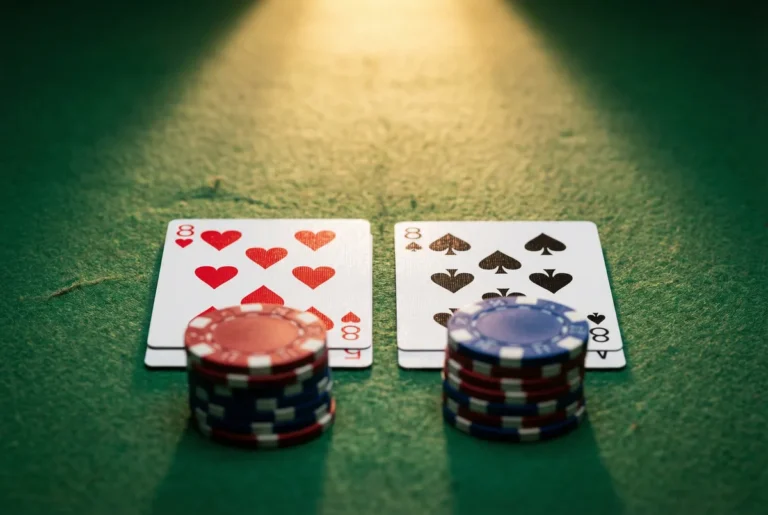
Why You Always Split Aces and 8s in Every Version of Blackjack
Splitting aces and 8s is the one pair-splitting rule that never changes. Here is the mathematical case for both unconditional…