
Early Surrender Against an Ace Is the Best Player Advantage
- Early Surrender Is Worth More Than Any Other Single Rule in a Blackjack Game
- How Much Does Early Surrender Against an Ace Reduce the House Edge?
- Which Hands Should You Surrender Against a Dealer Ace?
- How Does Early Surrender Differ from Late Surrender in Practice?
- Use the -0.50 Threshold on Every Hand Before You Act
Early surrender is the option to forfeit your hand and recover half your bet before the dealer checks their hole card for blackjack. It is available at only a small number of tables, and it is the single most valuable discretionary rule a player can find in a standard blackjack game. Against a dealer Ace it reduces house edge by approximately 0.39 percent in a 6-deck game. Against a dealer 10-value card, it adds another 0.24 percent. Most players have never sat at an early surrender table. The ones who have and failed to use it on every qualifying hand paid the same cost as never having the rule at all.
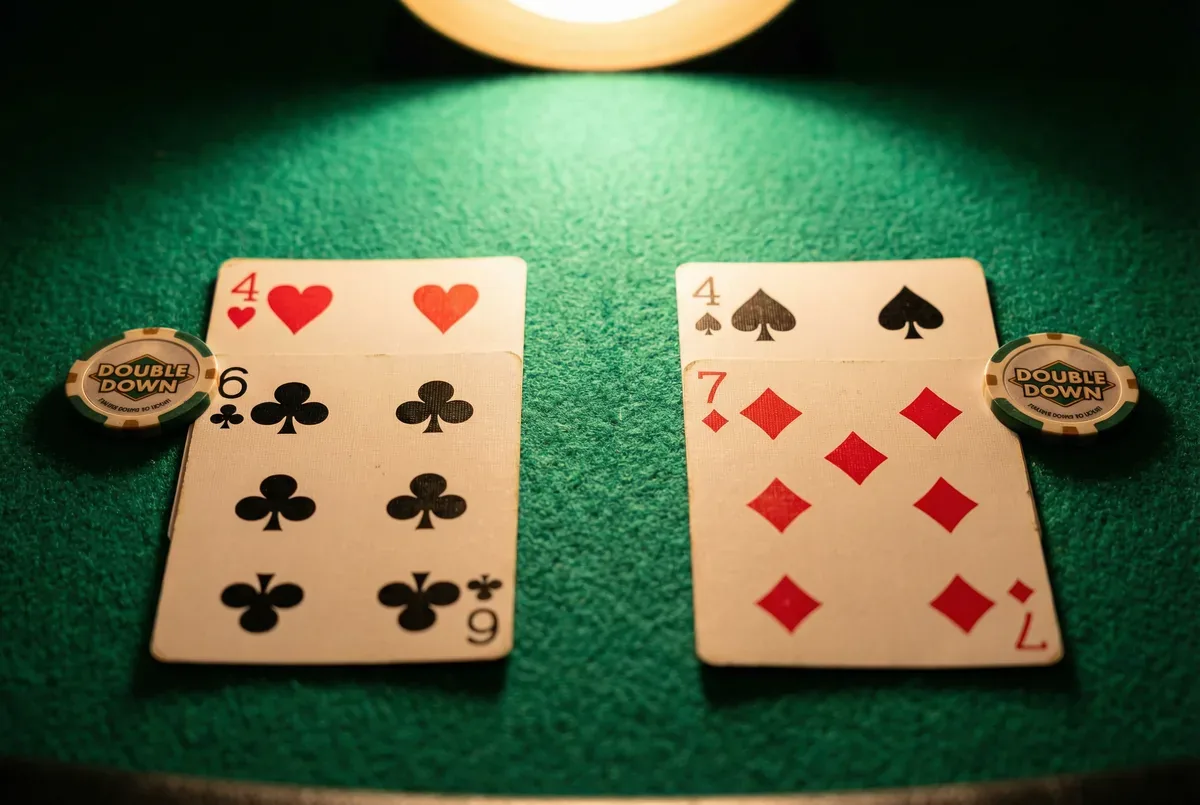
Early surrender against a dealer Ace is worth 0.39% in a 6-deck game: more than DAS (0.14%), RSA (0.06%), and the H17 vs S17 rule (0.22%) combined. The surrender threshold is simple: if the EV of your best playing option is worse than -0.50, surrender. Against a dealer Ace, hard 5-7 and hard 12-17 all clear that threshold. The -0.50 floor is the only number you need to remember.
Early Surrender Is Worth More Than Any Other Single Rule in a Blackjack Game
Early surrender lets you fold your hand and take back half your bet before the dealer checks their hole card for blackjack. This separates it from late surrender, the more common variant, which is only available after the dealer confirms no natural. The timing gap is the source of almost all the edge difference between the two rules. With early surrender, you can forfeit a hard 16 against a dealer Ace and recover half your bet even if the dealer then turns over blackjack. With late surrender, that hand is already lost before you get the option.
The power comes from the dealer’s blackjack probability. When the dealer shows an Ace, they hold blackjack approximately 30.8 percent of the time in a 6-deck game. Hard hands like 15 and 16 lose the vast majority of the remaining 69.2 percent of outcomes as well: the dealer completes a total above your standing value most of the time. Surrendering returns exactly -0.50 EV per dollar. Hitting hard 16 against a dealer Ace produces approximately -0.54 EV. Standing is worse still. Early surrender is the only play that improves the outcome.
How Much Does Early Surrender Against an Ace Reduce the House Edge?
Early surrender against a dealer Ace reduces house edge by approximately 0.39 percent in a 6-deck game: one of the highest single-rule player advantages available. Against a dealer 10-value card, early surrender adds another 0.24 percent, bringing the total early surrender value to approximately 0.63 percent in a game that offers it against both upcards. That total exceeds DAS (0.14 percent), RSA (0.06 percent), and the H17 vs S17 rule (0.22 percent) individually. Only the 3:2 vs 6:5 payout difference (1.39 percent) and single-deck versus 6-deck (approximately 0.56 percent) exceed it as a standalone rule advantage.
The 0.39 percent figure assumes perfect use on all qualifying hands. If you occasionally decline the surrender because a 16 “looks beatable,” you do not realize the full value of the rule. The math behind each surrender decision is the same: if the EV of your best playing option is worse than -0.50, surrender. Against a dealer Ace, a long list of hard totals cross that threshold.
Which Hands Should You Surrender Against a Dealer Ace?
The early surrender hands against a dealer Ace in a 6-deck game include hard 5, 6, and 7: three totals easily overlooked because they seem like they could improve with a draw. Hard 5 through 7 against a dealer Ace all have expected values worse than -0.50 under any playing option, making surrender the correct call. Hard 12 through 17 should also be surrendered against an Ace in most configurations. Hard 17, which is a standing hand against every other upcard, is surrendered against an Ace under early surrender rules because the dealer’s blackjack probability and completion strength make standing on 17 worse than -0.50 EV.
Hands that should not be surrendered against a dealer Ace: hard 8 through 11 hit or double profitably, as their EV exceeds -0.50 through drawing. Any soft hand retains the Ace buffer against busting, keeping expected values above the surrender threshold. Split 8-8 rather than surrender: the EV of splitting 8-8 versus an Ace is approximately -0.18, well above the -0.50 floor. Hard 5-7 and hard 12-17 constitute the full surrender list against a dealer Ace.
Pro Tip
Early Surrender Qualification: The -0.50 Threshold
Surrender when the EV of your best playing option is worse than -0.50 per dollar. Against dealer Ace: hard 5-7 qualify. Hard 12-17 qualify. Hard 8-11 do not: hit or double instead. Soft hands do not qualify. Split 8-8 rather than surrender. The threshold test replaces guessing and makes every early surrender decision automatic.
Dealer Shows
Your Hand
Dealer shows Ace. Early surrender available. You have a pair of 8s. Split or surrender?
Split 8-8 even against a dealer Ace, even with early surrender available. The expected value of splitting 8-8 vs Ace is approximately -0.18 per dollar: significantly better than the -0.50 floor of surrendering. Surrender is correct when the EV of the best playing option falls below -0.50. For 8-8, splitting clears that threshold comfortably.
How Does Early Surrender Differ from Late Surrender in Practice?
Late surrender, the more common rule, is only available after the dealer checks for blackjack and confirms none is present. If the dealer reveals a natural before you surrender, you lose the full bet. Late surrender is worth approximately 0.07 to 0.08 percent against a dealer Ace and 0.02 to 0.03 percent against a dealer 10. The total late surrender value is roughly 0.10 percent in a 6-deck game: valuable, but a fraction of early surrender’s 0.39 percent against the Ace alone.
When evaluating a new table, ask specifically about early surrender. Dealers will sometimes confirm surrender availability without specifying early or late: always clarify. The qualifier matters for both the edge value and the hand list. If you use the early surrender hand list at a late surrender table, you will attempt surrenders that are not permitted and miss the correct play on the hands that do qualify.
Use the -0.50 Threshold on Every Hand Before You Act
Early surrender tables are rare. Most U.S. casino floors do not offer them. Asian gaming markets, particularly Macau, have historically offered early surrender as a standard feature, which is how the rule became well-documented in blackjack strategy literature. When you encounter early surrender, confirm the exact scope: does it apply against dealer Ace only, or also against dealer 10-value cards? The answer changes both the edge value and the qualifying hand list.
Then apply the -0.50 threshold on every hand where the dealer shows an Ace. Surrender every hard 5 through 7 and hard 12 through 17 without deviation. Use the blackjack calculator to verify the EV of any borderline hand under your specific rule conditions before you sit, so the decision is already made before the cards are dealt.
Frequently Asked Questions
Early surrender is the option to forfeit your hand and receive half your bet back before the dealer checks for blackjack. It differs from late surrender, which is only available after the dealer confirms no natural. Against a dealer Ace, early surrender reduces house edge by approximately 0.39% in a 6-deck game: more than DAS, RSA, and the H17 vs S17 rule combined.
Surrender hard 5, 6, and 7, and hard 12 through 17 against a dealer Ace under early surrender rules. Do not surrender hard 8-11: hit or double those hands profitably. Do not surrender soft hands. Split 8-8 rather than surrendering: the split's EV is approximately -0.18, well above the -0.50 surrender floor.
Early surrender is available before the dealer checks for blackjack, meaning you can forfeit even if the dealer holds a natural. Late surrender is only available after the dealer confirms no blackjack. The timing difference produces dramatically different edge values: early surrender against an Ace is worth approximately 0.39%, while late surrender against an Ace is worth approximately 0.07-0.08%.
Before you test these plays at a real table, run them through our free blackjack simulator and practice unlimited hands at zero cost until every surrender decision is automatic.
Find Every Early Surrender Decision Before the Cards Are Dealt
The calculator identifies all early and late surrender thresholds by hand, dealer upcard, and deck count. Know your -0.50 threshold before you sit.
Blackjack Academy is an educational resource. All strategy is based on mathematical expectation. Always play within your means.

Written by
Mark AnurakProfessional card counter since 2009 · 500,000+ hands logged · Former Macau advantage player. Studied under Thorp, Griffin & Wong methodology. Full bio →
Learn More
Continue your education with these related lessons.
Basic Strategy for Spanish 21
Spanish 21 removes all four 10-pip cards per deck, changing dozens of strategy decisions. Here are the exact deviations from…
Why You Should Never Hit a 20 in Any Blackjack Game
Hard 20 wins 77% of the time and produces positive EV against every dealer upcard. Hitting hard 20 busts on…
Why Consistency in Strategy Is the Key to Winning
Consistency in blackjack strategy means zero deviations, every hand, every session. One gut-play decision costs a fixed EV regardless of…