
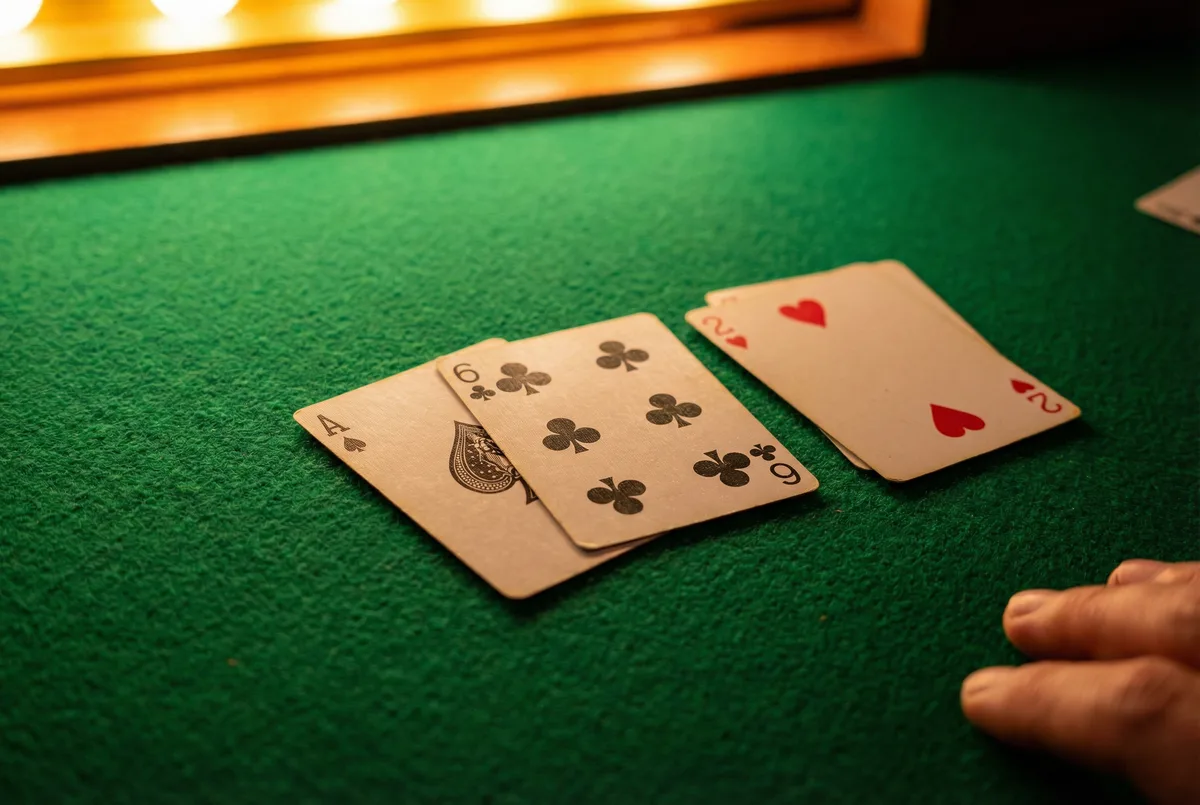
Why You Always Improve an Ace 6 by Hitting Soft 17
- Why Hitting Soft 17 Always Produce a Better Expected Value Than Standing
- How Do Dealer Upcards Make Doubling Soft 17 the Correct Play?
- What Is the Soft 17 Strategically Different From Hard 17?
- How to Execute Soft 17 Strategy Correctly at a Live Table?
- How to Build the Soft 17 Habit Through Deliberate Live Play
I used to watch a player at my regular table who would always stand on Ace-6 and look satisfied, as though 17 was a respectable total. It is not. Soft 17 is the one blackjack hand where standing is never mathematically correct in any deck count, against any dealer upcard. The reason is deceptively simple: because the Ace counts as either 1 or 11, you cannot bust by drawing one card to soft 17. Every hit either improves your total or leaves you with a hard 17 you already had. Standing on soft 17 is choosing certain mediocrity over free optionality.
Golden Rule
Soft 17 Rule: Never Stand
Ace-6 is never a standing hand. One draw can only improve it or leave it equivalent to what you had. The question is never stand vs hit it is whether to double or just hit based on the dealer upcard.
Why Hitting Soft 17 Always Produce a Better Expected Value Than Standing
When you hold Ace-6 and draw one card, the outcomes are: draw an Ace through 4 and improve to soft 18-21 (four ranks); draw a 5 and reach 12, flip the Ace to hard value, giving hard 12 (one rank); draw a 6 through 9 and reach hard 13-16 (four ranks); draw a 10-value and reach hard 17 (four ranks). The key insight is that 8 of 13 possible draw outcomes leave you equal or better than soft 17, and 5 outcomes produce a hard 12-16 that you would then play optimally.
Standing on soft 17 means you always have 17 a total that wins only when the dealer busts. Against strong dealer upcards like 9 or 10, the dealer makes 17 or higher far more often than they bust, meaning your standing 17 loses most of those hands. Hitting gives you a chance to reach 18, 19, 20, or 21, which win many of those otherwise-losing outcomes. The EV of hitting soft 17 exceeds standing by approximately $0.08 per dollar in a 6-deck game averaged across all dealer upcards.
How Do Dealer Upcards Make Doubling Soft 17 the Correct Play?
In a 6-deck game with standard rules, doubling soft 17 (Ace-6) is correct against dealer upcards 3 through 6. Against dealer 2, hitting is preferred over doubling in most multi-deck configurations. Against dealer 7 through Ace, hit without doubling the dealer’s completion probability is too high to justify the double exposure. Against dealer 3, 4, 5, or 6, the combination of dealer bust probability and the strong expected draw from Ace-6 creates positive doubling EV.
In a single-deck game, the doubling range expands slightly: some charts show doubling soft 17 against dealer 2 through 6. This is because the deck composition effect is stronger in single deck, and Ace-6 vs dealer 2 becomes a marginal double. Always match your soft doubling decisions to the specific deck count at your table the difference between 1 and 6 decks shifts some of these marginal decisions.
Dealer Shows
Your Hand
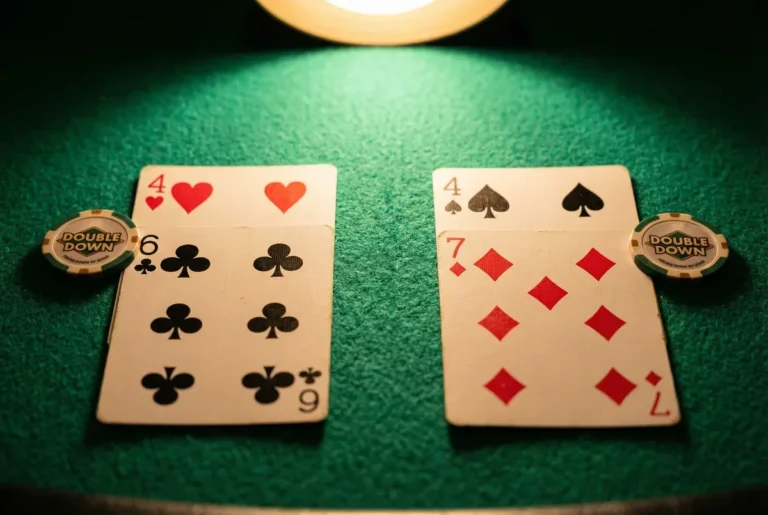
Dealer shows 4. You have soft 17 (Ace, 6). Double down?
Soft 17 vs dealer 4 is a correct double in all standard multi-deck and single-deck games. Dealer 4 busts approximately 40% of the time, and your one-card draw from A-6 can only improve or maintain your total. Never stand on soft 17.
What Is the Soft 17 Strategically Different From Hard 17?
Hard 17 is a standing hand against every dealer upcard without exception. You cannot improve hard 17 without busting any card except an Ace causes a bust (and an Ace converts it to 18, but that requires the Ace count as 1, which gives you 18 automatically that is actually an improvement). The key distinction is bust risk: hitting hard 17 busts 69 percent of the time. Hitting soft 17 cannot bust at all on the first card drawn.
This is the single most important thing to understand about soft hands: the Ace functions as insurance against busting on the draw. That insurance has value, and blackjack basic strategy exploits it fully. Players who treat soft 17 like hard 17 standing because “17 is a decent total” give up the entire advantage the Ace provides on that hand.
How to Execute Soft 17 Strategy Correctly at a Live Table?
The only time soft 17 decision-making requires real-time thought is when you need to decide between doubling and hitting against a specific dealer upcard. The framework is: dealer 3 through 6 means double. Dealer 2 means hit in most multi-deck games. Dealer 7 through Ace means hit. Against all upcards, standing is never the answer.
Players sometimes hesitate on soft 17 doubles because the hand looks like “a decent 17” and the double feels risky. It is not risk it is the chart telling you to put more money on a hand where the math favors you. I remind myself before every session that every soft double I skip because it feels uncomfortable is a concrete dollar amount left on the felt.
How to Build the Soft 17 Habit Through Deliberate Live Play
\n\n
Put soft 17 decisions under real pressure by joining a live game and tracking every Ace-6 situation for a full session. Real money is on every decision from the first chip, so set your session budget before you open the lobby and execute the chart without hesitation every time Ace-6 appears.
Frequently Asked Questions
Yes. Soft 17 (Ace-6) is never a standing hand. Drawing one card to soft 17 cannot bust the hand and can only improve it or leave it equivalent to a hard 17. Against dealer upcards 3 through 6, doubling is correct in most multi-deck games. Against all other upcards, hit.
Dealers follow fixed house rules standing on all 17s or hitting soft 17 depending on the specific casino rules. Players have no such restriction and hold a strategic advantage by acting first. Since standing on soft 17 leaves EV unrealized, basic strategy exploits the soft Ace to draw to a better total.
In a 6-deck game, hitting soft 17 improves expected value by approximately $0.08 per dollar wagered compared to standing, averaged across all dealer upcards. Against weak dealer upcards where doubling applies, the advantage of doubling versus standing is even larger approximately $0.20 per dollar in some configurations.
Before you test these plays at a real table, run them through our free blackjack simulator practice unlimited hands at zero cost until every move becomes automatic.
Model Soft 17 Decisions Across Every Dealer Upcard
The calculator shows exact EV for hit, stand, and double on Ace-6 at any deck count and rule set.
Blackjack Academy is an educational resource. All strategy is based on mathematical expectation. Always play within your means.

Written by
Mark AnurakProfessional card counter since 2009 · 500,000+ hands logged · Former Macau advantage player. Studied under Thorp, Griffin & Wong methodology. Full bio →
Learn More
Continue your education with these related lessons.
How to Reach 99.5 Percent RTP with Perfect Blackjack Strategy
99.5% RTP in blackjack requires two things: the right table rules and zero strategic errors. Most recreational players operate at…
The Real Math Behind Splitting Pairs and Why It Boosts Your Edge
The EV math behind every pair splitting decision in blackjack which pairs always split, which never split, and the conditional…
Basic Strategy for Spanish 21
Spanish 21 removes all four 10-pip cards per deck, changing dozens of strategy decisions. Here are the exact deviations from…