
Real History of Blackjack from 17th Century Spain to Today
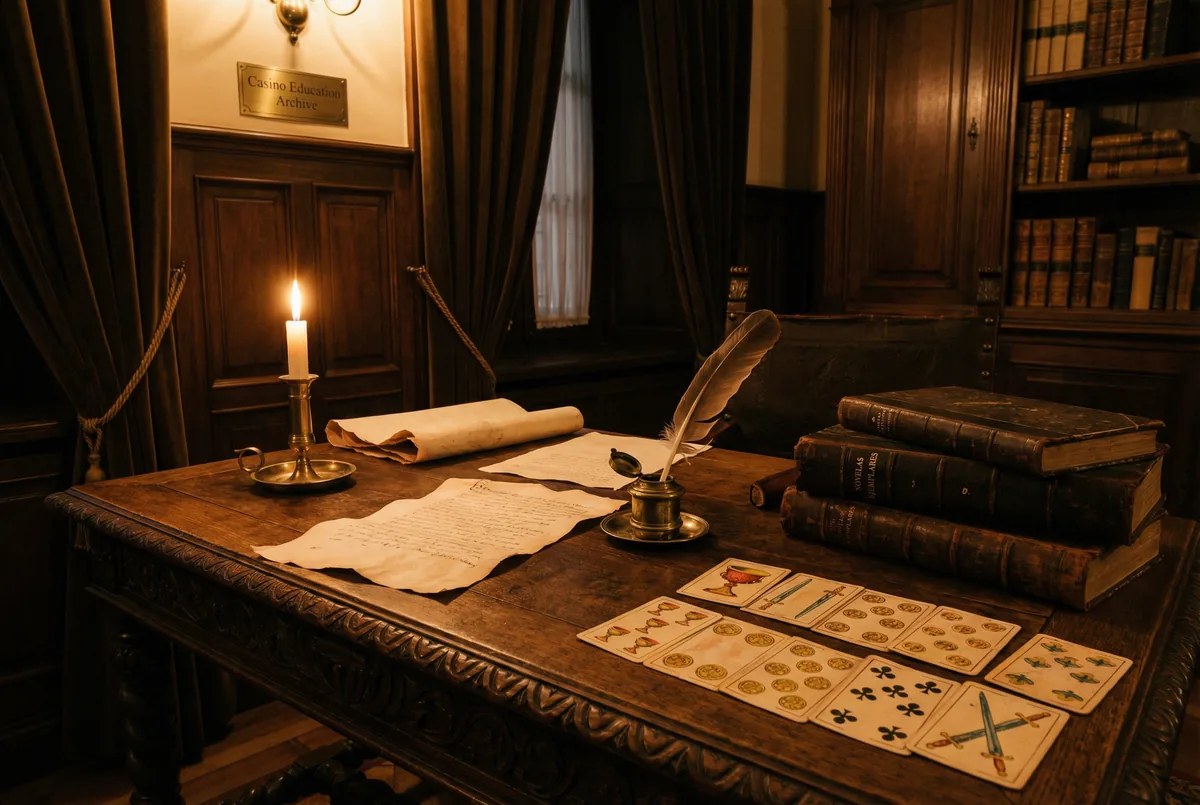
There is something I find remarkable about blackjack: the game you played last week runs on the same two mechanics a Spanish card sharp used in 1601. Ace as 1 or 11. Target of 21 without going over. Four hundred years of rule changes, name changes, and continent changes, and the core math never moved. 1601 is the earliest documented reference to a game resembling modern blackjack. Miguel de Cervantes described it in a short story called Rinconete y Cortadillo. Everything that followed, the French refinements, the American gambling houses, the bonus payout, the blackjack card counting revolution, built on that same foundation. This guide traces the full path from Spanish ventiuna to the 6-deck shoe games running on casino floors today.
Common Myth
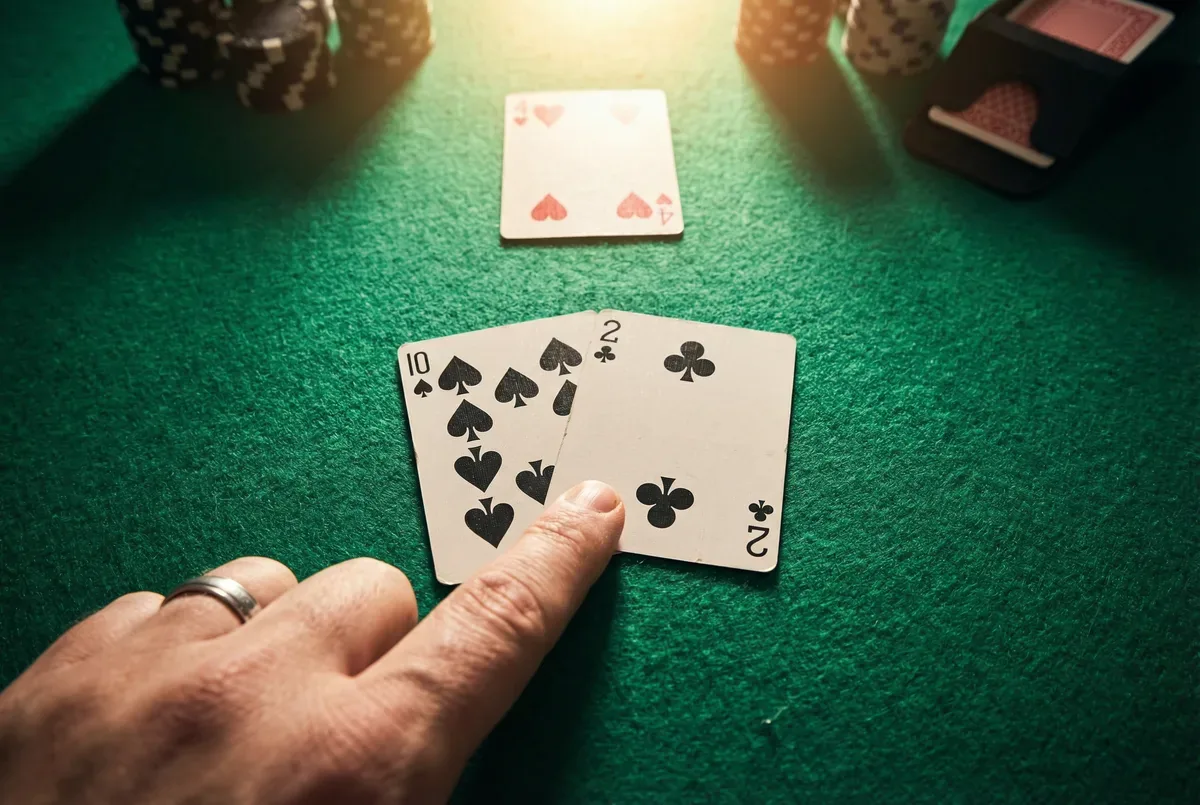
“Blackjack was invented by American casinos in the 20th century.”
The Reality
The game's core mechanics appear in Spanish literature as early as 1601. France formalized it as Vingt-et-Un in the 1700s. American gambling houses adopted it in the 1800s and the bonus payout that gave the game its current name emerged in the early 20th century.
The Spanish Origins: Ventiuna and Cervantes
Ventiuna is Spanish for twenty-one. Cervantes documented the game being played by a pair of card-sharp protagonists in Seville, describing the Ace as counting as 1 or 11 and the goal as reaching 21 without exceeding it. The mechanics match modern blackjack precisely. Historians believe the game predates Cervantes by at least a generation, placing its probable origin in late-16th-century Spain. The Spanish royal court card game Trente-un, or Thirty-one, shares ancestry, and several Italian games including Sette e Mezzo also contributed rules that evolved into the modern format.
The game spread rapidly through Spain and into the Spanish territories. By the late 1600s, versions of twenty-one appeared across Continental Europe, each country applying local rule variations. The core mechanics of Ace-as-11 and the 21-point target remained constant across all regional variants, suggesting the Spanish original was compelling enough to survive translation intact.
Blackjack: Key Historical Dates
1601
Veintiuna in Spanish literature: Miguel de Cervantes references a card game called Veintiuna in a short story, with rules nearly identical to modern blackjack, making Spain the game's earliest documented origin.
1700s
Vingt-et-Un in France: The game crosses to France as Vingt-et-Un, where it becomes a salon favorite. French rules add the concept of a banker and structured betting rounds.
1820s
First American casinos: New Orleans gambling houses introduce 21 to American players. Bonus payouts including a black Jack plus Ace hand give the game its enduring name.
1931
Nevada legalizes casino gambling: Blackjack is standardized across Nevada casinos. Basic strategy does not yet exist and the house edge is unknown to players.
1962
Ed Thorp publishes Beat the Dealer: The first mathematical proof that blackjack can be beaten using card counting triggers panic among casino operators and transforms the game permanently.
2003
MIT Blackjack Team story breaks: Bringing Down the House popularizes team card counting, leading casinos to expand surveillance and cut deck penetration further.
How Vingt-et-Un Spread Through France?
France became the primary incubator for twenty-one in the 18th century, formalizing the game as Vingt-et-Un with standardized dealer rules and a 3:2 payout for a natural Ace-and-picture-card hand. The French version, Vingt-et-Un meaning twenty-one, introduced several rules that persist in modified form today: the dealer received cards last, players acted before the dealer drew, and the dealer paid 3:2 on a natural twenty-one made with an Ace and a picture card. Napoleon Bonaparte reportedly played the game during his exile on Saint Helena, which accelerated its association with prestige and gave the French version an international reputation.
French colonists carried Vingt-et-Un to North America in the late 18th century. The game took hold in New Orleans, then the largest gambling hub in the young United States. New Orleans gambling operators modified the French rules, adjusting dealer drawing rules and payout structures to suit American table culture. By the mid-1800s, Twenty-One was the second most popular card game in American gambling establishments after poker.
Advantages
- Ace flexibility (1 or 11) already present
- 3:2 natural payout established in French version
- Dealer-acts-last rule gave structure to the game
Disadvantages
- No standardized rules across regions
- High bust risk with no surrender option
- Player could not see dealer cards in early formats
How American Gambling Houses Transform Twenty-One Into Blackjack?
The bonus payout that gave the game its current name appeared in American casinos during the early 20th century, rewarding a hand of Ace of spades plus a black Jack at enhanced odds of approximately 10:1. To attract players to twenty-one tables and differentiate the game from poker, casino operators introduced a special payout for a specific hand: an Ace of spades combined with either the Jack of spades or the Jack of clubs. This hand, the black jack, paid bonus odds. The promotion attached the name blackjack to the game itself, even though the bonus was eventually discontinued. The name outlasted the rule.
Nevada legalized casino gambling in 1931, and blackjack became the anchor table game of the Las Vegas casino floor. Standard rules emerged: 6-deck shoes, dealer hits soft 17 at most properties, player decisions fixed to the five options of today. By the 1950s, blackjack was the most widely played casino card game in America, and the conditions were in place for the mathematical revolution that would follow.
Why American Casinos Standardize the Rules They Use Today?
Nevada’s legalization of casino gambling in 1931 created competitive pressure that forced blackjack rules to converge: casinos that offered dealer-friendly rules drew fewer players than casinos with player-favorable conditions, and the market settled on a rule set that balanced blackjack house edge against player appeal. Before regulation, each gambling establishment set its own rules. After 1931, licensed Nevada casinos operated under public scrutiny and competed for the same pool of players on the same street.
The competitive pressure drove casinos toward the 3:2 natural payout and the S17 standing rule (dealer stands on all 17s) as table stakes for attracting serious players. A table that paid 1:1 on naturals or allowed the dealer to draw past 17 would empty out while the favorable table down the block filled. The 6-deck shoe became the mechanical standard by the late 1950s, driven not by fairness but by speed and card counter countermeasures.
The rule set that emerged from Nevada’s competitive casino market in the 1930s through 1950s is essentially the game you play today. Dealers hit to 16 and stand on 17. Players can double and split. Naturals pay 3:2. Those rules survived because they attracted players reliably. Modern casinos that deviate from them, particularly with 6:5 natural payouts, are exploiting the brand recognition the original rule set built over 90 years.
The Card Counting Revolution and the Modern Game
In 1956, four US Army mathematicians: Roger Baldwin, Wilbert Cantey, Herbert Maisel, and James McDermott, published a paper in the Journal of the American Statistical Association containing the first mathematically correct blackjack strategy. I keep a copy of that paper. It is the foundation everything I teach is built on. The paper reduced the blackjack house edge to under 0.5% for the first time in documented history. Six years later, MIT mathematics professor Edward Thorp published Beat the Dealer, the first book proving that blackjack could be beaten over time through blackjack card counting. Thorp’s book sold 700,000 copies and sent casinos scrambling to add decks, cut cards deeper into shoes, and develop countermeasures that remain standard today.
Four hundred years of rule evolution condensed into one blackjack basic blackjack strategy chart you can pull up on your phone. I find that remarkable. The math Baldwin’s team published in 1956 still works today, hand for hand. Whenever you are ready, bring 300 years of blackjack history to a real-money table and test that strategy the way Thorp’s students tested it: one hand at a time, following the chart, watching the math play out. The stakes are real from the first deal, so decide your session spend before clicking in.
Frequently Asked Questions
The earliest documented reference to a blackjack-like game appears in Spanish literature in 1601. Miguel de Cervantes described a card game called ventiuna with an Ace worth 1 or 11 and a 21-point target. The game traveled through France as Vingt-et-Un before reaching American gambling houses in the 1800s. The name blackjack emerged from a promotional bonus payout in early 20th-century American casinos.
American casinos introduced a special bonus payout for a specific hand: an Ace of spades paired with the Jack of spades or Jack of clubs. That hand was called the black jack and paid enhanced odds to attract players to twenty-one tables. The promotion was eventually discontinued but the name stuck, replacing the original twenty-one and Vingt-et-Un names entirely.
Edward Thorp, an MIT mathematics professor, published the first publicly accessible card counting system in his 1962 book Beat the Dealer. The mathematical foundation was laid earlier by Baldwin, Cantey, Maisel, and McDermott in a 1956 academic paper establishing optimal basic strategy. Thorp built on their work to demonstrate that tracking card ratios could shift the edge to the player.
Before you test these plays at a real table, run them through our free blackjack simulator practice unlimited hands at zero cost until every move becomes automatic.
Know Your Edge Before You Bet
The calculator shows the correct play for any hand total against any dealer upcard under your exact table rules.
Blackjack Academy is an educational resource. All strategy is based on mathematical expectation. Always play within your means.

Written by
Mark AnurakProfessional card counter since 2009 · 500,000+ hands logged · Former Macau advantage player. Studied under Thorp, Griffin & Wong methodology. Full bio →
Learn More
Continue your education with these related lessons.
Best Times to Split Pairs in Blackjack to Double Your Profit
Splitting pairs in blackjack follows strict rules. Aces and 8s are always split. 10s and 5s are never split. Every…
Why the Name Changed from Vingt-Un to Blackjack in the Gold Rush
The name blackjack is less than 120 years old. The game it describes had been played for over 300 years…
5 Major Differences Between Casino Blackjack Rules and Home Games
Home blackjack and casino blackjack look like the same game. They are not. The dealer rules, the payouts, the deck…