
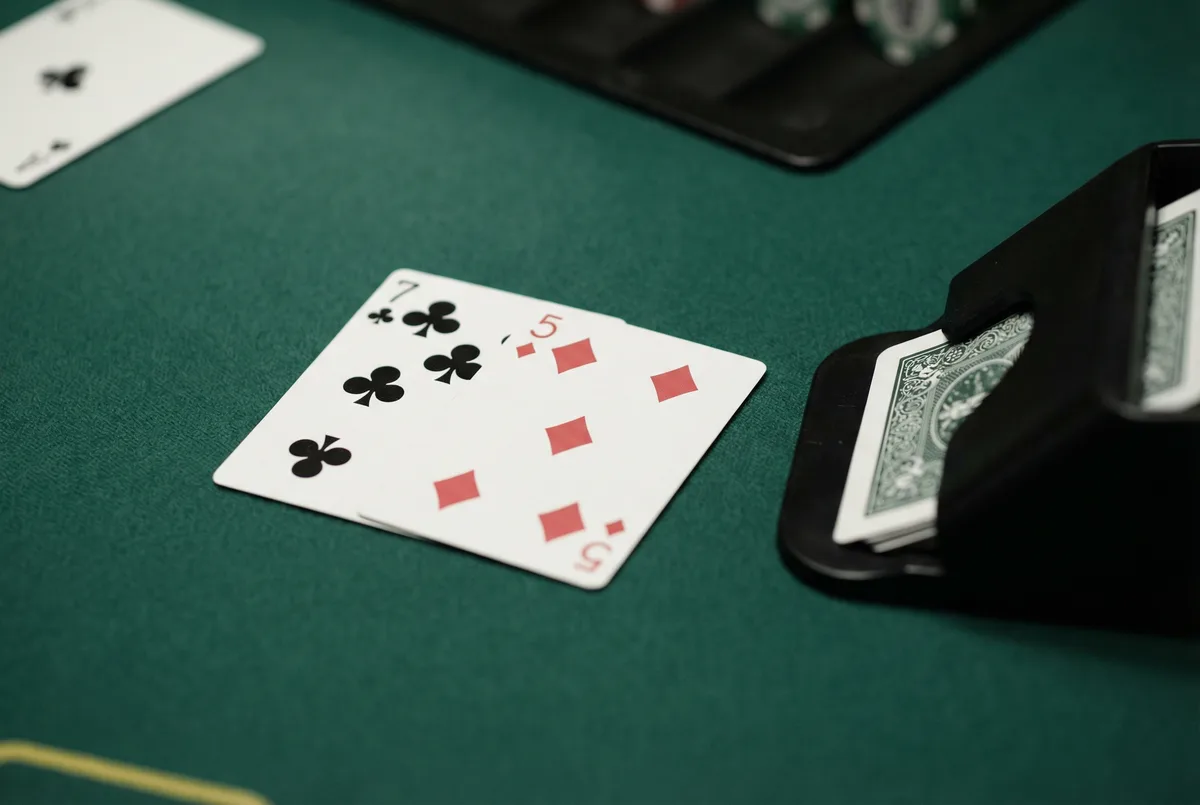
Probability of Busting on a 12 and Other Hand Statistics
Most players think standing on 12 is the conservative play. It is not. Standing on hard 12 against a dealer 7 through Ace is the high-risk play, because you are handing the dealer a one-card winning advantage while surviving a threat that only materializes 31 percent of the time. The probability of busting when you hit a hard 12 is exactly 31 percent four 10-value cards out of 13 possible card values. You survive 69 percent of the time. The question is never whether you might bust. The question is whether the expected value of hitting beats the expected value of standing given the dealer’s upcard.

Bust Probability Explained
Bust probability when hitting a hard total is the fraction of card values that would push your hand over 21. For a hard 12, the busting cards are any 10-value card 10, Jack, Queen, King. That is 4 card values out of 13 possible card values, giving a probability of 4 divided by 13, which equals 30.77 percent. Each one-point increase in your total adds one more busting card to the list.
For a hard 13, you bust with a 9 through King five card values out of 13, or 38.5 percent. Hard 14 adds the 8, giving six values or 46.2 percent. By the time you reach hard 16, eight of 13 possible cards bust you, putting the probability at 61.5 percent. Hard 17 busts with 9 through King nine values out of 13 so 69.2 percent of cards drawn cause a bust. These are exact fractions assuming an infinite deck, and they hold closely in 6-deck games.
Why Basic Strategy Ignore Bust Probability and Focus on Expected Value?
Basic strategy does not minimize bust probability it maximizes expected value. These are different objectives that often produce opposite actions. Standing on hard 16 against a dealer 7 feels safe because you cannot bust. But the dealer, starting from 7, completes a final total of 17 through 21 approximately 74 percent of the time. Standing on 16 means you lose all 74 percent of those outcomes plus ties. Hitting, even with a 61.5 percent bust rate, produces better EV because the times you do not bust, you frequently reach totals that beat the dealer.
The EV of hitting hard 16 against a dealer 7 is approximately -0.41 per dollar wagered. The EV of standing is approximately -0.48 per dollar wagered. Hitting is less negative by 0.07 per dollar roughly $1.75 per hand at $25 over the long run. Bust fear pushes players toward standing, which is the higher-EV-loss option. The math runs in the opposite direction of intuition.
Dealer Shows
Your Hand
Dealer shows 7. Three-card hard 12 (3, 3, 6). Hit?
Against dealer 7 through Ace, always hit hard 12. The 31% bust risk is outweighed by the dealer's strong completion probability. Standing on 12 vs dealer 7 means you lose every time the dealer makes 17-21 approximately 74% of hands.
How to Use Bust Statistics to Make Correct Standing Decisions?
Bust statistics are most useful when paired with dealer completion probabilities. Against a weak dealer upcard 4, 5, or 6 the dealer busts approximately 40 to 42 percent of the time. When the dealer busts, you win any hand you did not bust, regardless of your total. This is why the correct play on hard 12 through 16 against a dealer 4, 5, or 6 is often to stand: you do not need to improve your hand because the dealer is likely to self-destruct.
Against a strong dealer upcard 7, 8, 9, 10, or Ace the dealer completes a strong total far more often. Standing on 12 through 16 means you lose whenever the dealer makes any total between 17 and 21. In those situations, hitting despite the bust probability is the higher-EV play, because the alternative is near-certain loss. The bust statistics confirm the strategy rather than contradict it.
- 1Flash a hard 12 recall bust probability: 31%
- 2Flash a hard 14 recall bust probability: 46%
- 3Flash a hard 16 recall bust probability: 62%
- 4Practice: dealer 4 to 6 upcard = stand on 12 to 16
- 5Practice: dealer 7 to Ace upcard = hit 12 to 16
What Are the Most Common Busting Mistakes at the Blackjack Table?
The most expensive bust-related error is standing on 15 or 16 against a dealer 7 through Ace because the player fears busting. This happens regularly at every table I have ever sat at. The EV cost of standing on 16 against a dealer 10 is approximately $0.06 per dollar more than hitting. At $25 over 80 hands, with hard 16 vs dealer 10 appearing roughly five times per session, that error costs about $7.50 in additional expected loss every time you play.
The second most common error is hitting hard 15 or 16 against a dealer 4 or 5 the mirror mistake. Players hit because they want to improve a bad hand, not realizing that the weak dealer upcard is doing the work for them. Standing is correct against dealer 4, 5, and 6 for hard 12 through 16, and each deviation into hitting costs measurable EV.
How to Apply Bust Probability Knowledge in Live Table Situations
Bust statistics are academic until you apply them under pressure at a real table. Open a live session and count every time you face hard 12 through 16 note the upcard, recall the correct play, and execute it. The money is real from the first hand, so set your session limit before you click deal and let the math do the work.
Frequently Asked Questions
The probability of busting when you hit a hard 12 is 30.8%, or 4 out of 13 possible card values. Only 10-value cards (10, Jack, Queen, King) cause a bust. You survive 69.2% of the time, which is why hitting hard 12 against a strong dealer upcard produces better expected value than standing.
No. The probability of busting hard 16 is 61.5%, but standing against a strong dealer upcard (7 through Ace) is the worse play by expected value. The dealer makes a final total of 17 to 21 approximately 74% of the time when showing a 7. Standing on 16 means you lose all those hands plus ties. Hitting reduces expected loss despite the high bust rate.
The most useful numbers are hard 12 (31% bust), hard 16 (62% bust), and the dealer upcard breakpoints. Dealer 4, 5, 6 bust 40 to 42% of the time stand on 12 to 16. Dealer 7 through Ace completes 17 to 21 around 74% of the time hit 12 to 16 and accept the bust risk.
Before you test these plays at a real table, run them through our free blackjack simulator practice unlimited hands at zero cost until every move becomes automatic.
Calculate EV for Any Hard Total Decision
Enter your hand, dealer upcard, and deck count. The calculator shows the exact expected value of hit vs stand before you decide.
Blackjack Academy is an educational resource. All strategy is based on mathematical expectation. Always play within your means.

Written by
Mark AnurakProfessional card counter since 2009 · 500,000+ hands logged · Former Macau advantage player. Studied under Thorp, Griffin & Wong methodology. Full bio →
Learn More
Continue your education with these related lessons.
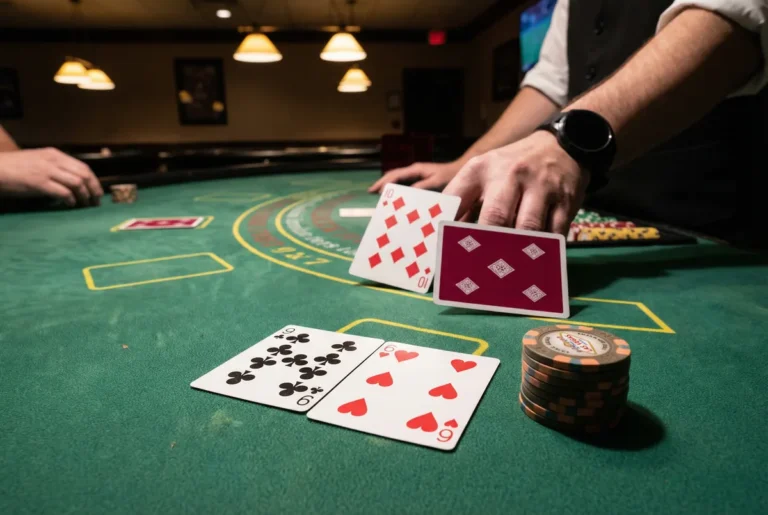
The Bust Probability of Every Dealer Upcard
Dealer bust percentages for every upcard 2 through Ace exact numbers, what drives them, and how they determine every stand/hit/double…
The Soft 17 Rule: How One Dealer Decision Costs You 0.22%
One rule printed at the felt. One number that silently inflates the house edge by 0.22%. Here's the complete mathematical…
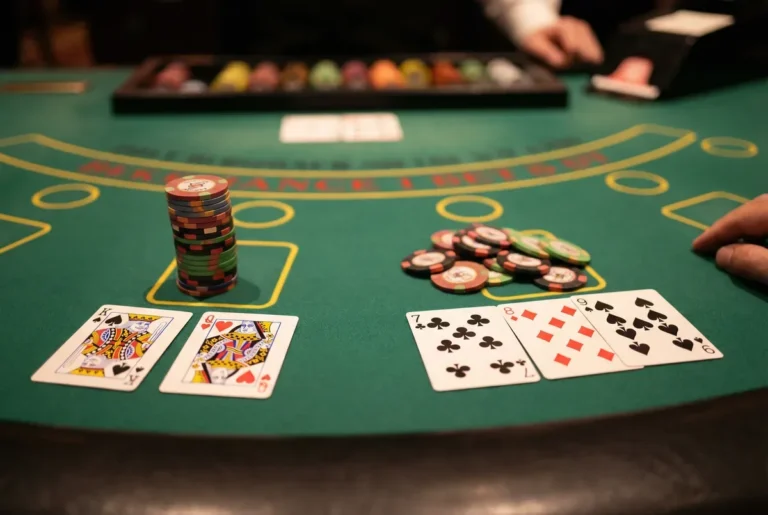
How Variance Affects Short-Term Blackjack Results
Variance explains why you can lose 10 sessions in a row playing perfect basic strategy or win for a month…