
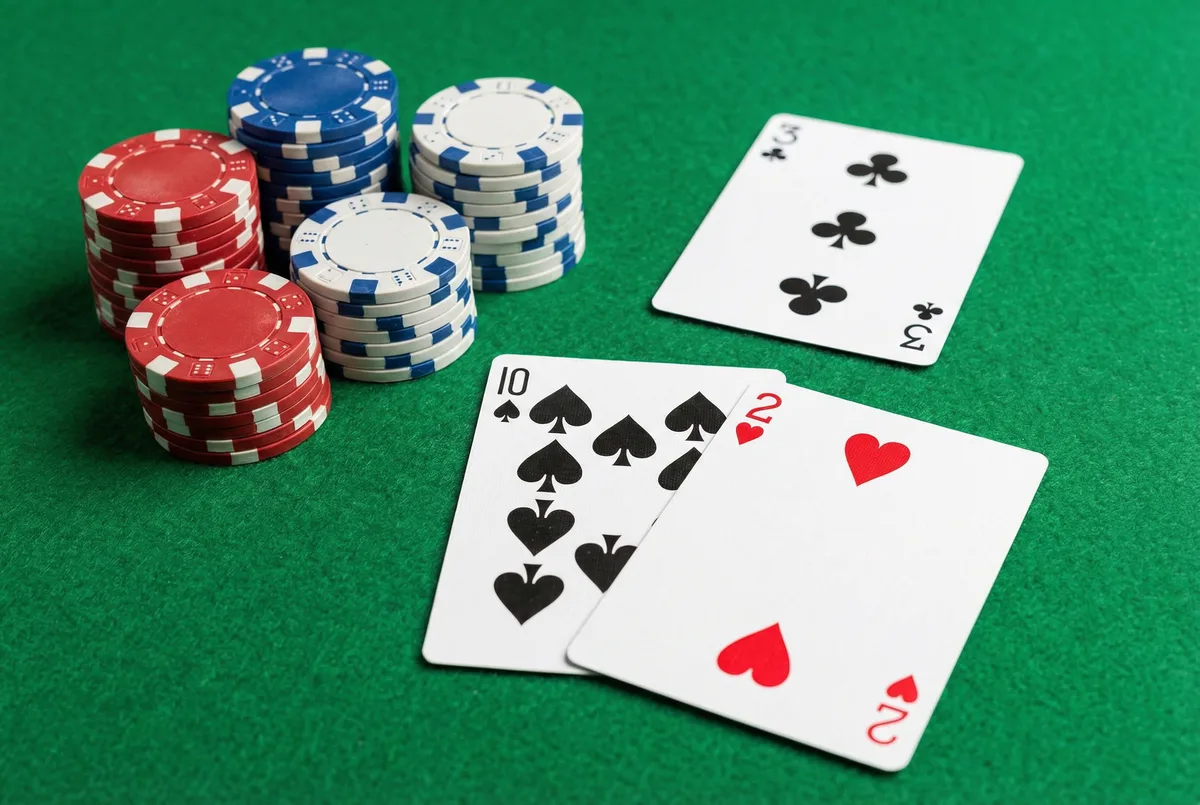
Why You Must Hit Hard 12 Against a Dealer 2 or 3
Hard 12 against a dealer 2 or 3 is the hand that separates disciplined players from guessers. Almost every instinct says stand: the dealer shows a small card, so let them bust.
That logic works perfectly from dealer 4 through 6. But a dealer showing 2 or 3 busts only 35 to 37 percent of the time, and that is not enough to cover your losses from standing on 12.
Basic strategy is unambiguous here. You hit. Every single time. Understanding why turns this frustrating exception into one of your most profitable decisions at the table.
Why Dealer 2 and 3 Not Truly Weak Upcards Matter
- Dealer 235.3% bust rate
- Dealer 337.6% bust rate
- Dealer 440.3% bust rate
- Dealer 542.9% bust rate
- Dealer 642.1% bust rate
- Dealer 726.2% bust rate
Players lump dealer upcards of 2 through 6 into one category: weak cards, dealer will bust, stand and collect. The data does not support that grouping for 2 and 3. A dealer showing 4, 5, or 6 busts more than 40 percent of the time. That gap matters enormously when you calculate expected value over thousands of hands.
A dealer with a 2 up completes a standing hand roughly 65 percent of the time. That means when you stand on 12 against a dealer 2, the dealer beats you in the majority of outcomes. The bust rate of 35 percent simply does not compensate for how often your 12 loses to a made dealer hand.
The dividing line in blackjack basic strategy is dealer 4. At 4, 5, and 6 the bust probability crosses 40 percent and standing on 12 becomes mathematically correct. Below that line, at 2 and 3, you are better off drawing a card and trying to improve your total.
What Is Your Real Bust Risk When You Hit 12?
Common Myth
“Hitting 12 is suicide because any face card busts you”
Players see a 12 and mentally picture hitting a 10 or face card, going over 21 instantly. The deck feels full of tens.
The Reality
Only 4 of 13 card ranks bust a hard 12 when you hit: 10, J, Q, K. That is a 30.8% bust chance, not a coin flip.
Standing on hard 12 vs dealer 2 carries a higher expected loss per hand than hitting, even accounting for the 31% bust probability on the draw.
When you hold a hard 12 and draw one card, exactly 4 of the 13 possible card ranks cause a bust: ten, jack, queen, and king.
That gives you a 30.8 percent chance of busting on the hit. The other 69 percent of draws either land you on a total between 13 and 21 or give you an ace that stays at 13.
An ace drawn to 12 produces a soft 13, which is 13 hard if you count it as 1. Cards two through nine improve your position to totals between 14 and 21. Nine of thirteen possible draws move your hand forward. That is a better ratio than most players instinctively believe.
The psychological trap is weighting the bust scenario too heavily. Yes, busting feels worse than losing a standing hand, but the math evaluates both outcomes purely by expected value. Over 1,000 decisions, hitting hard 12 vs dealer 2 or 3 saves you real money compared to standing.
Why Does the Expected Value Compare Between Hitting and Standing?
Dealer Shows
Your Hand
You hold hard 12 (10-2). The dealer shows a 2. What is the correct play?
The dealer's 2 only causes a bust 35% of the time. That leaves a 65% chance the dealer completes a hand that beats your 12. Hitting gives you nine possible improving cards vs four bust cards, making the draw mathematically superior to standing still.
Expected value is the average result of a decision repeated thousands of times. Standing on hard 12 vs dealer 2 loses approximately 29 cents per dollar wagered over the long run. Hitting loses approximately 25 cents per dollar. Neither option is profitable, but hitting is measurably less damaging.
Four cents per dollar sounds small. At a 25-dollar table, that difference is one dollar per hand. Play 200 hands in a session and correct decisions on hard 12 save you roughly 200 dollars in EV compared to a player who always stands on 12. The leak is real and it compounds over time.
Against dealer 3 the numbers shift slightly: standing loses about 23 cents per unit, hitting loses about 23 cents as well, making it the closest call in the chart. Most published blackjack strategy charts still show hit for hard 12 vs dealer 3 in standard six-deck games. When in doubt, hit.
Why This the Most Commonly Misremembered Rule in Basic Strategy Matters?
Hard 12 vs dealer 2 or 3 violates the simple mental model most players carry. The shorthand is: dealer 2 through 6, you stand on stiff hands. That rule holds for hard 13 through 16. Hard 12 is the lone exception below dealer 4, and exceptions are the first thing memory drops under casino conditions.
Surveys of recreational blackjack players consistently rank this hand among the top five errors by frequency. The error direction is always the same: players stand when they should hit. Nobody accidentally hits hard 12 vs dealer 5. The mistake flows one way, and it costs money every session.
The fix is a simple memory anchor. Hard 12 hits against dealer 2 and 3. Everything else about 12 is identical to the broader stiff-hand rule: stand from dealer 4 through 6, hit against 7 through ace. Isolate those two cells on the blackjack strategy chart and drill them until they feel automatic.
Burn hard 12 vs dealer 2-3 into muscle memory with a dedicated drill. Deal yourself a 10-2 and flip dealer cards one at a time. Stop at 2 and 3, say 'hit' out loud, then continue. Twenty minutes of this and you will never stand here again at a real table.
How to Practice This Until It Becomes Automatic
Chart review alone does not build reliable decision speed under casino conditions. You need repetitions with feedback. Free online trainers flag every blackjack basic strategy error instantly, and hard 12 vs 2 or 3 is a mistake they catch often. Run 100 hands specifically on stiff totals and watch how often this spot appears.
Physical flashcards work well for visual learners. Write dealer upcards on one side and the correct hard 12 action on the reverse. Carry them and quiz yourself in two-minute bursts. Spaced repetition cements exceptions faster than marathon study sessions.
Once the decision is automatic in practice, verify it under real conditions at a low-stakes table before raising your bets. If you want to test your reads against a live dealer using real money, blackjack-live.com streams dealer games you can join with real stakes, so go in knowing your chart is solid before any chips leave your hand.
Frequently Asked Questions
In standard six-deck and eight-deck games with standard rules, basic strategy always calls for hitting hard 12 vs dealer 2. Some single-deck games with restrictive doubling rules may shift this slightly, but for the vast majority of casino games you will encounter, the answer is hit.
The expected values are very close for hard 12 vs dealer 3, but the standard basic strategy chart for multi-deck games calls for a hit. The difference is fractions of a percent, but consistent correct play means following the chart as printed rather than rounding close calls toward intuition.
At dealer 4, the bust probability crosses 40 percent for the first time, which changes the balance between the dealer completing a hand and you drawing to improve your 12. Below 40 percent bust probability, the math favors taking a card. At 40 percent and above, letting the dealer risk a bust becomes the better play.
Before you test these plays at a real table, run them through our free blackjack simulator practice unlimited hands at zero cost until every move becomes automatic.
Blackjack Math Is Exact. Results Are Not.
Basic strategy eliminates guesswork but does not eliminate variance. Even perfect play loses sessions. Every hand involves real financial risk and no strategy system guarantees a profit. Set a loss limit before you sit down and treat every session as entertainment with an honest price.
Blackjack Academy content is for educational purposes only. Gambling involves risk of financial loss. Play within your means.

Written by
Mark AnurakProfessional card counter since 2009 · 500,000+ hands logged · Former Macau advantage player. Studied under Thorp, Griffin & Wong methodology. Full bio →
Learn More
Continue your education with these related lessons.
Composition-Dependent Basic Strategy and When It Gives You Real Edge
Composition-dependent basic strategy goes beyond your hand total the specific cards you hold can change the correct play. The multi-card…
Why You Should Only Play at Stand on Soft 17 Tables
Stand on Soft 17 (S17) tables give you a 0.22% lower house edge than Hit on Soft 17 (H17) tables.…
Why Deck Penetration Is the Hidden Factor That Changes Basic Strategy
Deck penetration determines how much of the shoe is dealt before a reshuffle. Learn how it affects basic strategy accuracy,…