
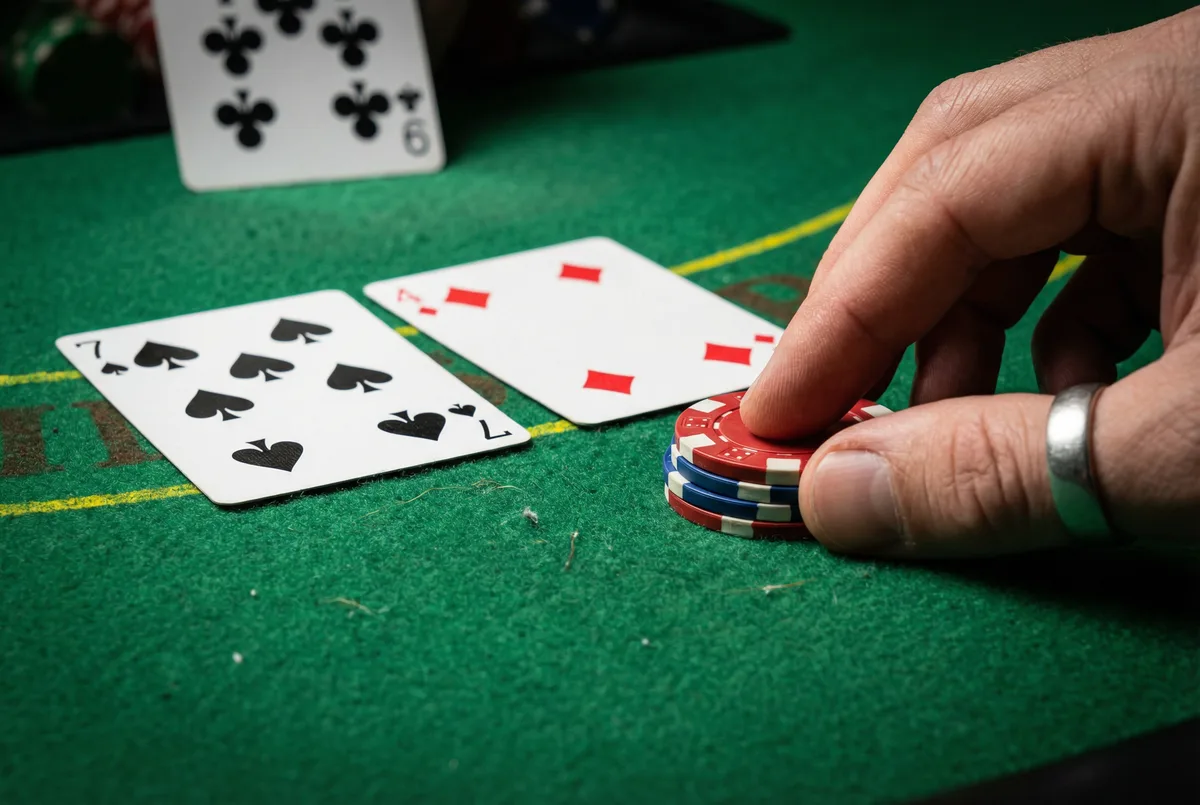
Why Doubling Down on Hard 11 is Your Most Profitable Move
Hard 11 is the single best doubling opportunity in the entire game of blackjack. When you are dealt a two-card total of 11 against most dealer upcards, mathematics demands you double your bet. Thirty percent of the deck is 10-value, meaning your most likely next card brings you directly to 21.
Skipping this double is one of the most expensive mistakes a strategy player can make. Every time you hit instead of doubling hard 11 in the correct situation, you forfeit roughly half the edge this hand generates. This article explains exactly why, using the expected value numbers that make the case.
Why Hard 11 the Best Doubling Hand in Blackjack Matters
Hard 11 holds an exceptional position in blackjack basic strategy because it combines three powerful factors at once. The total cannot bust on a single card, so the risk of the one-card constraint is zero.
The 10-value density in a standard deck is 30.8%, making 21 the single most likely result. And the dealer’s bust probability adds a second layer of edge that compounds your advantage.
No other hard total delivers all three conditions simultaneously. Hard 10 comes close but can still receive an ace that produces 11 rather than 21. Hard 9 faces narrower doubling windows. Hard 11 is the unique intersection where total, deck composition, and dealer vulnerability all align perfectly.
- 10-value cards in a standard deck30.8%
- Probability of reaching 21 on the double30.8%
- Hard 11 vs dealer 6 EV (double)+0.64
- Hard 11 vs dealer 6 EV (hit)+0.38
- Hard 11 vs dealer 10 EV (double)+0.17
- Hard 11 vs dealer 10 EV (hit)+0.15
- Dealer bust rate with upcard 642%
What Is the Correct Basic Strategy for Hard 11?
In a standard six-deck shoe with the dealer standing on soft 17, double hard 11 against every dealer upcard from 2 through 10.
Against a dealer ace in an H17 game, blackjack basic strategy also doubles hard 11 in most rule sets. In an S17 shoe game, hitting vs. the ace is marginally better, but the difference is under one tenth of a percent.
In single deck, doubling hard 11 against a dealer ace is always correct. The thinner deck shifts the probabilities enough that the double produces positive expected value even against the dealer’s strongest upcard. This is one of the few decisions where single deck and shoe strategy diverge.
The practical rule: double hard 11 against 2 through 10 every single time, no exceptions. Against the ace, check whether the game is S17 or H17. In H17 shoe games, doubling is still correct. When in doubt, the double is never far wrong regardless of the dealer ace rule.
Dealer Shows
Your Hand
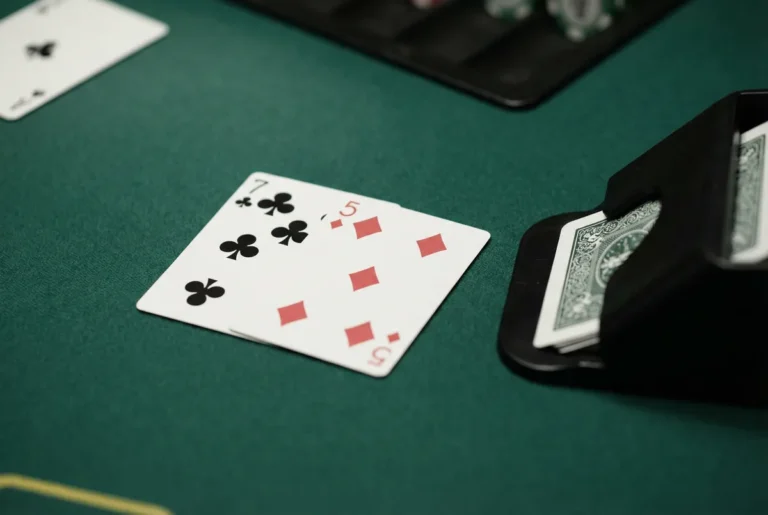
You hold hard 11 (5 and 6) against dealer 6. What is the correct play?
Double every time without hesitation. The dealer's 6 is the weakest upcard in the game. Combining your shot at 21 with the dealer's high bust probability makes this the single most profitable decision you can execute at a blackjack table.
What Is Cost You to Hit Instead of Doubling Hard 11?
The cost is real and measurable. Against a dealer 6, doubling hard 11 produces an EV of approximately +0.64 per unit wagered. Hitting the same hand returns around +0.38 per unit. The gap is 0.26 units, meaning you forfeit more than a quarter of a bet in expected value every time you hit instead of doubling.
Against a dealer 10, the numbers are tighter but the principle holds. Doubling hard 11 vs. dealer 10 returns approximately +0.17 per unit. Hitting returns about +0.15. The difference is smaller, but the double is still the correct play and the edge still belongs to the double over thousands of hands.
Over a typical session of 200 hands, a player who hits every hard 11 instead of doubling will occur this spot roughly eight to ten times. At a $25 base bet, that is between $50 and $65 of expected value surrendered in a single session. The math compounds across every trip.
Common Myth
“Doubling hard 11 against a dealer 10 is too risky because the dealer might have 20.”
Players fear the dealer has a 10 in the hole, creating a near-unbeatable 20. The thought of losing double the bet on one card feels dangerous.
The Reality
The dealer does not always have a 10 in the hole. Only 30.8% of unseen cards are 10-value. Doubling hard 11 vs. dealer 10 still produces a positive EV of approximately +0.17 per unit.
Doubling: +0.17 per unit. Hitting: +0.15 per unit. The double wins more money on this hand over time. Fear of the dealer's hole card is not a strategy.
Why Players Hesitate to Double Hard 11?
The most common reason is fear of putting double the money at risk on a single card. Players imagine receiving a low card, landing on a total like 13 or 14, and watching the dealer draw to 20. The outcome is vivid and painful. The frequency is much lower than intuition suggests.
The second reason is confusion about the ace rule. Some players remember being told not to double vs. an ace and generalize that to all uncertain situations. The correct rule is precise: in most shoe games, doubling hard 11 vs. ace is still correct or at worst a near-zero deviation from the optimal play.
Fear of busting is mathematically irrelevant here. Hard 11 cannot bust on one card. The worst card the deck can give you is an ace, producing a soft 12. From there you play forward. The one-card constraint has zero bust risk on this hand, which removes the primary argument against doubling entirely.
Hard 11 is the one hand where hesitation has a direct dollar cost. The math does not ask you to be brave. It asks you to place a second bet on the best starting total in the game. Commit to the double before the cards land, not after, and you will never talk yourself out of the correct play.
Hard 11 Doubling Strategy Change in Different Game Formats: The Evidence
The core rule holds across formats, but two variables shift the ace decision. First, S17 vs. H17: when the dealer stands on soft 17, the dealer’s ace is slightly weaker. This nudges the hard 11 vs. ace decision toward doubling in H17 and toward hitting in S17 six-deck games. The gap in expected value is minimal either way.
Second, the number of decks: single deck concentrates the 10-value proportion differently enough that doubling vs. the ace is always correct. In two-deck games the decision lands on the doubling side as well. Only in the six-deck shoe, under S17 rules, does hitting vs. the ace become technically optimal.
Spanish 21 removes all 10-spot cards from the deck. This cuts the 10-value density significantly and changes the doubling calculus on hard 11. The strategy for Spanish 21 is a separate chart entirely. Do not apply standard hard 11 strategy in a Spanish 21 game.
Practice this decision at pace before you bring it into a live session. Try a live dealer table with real wagers on the line and use the hard 11 rule as your benchmark hand.
Every correct double you execute there is money working in your favor from the first round. Note that real money is at stake from the moment you sit down.
Frequently Asked Questions
In a standard six-deck shoe game, double hard 11 against dealer upcards 2 through 10. Against a dealer ace in an H17 shoe game, doubling is also correct in most rule sets. In an S17 shoe game, hitting vs. the ace is marginally better. In single deck, double hard 11 against every upcard including the ace. The rule is near-universal: hard 11 is always a doubling hand.
Doubling hard 11 against a dealer 6 produces an expected value of approximately +0.64 per unit wagered. Hitting the same hand returns approximately +0.38 per unit. The gap of around 0.26 units per bet means every time you hit instead of doubling, you surrender more than a quarter bet in expected value. Hard 11 vs dealer 6 is the single highest EV doubling situation in basic strategy.
No. Hard 11 cannot bust on a single card because no card in the deck adds enough value to push an 11 past 21. The worst single card you can receive is a 2, bringing the total to 13. An ace on a hard 11 produces a soft 12, which plays forward normally. The bust-free nature of hard 11 on the double is one of the reasons it is the strongest doubling hand in the game.
Before you test these plays at a real table, run them through our free blackjack simulator practice unlimited hands at zero cost until every move becomes automatic.
Hard 11 Is the Most Profitable Move in Basic Strategy
Verify every correct doubling situation with the Blackjack Calculator before your next session.
Blackjack Academy is an educational resource. All strategy figures are based on mathematical expectation and assume correct basic strategy play. Always set a session limit before wagering real money.

Written by
Mark AnurakProfessional card counter since 2009 · 500,000+ hands logged · Former Macau advantage player. Studied under Thorp, Griffin & Wong methodology. Full bio →
Learn More
Continue your education with these related lessons.
Why Flat Betting Is the Most Rational Approach for Basic
Flat betting wagering the same amount every hand is the mathematically correct bet-sizing strategy for any player using basic strategy…
Why Mathematics Outperforms Luck in Long Term Blackjack
Luck dominates individual blackjack sessions. Mathematics dominates long-term results. A player who understands variance knows why their session won and…
Probability of Busting on a 12 and Other Hand Statistics
The probability of busting on a hard 12 is just 31% meaning you survive 69% of the time. Understanding the…