
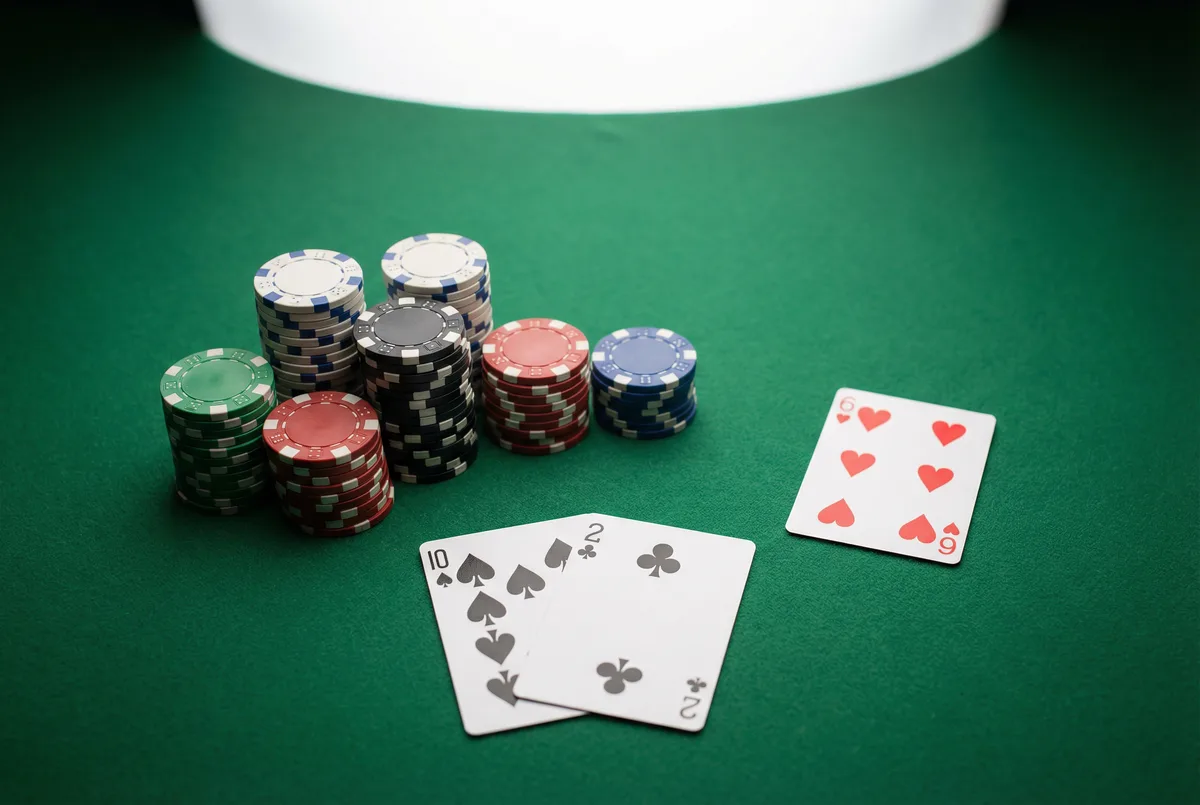
Best Basic Strategy to Reduce the House Edge Under 1 Percent
A casino’s built-in advantage on a standard six-deck blackjack table sits at roughly 2 percent. Basic strategy shrinks that number to approximately 0.5 percent.
That difference translates to about $15 saved per $1,000 wagered. It is not a system or a trick. It is a set of mathematically derived decisions, one for every hand combination, built from decades of computer simulation and probability analysis.
Every time you deviate from blackjack basic strategy, you hand some of that 1.5 percent back to the house. The decisions are not opinions.
They are optimal plays calculated from the complete probability distribution of every possible outcome. This guide explains what those decisions are, why they work, and how to use the blackjack strategy chart as your primary tool at the table.
Basic Strategy Explained
Basic strategy is a complete decision matrix for blackjack. It maps every possible player hand, from hard 4 to soft 20 to every pair, against every possible dealer upcard from 2 through Ace. For each combination, it gives a single optimal decision: hit, stand, double, or split. There are no judgment calls. The chart is the answer.
The strategy was first published in 1956 by four US Army mathematicians: Roger Baldwin, Wilbert Cantey, Herbert Maisel, and James McDermott. They computed the optimal plays by hand using mechanical calculators. Later work by Edward Thorp used early computers to refine and verify every decision. The conclusions have not changed in 70 years because the math does not change.
The strategy accounts for one variable only: the information visible at the table. Your two cards, the dealer’s upcard. Nothing else. It does not require tracking previous hands or counting cards. It is purely the optimal response to the current visible state of the game.
Different rule sets produce slightly different blackjack strategy charts. A six-deck game with the dealer hitting soft 17 has different optimal plays in a handful of spots compared to a single-deck game where the dealer stands on all 17s. The differences are small, but they exist. Always use a chart matched to the specific rules of the table you are playing.
- Starting house edge (6-deck)~2.0%
- With perfect basic strategy~0.5%
- Edge reduction from strategy~1.5%
- Total hand scenarios covered340+
- Years of mathematical study behind it70
What Is the Basic Strategy Cuts the House Edge Below 1 Percent?
The blackjack house edge in blackjack comes from one structural rule: the player acts first. If you bust, you lose immediately, even if the dealer busts afterward. Basic strategy counters this by identifying exactly when the dealer is likely to bust and adjusting your play to exploit those situations rather than take unnecessary risk.
When the dealer shows a 5 or 6, the bust probability climbs above 40 percent. Basic strategy responds by standing on stiff totals like hard 12 through 16, because you do not need a better hand. You need the dealer to bust. Standing in those spots converts a situation most players play fearfully into a controlled, positive-expectation position.
When the dealer shows a strong card, a 9, 10, or Ace, the dealer busts less than 23 percent of the time. Basic strategy responds by hitting stiff totals aggressively. Standing on hard 14 against a dealer 10 is statistically a losing play on roughly 77 percent of hands. Hitting at least gives you a path to a competitive total.
How Does the Decisions With the Biggest Impact on Your Results?
Doubling down on hard 11 against a dealer upcard of 2 through 10 is one of the highest expected-value plays in the game.
You are one card from 21, the dealer is not yet in a strong position, and you have zero bust risk on the first hit. Skipping this double hands the casino back a material portion of your edge.
Splitting Aces and 8s is mandatory in every rule variation. Aces split into two potential 21-point starters.
Splitting 8s converts a hard 16, the worst hand in the game, into two hands starting at 8, each with a real chance of reaching 18 through 21. Players who refuse to split 8s against a dealer 10 because it feels risky are paying a measurable penalty.
Never split 10s. A total of 20 wins roughly 85 percent of hands. Breaking it into two hands starting at 10 is trading a near-certain win for two uncertain outcomes. The math is not close. Stand on 20 in every situation the rules allow.
Dealer Shows
Your Hand
You hold hard 16 against a dealer 7. The chart says hit. Do you follow it or stand?
The dealer makes a pat hand (17-21) far more often than she busts when showing a 7. Standing surrenders EV. Hitting is the correct play, and following these correct plays across all 340+ decisions is exactly what compresses the house edge below 0.5%.
Why Every Deviation From Basic Strategy Costs You Money?
Basic strategy is calculated to maximize expected value across the full probability distribution of outcomes. A deviation does not occasionally lead to a worse result. It leads to a worse expected value on every single hand where the deviation occurs, because the correct play was already the one with the highest expected outcome given the available information.
The most common deviation is standing on stiff totals against a dealer 7 or higher out of fear of busting. This is called the “mimic the dealer” fallacy.
The dealer busts about 28 percent of hands overall. Counting on the dealer to bust while holding hard 14 against a dealer 9 means you are counting on a 28 percent event to save a hand that needs a 72 percent solution. Hitting is correct.
Another common deviation is refusing to double soft totals against weak dealer upcards. Doubling soft 15 (Ace-4) against a dealer 5 is a positive-expectation play. Players who just hit these hands instead are getting the right direction but at half the money. Over 500 hands, this adds up to a measurable loss in realized value.
Common Myth
“Basic strategy only works if you get lucky cards”
Players confuse short-term variance with long-term EV. When a correct play loses, it feels like the strategy failed.
The Reality
Basic strategy is an EV optimization system, not a winning guarantee. It reduces the house edge to 0.5% across hundreds of thousands of hands, luck determines individual session results, math determines long-run outcomes.
Following perfect basic strategy on every hand is worth approximately 1.5% of every bet compared to playing by instinct, roughly $15 per $1,000 wagered.
How to Use a Strategy Chart Effectively at the Table
Casinos allow strategy cards at the table in most jurisdictions. You can hold a laminated chart in your hand and consult it on every decision. There is no rule against it. Players who use a chart play faster, make fewer errors, and preserve their edge without needing to memorize 340 hand combinations before sitting down.
The chart has three sections: hard totals, soft totals, and pairs. Find your hand type first, then your total, then the dealer’s upcard column.
The cell at the intersection gives the optimal play. The first time I saw a blackjack strategy chart, I assumed it would be faster to just remember the rules by feel. That assumption cost me about 60 hands of suboptimal play before I stopped guessing.
Before you put real money in the game, verify your understanding of the strategy with the Blackjack Academy calculator. Practice is the fastest path from knowing the rules to executing them automatically.
When you feel ready to apply the strategy in a live environment, the live dealer tables let you test your decisions against a real game. Note that real money is at risk at those tables, so enter only with a session budget you have set in advance and are prepared to lose entirely.
Frequently Asked Questions
Basic strategy is a mathematically derived set of optimal decisions for every possible hand combination in blackjack. It tells you exactly when to hit, stand, double, or split based on your hand and the dealer's upcard. Applied consistently, it reduces the house edge from roughly 2 percent to approximately 0.5 percent.
No. Basic strategy optimizes your expected value, it does not guarantee wins. In any given session you can lose while playing perfectly. What basic strategy does is ensure that over thousands of hands, you lose as little as mathematically possible given the rules of the game you are playing.
Yes. Most casinos allow laminated strategy cards at the table and dealers will not stop you from using one. Consulting the chart on every decision is perfectly legal and recommended for anyone still building their strategy memory. Using a chart is always better than guessing.
Before you test these plays at a real table, run them through our free blackjack simulator practice unlimited hands at zero cost until every move becomes automatic.
Know Your Expected Value Before You Sit Down
The Blackjack Academy calculator shows your exact house edge based on the rules at your specific table.
Blackjack Academy is an educational resource. All strategy content is based on mathematical expectation. Gambling involves real financial risk. Always set a session budget before play and never wager more than you can afford to lose.

Written by
Mark AnurakProfessional card counter since 2009 · 500,000+ hands logged · Former Macau advantage player. Studied under Thorp, Griffin & Wong methodology. Full bio →
Learn More
Continue your education with these related lessons.
Why Casinos Let You Use a Strategy Cheat Sheet at the Table
Casinos allow strategy cards because basic strategy reduces but does not eliminate the house edge. A card reader at a…
When Doubling Down Is Wrong
The five hands beginners over-double soft 19, hard 12, pair of 5s as 10, hard 10 vs Ace, hard 9…
Real Expected Value Numbers for Every Blackjack Hand Type
The expected value of every blackjack hand type hard hands 8 through 20, soft hands, and pairs quantified. Understand which…