Best Free Blackjack Training Simulator to Practice Before Vegas
Studies by Stanford Wong and other blackjack researchers show that it takes between 500 and 1,000 hands of deliberate practice before blackjack basic strategy becomes automatic at a real table. Most Vegas visitors skip this step entirely and pay for it with costly misplays under pressure.
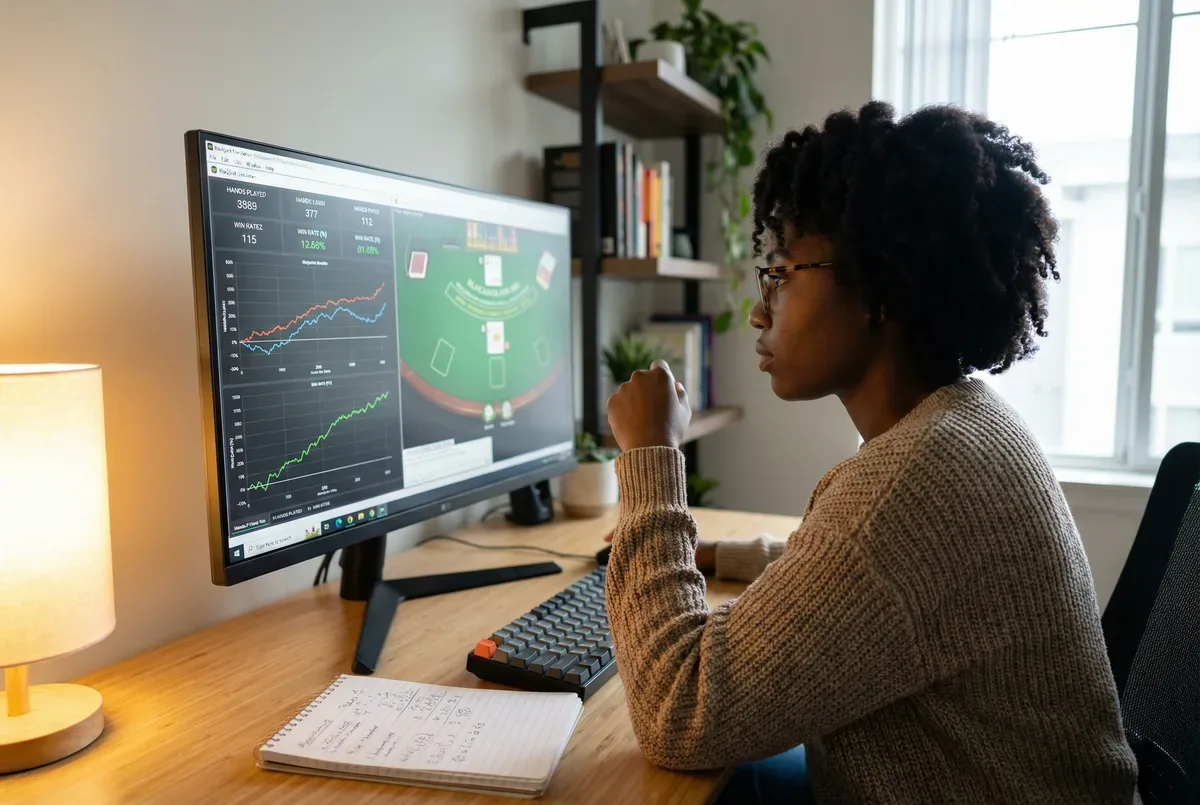
A free blackjack training simulator compresses that learning curve into focused sessions you can run at home. This guide covers what separates a genuinely useful simulator from a toy, how many hands to log before your trip, and exactly how to transition from practice mode to real casino play.
Why Practice Volume Matters Before Real Money Play
Basic strategy is a 270-cell decision grid. Reading it off a chart is easy. Retrieving the correct answer in under three seconds, at a busy table with other players watching, is a different skill. That retrieval speed only comes from repetition.
Cognitive science research on motor-skill learning suggests that roughly 500 correct repetitions are needed to encode a decision pattern. At the average casino pace of 60 hands per hour, that represents eight hours of live play just to reach baseline fluency.
a blackjack simulator lets you run 200 hands in 30 minutes because there are no dealer shuffles, tip conversations, or cocktail interruptions. You reach your practice volume before spending a single dollar at the felt.
- 500 handsstrategy decisions become consistent
- 1,000 handssoft totals and pairs feel automatic
- 2,000 handsready to add speed pressure drills
- 200+ hands/sessiontypical simulator output in 30 min
What to Look for in a Good Blackjack Simulator?
Not every free blackjack game online qualifies as a training tool. Casino-lobby demos are designed to be entertaining, not educational. A genuine simulator has four non-negotiable features.
The first is rule accuracy. the blackjack simulator must match the exact rules you will face in Vegas: typically 6-deck, S17 (dealer stands on soft 17), double after split allowed, and no surrender unless you are targeting casinos that offer it. Playing a single-deck game on a blackjack simulator while planning to play a 6-deck shoe creates bad habits.
The second feature is an instant-feedback hint system. When you click the wrong play, the blackjack simulator should immediately tell you the correct decision and explain why. Passive repetition without correction is how wrong habits get locked in.
Third is a mistake counter. You need to see your error rate per 100 hands. An error rate above 3 per 100 hands means you are not ready for real money play. Below 1 per 100 hands means you are in excellent shape.
Fourth is speed control. A good simulator lets you toggle between slow practice mode and fast pressure mode. The pressure mode simulates the time constraint of a real table and should be used in your final preparation weeks.
Dealer Shows
Your Hand
Dealer shows 6. You hold Ace-7 (soft 18). What is the correct play?
Basic strategy: double soft 18 against dealer 2 through 6. Many players stand here and leave money on the table.
How Many Hands to Practice Before Your Vegas Trip?
The minimum preparation benchmark is 1,000 hands with a mistake rate under 2 per 100. This is achievable in five one-hour simulator sessions across two weeks.
Week one should focus exclusively on hard totals (hard 8 through 17). These are the most common situations and the ones where players lose the most from misplays. Do not move on until your hard-total accuracy is at 98 percent or better.
Week two adds soft totals (any hand with an ace counted as 11) and pairs. Soft totals confuse most beginners. Pairs require you to know the split and no-split boundaries cold. Run at least 300 hands focused on these two categories before adding speed pressure.
Self-test before your trip: close the blackjack strategy chart, run 100 hands at maximum simulator speed, and count your errors. If you make three or fewer mistakes, you are ready. If you make more, add another week of focused drilling on your weak spots.
Simulator
Real Casino
- 200+
- 60-80
How to Transition from Simulator to Real Casino Play?
The transition has two stages. Stage one is live dealer practice online, which bridges the gap between solo simulator sessions and a real Vegas table. Live dealer blackjack puts a human dealer on screen, uses real cards, and has other players at the table. This adds social dynamics without the full financial pressure of Vegas minimums.
If you want to test live dealer play before committing to full real-money stakes, the live blackjack table at use a live dealer game as your final training test lets you observe real dealer play. Note that live play involves real money bets, so treat it as a continuation of your education, not a free practice ground.
Stage two is your first real Vegas session. Arrive with a printed strategy card in your pocket. Casinos allow this at most tables. Use it as a backup, not a crutch. Your goal: consult it fewer than five times per shoe.
If you are consulting it more than five times per shoe, you need more simulator time before raising your bet sizes. The card is a safety net, not a learning substitute.
From Simulator to Live Table: The Final Step
The best training systems combine three layers: a visual blackjack strategy chart, an interactive flashcard drill, and a full simulation mode. Each layer targets a different stage of learning.
The chart layer is for initial exposure. You study the grid, understand the logic, and develop a mental model of the decisions. This stage takes two to three hours and should be done before touching a blackjack simulator.
The flashcard layer drills isolated decisions. You are shown a hand and dealer upcard combination and must answer instantly. This is the fastest way to identify which specific situations you are weak on and target them.
The simulation layer puts decisions in sequence, which is closer to real play. Unlike flashcards, simulation requires managing your chips, tracking the count of your hands in a session, and making decisions while thinking about what just happened two hands ago.
Frequently Asked Questions
Most dedicated learners reach 98% accuracy in two to three weeks of daily 30-minute simulator sessions. The key is focused drilling on weak spots rather than passive repetition. Soft totals and pair splits are usually the last areas to lock in.
Yes. Most Vegas casinos allow a printed strategy card at the table. Dealers and pit staff see this regularly. Use it as a backup while your recall is still developing. Over time you will consult it less and less as the decisions become automatic.
Aim for fewer than 2 mistakes per 100 hands before playing real money blackjack. At 3 or more errors per 100, wrong plays will cost you measurably over a session. Simulators that track your error rate make this benchmark easy to monitor.
Practice Does Not Eliminate Risk
Even perfect basic strategy play carries a house edge. A free blackjack simulator prepares you to make correct decisions, but it cannot guarantee winning sessions. Always set a loss limit before sitting down at any real money table and never bet money you cannot afford to lose.
Blackjack involves real financial risk. Past simulator performance does not predict casino results.

Written by
Mark AnurakProfessional card counter since 2009 · 500,000+ hands logged · Former Macau advantage player. Studied under Thorp, Griffin & Wong methodology. Full bio →
Learn More
Continue your education with these related lessons.
How to Tell When a New Blackjack Shoe is Starting
A new shoe resets everything: the count, the penetration, and your decision-making baseline. Learn the visual signals that tell you…
Master the Blackjack Table Layout and Every Betting Position Fast
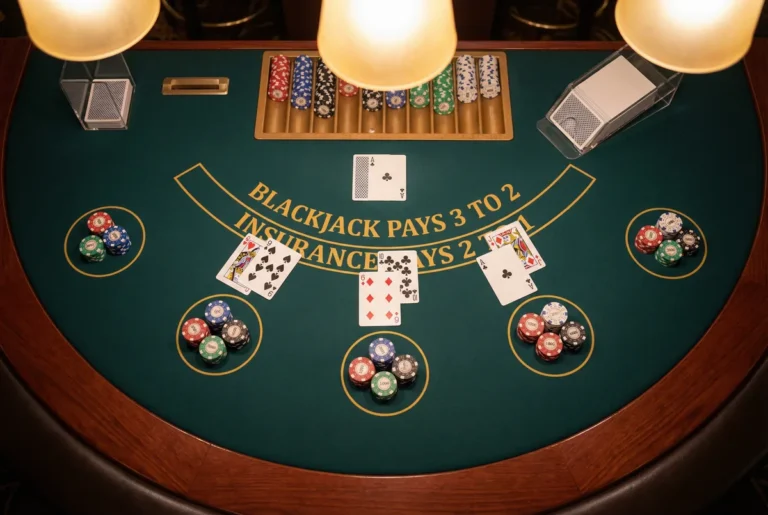
A standard blackjack table has 5 to 7 betting positions arranged in a semicircle. Every position plays by identical rules,…
What Happens When You Bust in Blackjack and How to Avoid It
A bust ends your hand immediately and forfeits your bet even if the dealer busts afterward. Understanding which hands bust…