

How Advantage Players Track Their Results
Advantage players track results not because they enjoy record-keeping, but because without tracked data there is no way to distinguish skill from variance. A player who runs well for two months might believe their technique is sound. A player who runs poorly for the same period might abandon a correct strategy. Without session logs, both conclusions are based on noise. Tracking transforms your play from gambling on outcomes to measuring a process. It is the only way to answer the question that matters: is my edge real, and is it expressing itself correctly over time?
Why Tracking Results Is a Professional Requirement
- Date, casino, table rules (S17/H17, decks, penetration %)
- Buy-in, cash-out, net result in both dollars and units
- Hours played, approximate hands per session
- Count accuracy estimate (self-assessed or drill-verified)
- Any unusual eventsfloor attention, rule changes, back-off
How Do You Separate Skill From Variance in Your Records?
The fundamental challenge in blackjack results analysis is that variance dominates short-run results. A player with a genuine 1% edge running 200 hands per session has a session standard deviation of approximately $275 at $25 average betting meaning roughly 68% of sessions will end within $275 of expectation in either direction, and 32% will end beyond that range. You can run significantly below expectation for 10, 20, or even 50 sessions in a row without any evidence of strategic error. This is not a motivational claim it is the statistical reality of low-edge, high-variance games.
The practical implication is that you should never modify your strategy based on short-run results. If your records show you are playing with consistent discipline and the game conditions match your target parameters, a losing streak is irrelevant signal. Modify strategy only when post-session reviews reveal documented decision errors not because you lost.
A losing month with a perfect process is evidence of variance. A winning month with frequent strategy breaks is evidence of luck. Only the process is under your control evaluate that, not the outcome.
The Tracking Principle
What Is the 95% Confidence Interval?
The statistical threshold for confirming your true win rate at 95% confidence is approximately 10,000 to 30,000 hands, depending on bet spread and edge size. At 70 hands per hour, that is 143 to 428 hours of logged play. For a player averaging 10 hours per week, that is 14 to 43 weeks of sessions before your running win rate is statistically distinguishable from variance at 95% confidence. This is not a discouraging figure it is the honest answer to how blackjack probability works. Professionals who have logged 10,000+ hands with consistent positive results can defend their edge mathematically. Everyone below that threshold is still in the variance-dominated evaluation zone.
Hands for 95% confidence
hands
How Do You Build a Tracking System That You Will Actually Use?
The best tracking system is the one you maintain consistently. Complex spreadsheets with multiple calculated fields often get abandoned after a few weeks when the data entry burden feels high. The minimum viable session log is a five-field entry: date, net result in units, hours played, game conditions, and one observation about your play quality. From these five fields, you can calculate cumulative win rate, hourly rate, and simple trend lines. Add a running cumulative units column and graph it monthly. When your cumulative curve trends upward with a slope matching your expected win rate, you have confirmation. When it trends flat or down over thousands of hands with consistent game conditions, something in your process needs investigation. To calibrate your expected results against real live-dealer conditions before logging field sessions, test this with real money in a live session this week lets you track real-money results in a live environment generating the kind of sample data you can use to pressure-test your strategy before committing to full-scale professional volume.
Putting Your Tracking System to Work at a Live Table
A tracking system only improves your game when you review it honestly and adjust your play based on what the data shows.
Frequently Asked Questions
Date, net result in both dollars and units, hours played, game conditions (S17/H17, decks, penetration), and a brief quality note on your own play. These five fields are enough to calculate cumulative win rate and identify process trends over time.
Between 10,000 and 30,000 hands at 95% confidence, depending on your edge size and bet spread. At 70 hands per hour, that is 143 to 428 hours. Below this threshold, any result positive or negative is dominated by variance rather than edge expression.
Only if post-session reviews show documented decision errors. A losing trend in the absence of identified strategy errors is expected variance not evidence that your system is wrong. Modify strategy based on identified mistakes, never based on outcome alone.
Before you test these plays at a real table, run them through our free blackjack simulator practice unlimited hands at zero cost until every move becomes automatic.
Mathematical Risk Warning
Even with a verified positive edge, blackjack variance can produce extended losing streaks spanning thousands of hands. No tracking system eliminates this risk. Adequate bankroll capitalization of 300+ units is required to survive the variance built into the mathematical model.
Blackjack Academy is an educational resource. All strategy is based on mathematical expectation. Always play within your means.

Written by
Mark AnurakProfessional card counter since 2009 · 500,000+ hands logged · Former Macau advantage player. Studied under Thorp, Griffin & Wong methodology. Full bio →
Learn More
Continue your education with these related lessons.

The Elite Wonging Tactic for Mastering Table Hopping and Maximizing Profit
Wonging back-counting a table and entering only when the count is favorable eliminates the negative-count hands that drag down a…
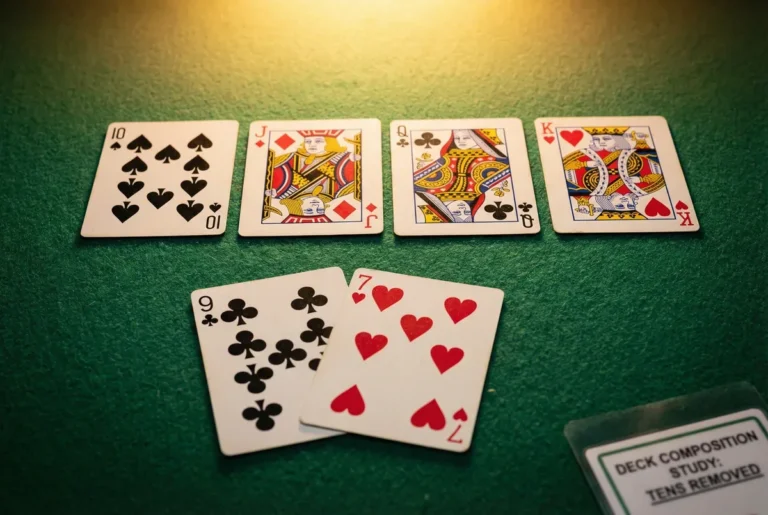
How to Play Strategy When There are No 10s in the Deck
A deck stripped of tens is one of the most player-hostile conditions in blackjack. Your doubling, standing, and insurance decisions…
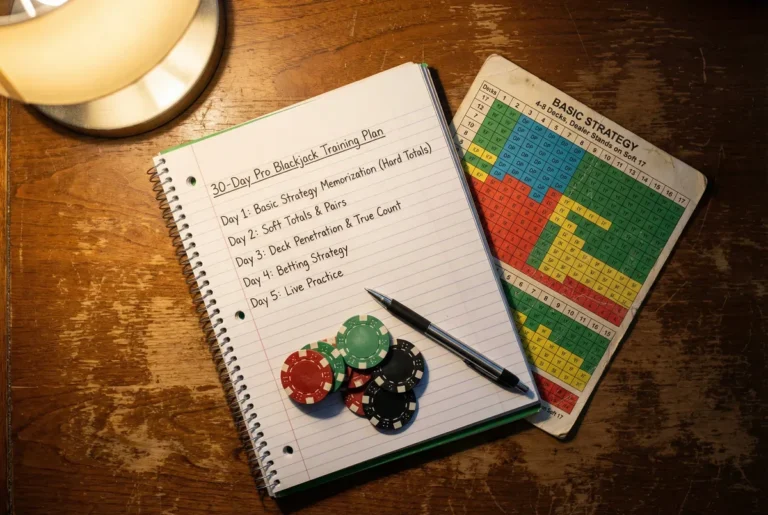
Moving from Casual Player to Professional in 30 Days
The path from casual blackjack player to professional-level competence is defined and trainable. This 30-day roadmap covers every stage from…