
When Doubling Down Is Wrong
Doubling down is the most powerful offensive tool in blackjack when applied correctly. The mechanics are straightforward: you place an additional bet equal to your original wager and receive exactly one more card. The limitation is that you cannot hit again after the double, which means any single draw that doesn’t improve your hand leaves you locked in at that total. This constraint makes doubling down profitable only when two conditions align: your current total has a high probability of improving significantly on one card, and the dealer’s bust probability or expected completion total is weak enough to make the extra bet worth the risk. Outside that window, doubling transforms a manageable loss into a larger one. The five mistakes below represent the most common ways beginners identify the wrong window.
Doubling Down Is Profitable Only in Specific Windows
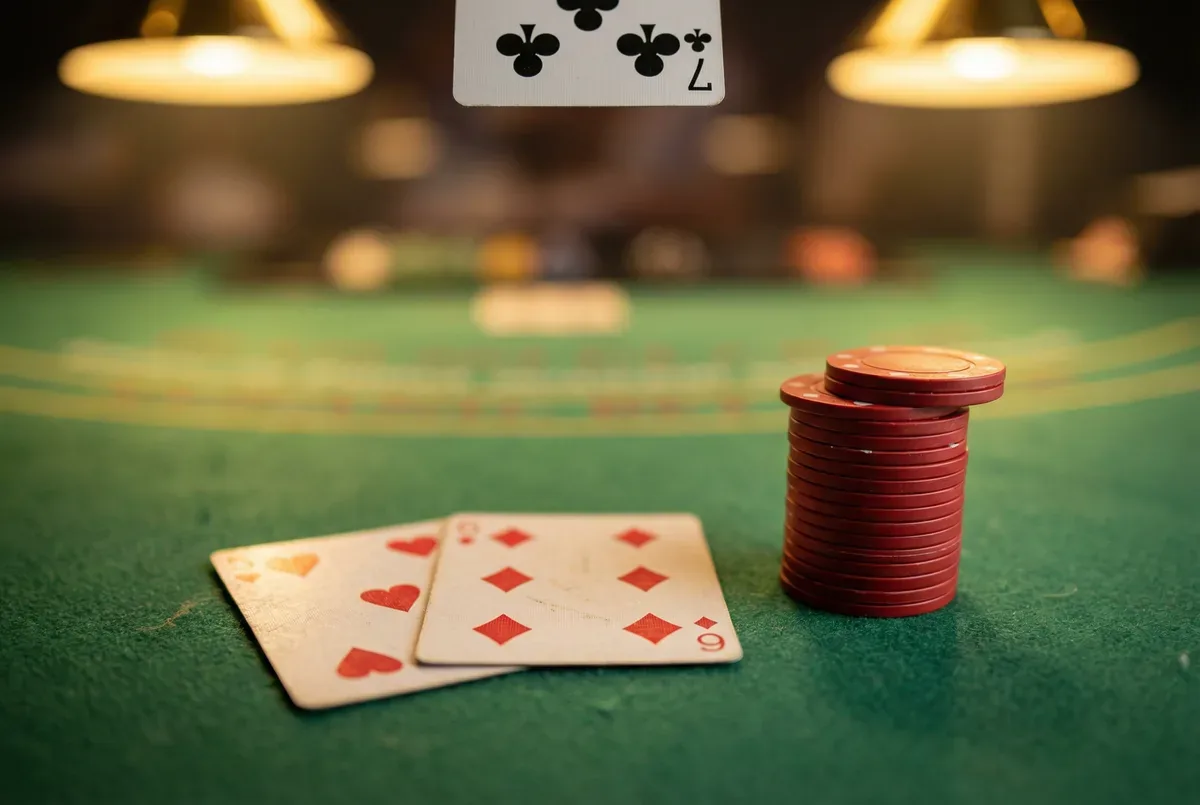
- Hard 9Double vs dealer 3-6 only
- Hard 10Double vs dealer 2-9 only
- Hard 11Double vs dealer 2-10 only
- Soft 13-17Double vs dealer 4-6 (some vs 3 also)
- Soft 18Double vs dealer 3-6 only never vs 7+
How Do You Doubl Soft 19 (A-8)?
Soft 19 is a made hand. It wins the majority of outcomes against most dealer totals. Doubling soft 19 in standard 6-deck games is not part of blackjack basic strategy the hand is strong enough that the one-card restriction of a double is more likely to hurt (locking you into a 12-17 after a high draw) than the additional bet is worth. Some advanced players double soft 19 vs dealer 6 in specific single-deck or composition-dependent situations, but this is an index play, not blackjack basic strategy. In standard conditions, stand on soft 19. The EV difference between standing and doubling is small on the soft 19 vs 6 spot, but in all other upcard situations, doubling soft 19 is clearly incorrect and costs approximately 10-15 cents per dollar versus standing.
Mistake 2: Doubling hard 12, 13, 14, or 15. Doubling on stiff hard totals is never correct in blackjack basic strategy. These hands have high bust probability on a single draw, and the one-card restriction of a double makes them especially dangerous. Players who double hard 14 because the dealer shows a weak upcard are confusing the logic of standing (which is correct) with the logic of doubling (which is not). If a stiff hand should stand, it stands it does not double.
Common Myth
“Any 10 or 11 total is a double against every upcard”
Players know that 10 and 11 are strong doubling hands and apply the rule too broadly, including vs dealer Ace.
The Reality
Hard 10 doubles vs dealer 2-9 only. Hard 11 doubles vs dealer 2-10 (hit vs Ace in 6-deck H17).
Doubling hard 10 vs dealer Ace costs approximately 12 cents per dollar compared to hitting. Doubling hard 11 vs Ace in 6-deck H17 costs about 6 cents vs hitting. The dealer's upcard strength always gates whether the double is profitable.
How Do You Treat a Pair of 5s as Hard 10?
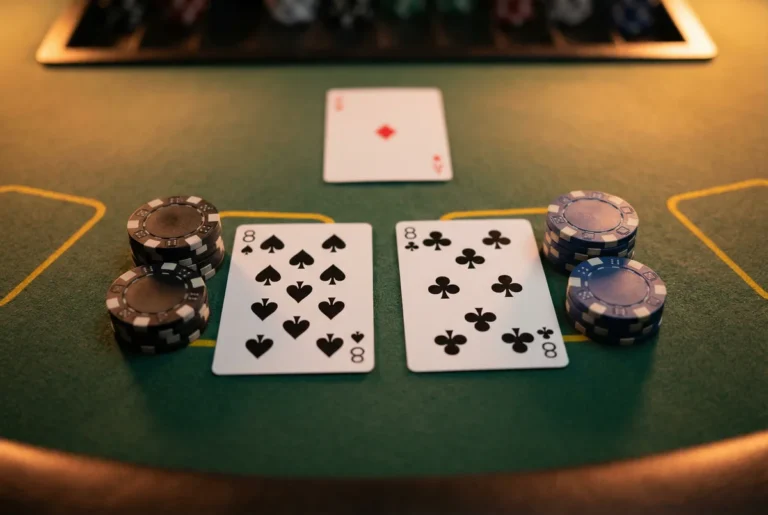
A pair of 5s totals 10 but it should never be played as hard 10 with doubling decisions. The pair of 5s is a split/double decision node in strategy: you never split 5s (that produces two weak starting hands of 5), and you play the hand as hard 10 for doubling purposes. However, many players who understand this principle then over-extend the double: they double a pair of 5s vs dealer 10, which is an error. Hard 10 doubles only against dealer 2–9. Against dealer 10, you hit hard 10 including when hard 10 comes from a pair of 5s. The distinction matters because players often justify the double with “it’s a 10 total” without applying the upcard restriction that governs all hard 10 doubling decisions.
Dealer Shows
Your Hand
Pair of 5s (hard 10) vs dealer 10. Do you double?
Hard 10 doubles only vs dealer 2-9. Against dealer 10, the risk/reward of doubling shifts: the dealer is strong enough to complete a high total frequently, and being locked into one card on a hard 10 gives up too much flexibility. Hitting hard 10 vs dealer 10 is slightly negative EV but still better than doubling. Never double hard 10 vs dealer 10 or Ace.
How Do You Doubl Hard 9 Against Dealer 7?
Hard 9 doubles against dealer 3, 4, 5, and 6 in standard 6-deck games. Against dealer 2, it is a borderline call that resolves to hit. Against dealer 7, it is clearly a hit not a double. The logic: dealer 7 frequently completes a total of 17 (the most common dealer completion when showing 7, due to the high frequency of 10-value cards as the hidden card). Your hard 9 is likely to improve to 13–19 on a draw, but doubling means you’re locked in after that one card. Against a dealer that makes 17+ more than 73% of the time, your doubled total needs to be competitive and the distribution of possible totals from hard 9 after one draw is not strong enough to justify paying double against a 7-showing dealer.
Mistake 5: Doubling any hand against dealer Ace unless the chart specifically calls for it. Dealer Ace is the strongest upcard in the game with only 11.7% bust probability and frequent strong completions. The only double against dealer Ace that appears in standard 6-deck blackjack basic strategy is hard 11 in S17 rule sets (and in some 2-deck games as previously noted). In H17 6-deck games, no doubling opportunity is correct against dealer Ace hit everything.
Every Over-Double Has a Measurable Cost
Over-doubling isn’t as visible as obviously wrong plays like hitting hard 17 or standing on soft 16. It feels like taking action, like being aggressive in the right way. The cost accumulates quietly. If you want to test your doubling discipline against live conditions where the real-money stakes clarify every decision quickly, apply this double in live play is one way to do it just be aware that those games involve actual money, and every incorrect double will cost you double the stake.
Frequently Asked Questions
Hard 11 vs dealer 6 is generally considered the most profitable double in standard 6-deck blackjack, producing an expected value of approximately +40 cents per dollar wagered. Dealer 6 has the highest bust probability (42.3%) and hard 11 has the best chance of completing a 21 or strong 20.
Many casinos allow doubling for less (placing a smaller additional bet than the original). This is technically permitted but is always suboptimal if the double is correct, you should double for the full amount to maximize expected value. If the double is not worth full doubling, it typically means you should hit instead.
Double. Hard 10 doubles against dealer 2 through 9, including dealer 9. The double only stops being correct at dealer 10 and Ace. Many players mistakenly hit hard 10 vs 9, costing approximately 5 cents per dollar versus the correct double.
Before you test these plays at a real table, run them through our free blackjack simulator practice unlimited hands at zero cost until every move becomes automatic.
Mathematical Risk Warning
Doubling down increases money at risk per hand. Incorrect doubles compound losses more quickly than base-bet errors. Apply the strategy chart precisely to avoid over-doubling situations.
Blackjack Academy is an educational resource. All strategy is based on mathematical expectation. Always play within your means.

Written by
Mark AnurakProfessional card counter since 2009 · 500,000+ hands logged · Former Macau advantage player. Studied under Thorp, Griffin & Wong methodology. Full bio →
Learn More
Continue your education with these related lessons.
How Late Surrender Saves Your Bankroll on 15s and 16s
Late surrender on hard 15s and 16s against strong dealer upcards is one of the most underused plays in blackjack.…
Free Printable Blackjack Strategy Chart for Every Possible Hand
A blackjack strategy chart maps every possible player hand against every dealer upcard and tells you the mathematically correct play.…
Why the Original Bets Only Rule in European Blackjack Costs You Real Edge
The Original Bets Only rule cuts the ENHC house edge penalty from 0.11% down to 0.03% meaning you can double…