
Complete Post-Split Strategy Guide for Playing Blackjack After Splitting
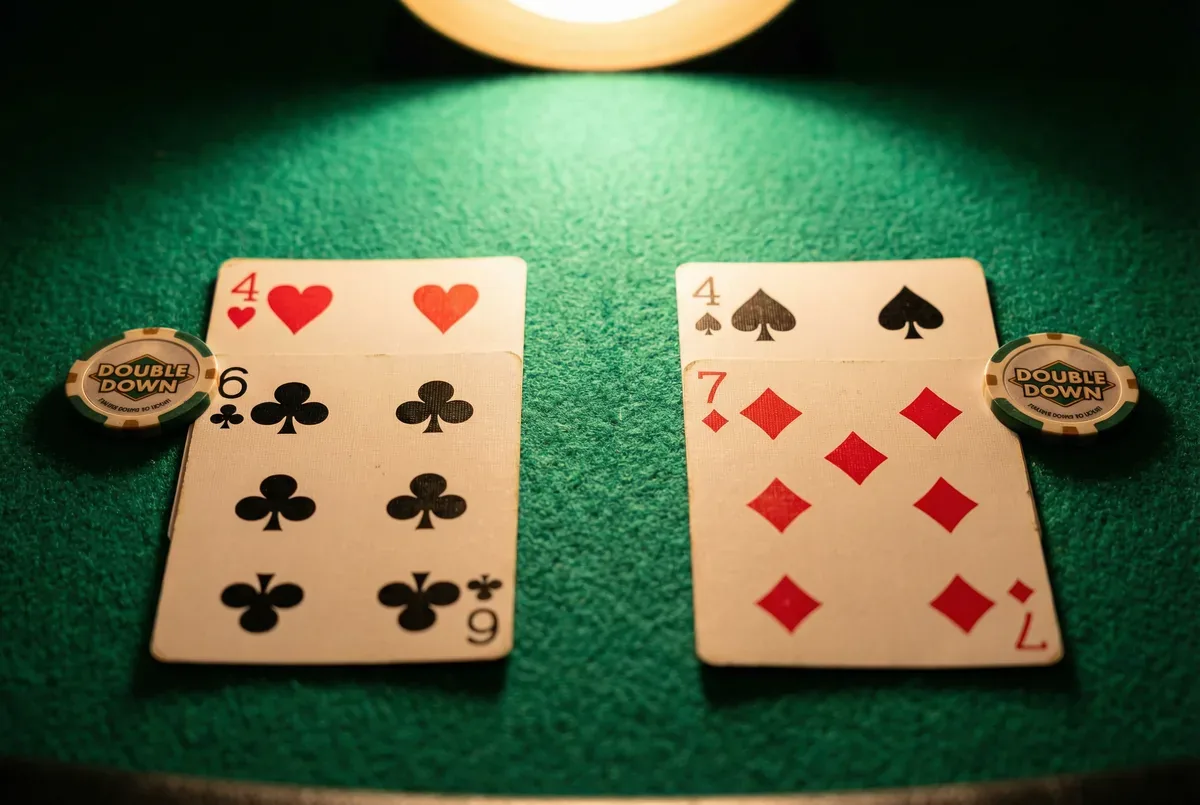
Splitting a pair creates two independent hands from one. After you place the second bet and the dealer distributes a new card to each split card, you play each hand exactly as you would any other starting hand applying full blackjack basic strategy to every decision. The original pair context is irrelevant to post-split play. If you split 8s and your first new card is a 3, giving you an 11, you double that hand if the dealer upcard warrants it. If the second 8 receives a 5, giving you a 13, you consult the stiff-hand rules. Many players fail to apply this independence principle and play both split hands too conservatively, forfeiting doubles and additional hits that the cards clearly call for.

After the Split, Each Hand Stands Alone
- Each split hand is played by full basic strategy no exceptions
- Split acesmost casinos deal exactly one card per ace, then stand (locked)
- Re-splittingif a split hand produces another pair, split again (where allowed)
- Doubling after split (DAS)available in most multi-deck games use it when the chart calls for a double
- Blackjack after splittypically pays 3:2 as a regular 21, not as blackjack in most casinos
What Is Split Aces?
Split aces are the most important exception in post-split play. In virtually all casino environments, when you split a pair of aces, each ace receives exactly one additional card you cannot hit, double, or take any further action after that single draw. The casino imposes this restriction because Ace + 10-value cards (totaling 21) produced after splitting are paid as ordinary 21, not as blackjack (3:2), which mitigates the player advantage from splitting aces. Despite the restriction, splitting aces is still one of the most profitable plays in the game: starting each hand with an ace gives you the highest probability of reaching 17–21, and the one-card-only rule costs less EV than you might expect because most winning totals from an ace start are 17–21 anyway.
The EV of splitting aces against a dealer 6, for example, exceeds +50 cents per dollar wagered. Even under the one-card restriction, no other play comes close. Always split aces against every dealer upcard, including Ace.
Common Myth
“Don't split aces vs dealer Ace you'll just end up with two bad hands”
Players see the dealer Ace and assume splitting into two soft 11s (or totals dependent on a single draw) is too risky given the dealer's strong position.
The Reality
Split aces against every dealer upcard, including Ace. The one-card rule doesn't change this.
Even vs dealer Ace, splitting aces produces roughly +18 cents per dollar versus the alternative of playing a hard or soft 12, which is a deeply losing position. Always split.
What Is Re-Splitting?
Most casinos allow re-splitting if one of your split hands forms another pair, you split again. Standard rules allow up to 3 or 4 total hands from a single original bet. Re-splitting follows exactly the same logic as the original split decision: if blackjack basic strategy calls for splitting the pair in isolation, you split it again. Re-split 8s if the dealer upcard still warrants splitting. Re-split aces when allowed (though many casinos restrict ace re-splitting check the blackjack table rules before sitting). The only pairs you never split are 10s and 5s a pair of 10s forms hard 20, and a pair of 5s is better played as hard 10 with doubling potential. If you happen to split 5s (which you shouldn’t), and a split hand produces another 5, do not re-split play it as hard 10.
Dealer Shows
Your Hand
You split 8s vs dealer 4. Your first split card is another 8. What do you do?
Basic strategy logic applies identically to split hands. A new pair of 8s against dealer 4 is a re-split regardless of the fact that it originated from a split. The EV of three separate 8-hands vs dealer 4 is better than two 16s, which is better than one 16. Always re-split 8s when allowed.
How Do You Doubl After Split: A Significant Rule Variation?
Doubling after split (DAS) is permitted in most multi-deck blackjack games. When a split hand produces a two-card total that blackjack basic strategy would normally double, you double it paying a third unit of the original bet. This changes several splitting decisions compared to games where DAS is not allowed. Most importantly, it makes splitting 2s, 3s, 6s, and 7s against certain weak dealer upcards more attractive because you can reach doubling totals on the split hands. When DAS is unavailable (NDAS), split ranges tighten: you stop splitting some low pairs against upcards that would otherwise be borderline splits. Always check the table placard for DAS availability before assuming post-split doubles are permitted.
Execute Post-Split Decisions Without Hesitation
Post-split hands are where recreational players most often freeze up, unsure whether normal strategy still applies to each new hand. It does, completely. The fastest way to build that reflex is repetition with real dealer pressure if you want to drill post-split scenarios at a live table, make this split with real money down will get you there quickly. Those are real-money games, so make sure your blackjack basic strategy is automatic before you sit down and face a three-hand post-split situation under live conditions.
Frequently Asked Questions
No. A 21 formed after splitting (including ace + 10-value after splitting aces) is treated as a regular 21, not blackjack. It wins at 1:1 against the dealer's non-blackjack total, and pushes against dealer 21. Only an original two-card blackjack pays 3:2.
Doubling after split is allowed in most multi-deck games but is not universal. Some casinos restrict it. Check the table rules before sitting. If DAS is not available, adjust your split ranges slightly particularly for low pairs like 2s, 3s, 6s, and 7s against borderline dealer upcards.
Only if basic strategy calls for standing on each individual hand. For example, if you split 9s and each hand receives a 10, giving you 19 on both yes, stand on both. Post-split decisions are made independently by the chart. The fact that you split is irrelevant to what you do next.
Before you test these plays at a real table, run them through our free blackjack simulator practice unlimited hands at zero cost until every move becomes automatic.
Mathematical Risk Warning
Splitting and post-split doubling increase total money at risk per round. While they improve expected value when applied correctly, they also increase variance. Use within bankroll limits.
Blackjack Academy is an educational resource. All strategy is based on mathematical expectation. Always play within your means.

Written by
Mark AnurakProfessional card counter since 2009 · 500,000+ hands logged · Former Macau advantage player. Studied under Thorp, Griffin & Wong methodology. Full bio →
Learn More
Continue your education with these related lessons.
When to Stand on 12 Through 16 Against a Dealer 2 Through 6
Stiff hands from 12 to 16 are the most misplayed zone in blackjack. Learn exactly when to stand against a…
Why the Dealer Has the Advantage on Stiff Hands
The double-bust rule both player and dealer bust, dealer wins is the primary source of house edge in blackjack. Here…
Composition-Dependent Basic Strategy and When It Gives You Real Edge
Composition-dependent basic strategy goes beyond your hand total the specific cards you hold can change the correct play. The multi-card…