
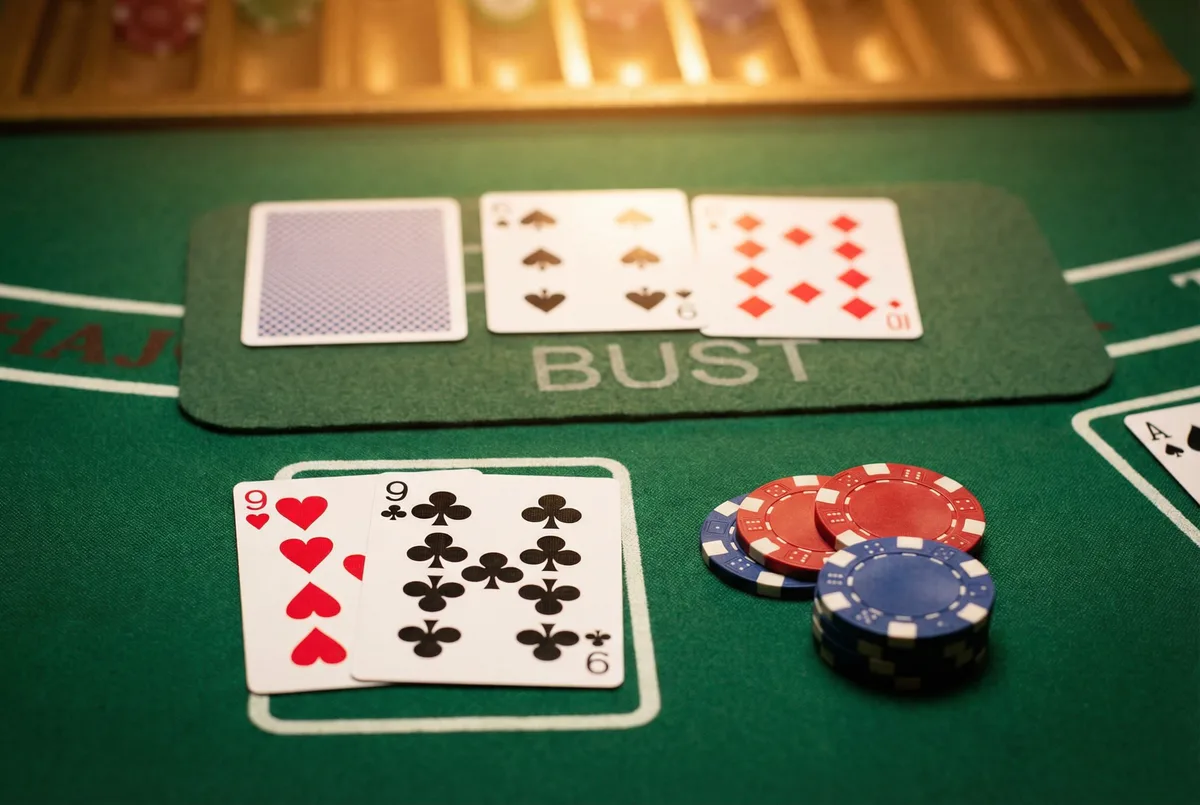
The Real Goal of Blackjack Is to Beat the Dealer Not Chase 21
Roughly 30% of blackjack decisions are mishandled by recreational players, and most of those errors trace back to one false premise: the goal is to get as close to 21 as possible. It is not. The goal is to beat the dealer’s total without going over 21. That distinction sounds small. At the table, it changes every decision you make.
Common Myth
“The goal of blackjack is to get as close to 21 as possible.”
The Reality
The goal is to beat the dealer's total without busting. You win at 12 if the dealer busts at 22. You lose at 20 if the dealer hits 21.
The True Objective at the Table
You win a hand of blackjack in one of two ways: your total exceeds the dealer’s without exceeding 21, or the dealer busts and you do not. That second path is the one most players ignore. When the dealer is showing a 6, the mathematically correct play on a hard 12 is to stand, not because 12 is a strong hand, but because the dealer busts on 6-upcard at roughly 42% frequency. You do not need a strong hand. You need the dealer to fail.
This single reframe explains a dozen otherwise confusing blackjack basic strategy moves. Standing on 16 versus a dealer 6. Doubling on 11 against a dealer 5. Every one of them is built on the same logic: what is the probability the dealer busts from here? Your hand total is only half the equation.
What Are Card Values and Hard vs. Soft Hands?
Number cards are worth face value. Face cards, Jack, Queen, King, are each worth 10. The Ace is worth either 1 or 11, whichever keeps your hand alive. A hand containing an Ace counted as 11 is called a soft hand. Soft 18 (Ace + 7) is different from hard 18 (9 + 9) in one critical way: you can take another card on soft 18 without risk of busting. On hard 18, a 4 puts you at 22 and ends the hand immediately.
That flexibility is why soft hands follow a different strategy matrix than hard hands. An Ace is not just a high card. It is a safety valve. Use it that way.
- Goalbeat the dealer without exceeding 21
- Cards 2-9face value; 10/J/Q/K: worth 10; Ace: 1 or 11
- Natural blackjack (Ace + 10-value) pays 32
- Dealer must hit to 16 and stand on 17 or higher
- House edge with basic strategyapproximately 0.5%
What the Dealer Must Do?
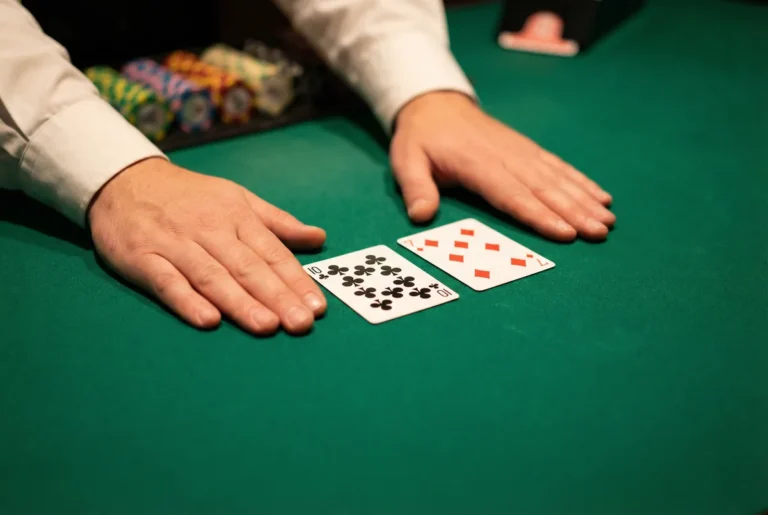
The dealer follows fixed rules with no discretion. The dealer must hit on any total of 16 or below. The dealer must stand on hard 17 or above. The one variation that matters: soft 17. In S17 games, the dealer stands on soft 17. In H17 games, the dealer must hit soft 17. That one rule adds 0.22% to the blackjack house edge, worth $4.40 per hour at a $25 table running 80 hands. Check the felt for “Dealer must hit soft 17” before you sit.
This is why dealer upcard determines so much of blackjack basic strategy. You know exactly what the dealer will do given any upcard. The dealer cannot deviate. That predictability is the entire basis for strategy calculation. You are not guessing what the dealer will do. You are computing it.
Why Does the Two Way You Win?
Path one: you end the hand with a higher total than the dealer without busting. Path two: the dealer busts and you do not. A natural blackjack, an Ace plus any 10-value card on your first two cards, pays 3:2 at a proper table. On a $10 bet, that is $15. At a 6:5 table, the same hand pays $12. That $3 difference across 100 hands at $10 per hand is $300. This is why table selection is not optional. Check the payout before you buy in.
| Outcome | Payout | $10 bet | $25 bet |
|---|---|---|---|
| Blackjack (3:2) | 3:2 | ||
| Blackjack (6:5) | 6:5 | ||
| Win | 1:1 | ||
| Push / Tie | 0 | ||
| Loss | -1 | ||
| Bust | -1 |
The One Mistake That Costs You the Most
Playing to 21 instead of playing to beat the dealer leads to one consistent error: hitting when you should stand. If you hold a hard 14 and the dealer shows a 4, blackjack basic strategy says stand. The dealer busts at roughly 40% frequency from that upcard. You do not need to improve your hand. You need to survive. Players who chase 21 hit the 14, bust at a higher rate than the dealer ever would have, and lose money they did not have to lose.
The second most common mistake is treating a push as a neutral event to be avoided at all costs. A push returns your bet. It is not a loss. Taking unnecessary risk to avoid a tie, hitting a 17 because “I want to beat him”, is how recreational players donate money to the house on hands where blackjack basic strategy would have cost them nothing.
When you’re ready to put this to use, play test this rule at a real dealer table with a clear objective in mind: beat the dealer, not the number 21. Decide your session limit before you sit, not at the table, not after a bad run. That is not a disclaimer. That is the first rule of bankroll management.
Before you test these plays at a real table, run them through our free blackjack simulator practice unlimited hands at zero cost until every move becomes automatic.
Know Your Edge Before You Bet
The calculator shows your exact EV before you sit down.
Blackjack Academy is an educational resource. All strategy is based on mathematical expectation. Always play within your means.
Frequently Asked Questions
The goal is to beat the dealer's hand total without going over 21. You win if your total is higher than the dealer's at the end of the hand, or if the dealer busts and you do not. Getting close to 21 is not the objective, beating the dealer is.
A tie, called a push, returns your bet in full. You do not win and you do not lose. It is not a bad outcome, it is a neutral one. Never take unnecessary risk on a strong hand to avoid a push.
A 3:2 payout gives you $15 on a $10 bet when you hit blackjack. A 6:5 table pays only $12. Over a session of 100 hands at $10, that difference costs you $30 in blackjack payouts alone. The 6:5 rule adds approximately 1.39% to the house edge. Always check the payout before sitting down.

Written by
Mark AnurakProfessional card counter since 2009 · 500,000+ hands logged · Former Macau advantage player. Studied under Thorp, Griffin & Wong methodology. Full bio →
Learn More
Continue your education with these related lessons.
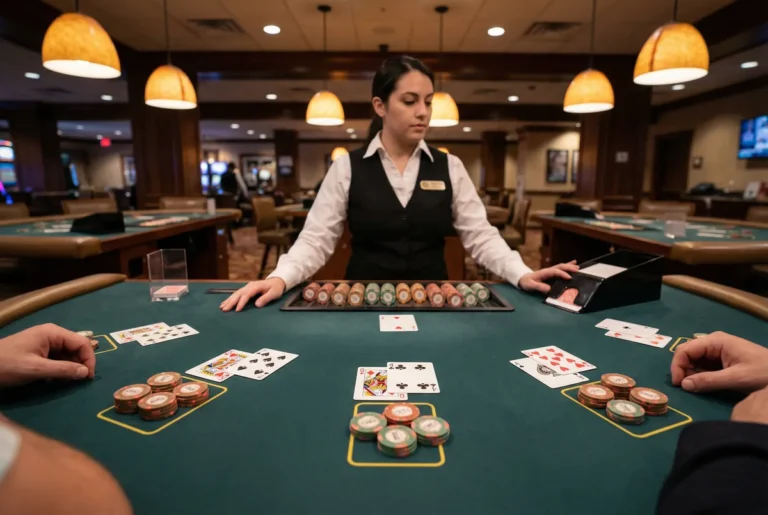
Why Play Moves Clockwise from the Dealer’s Left Side
Blackjack action always starts at first base the seat to the dealer's left and moves clockwise to third base. This…
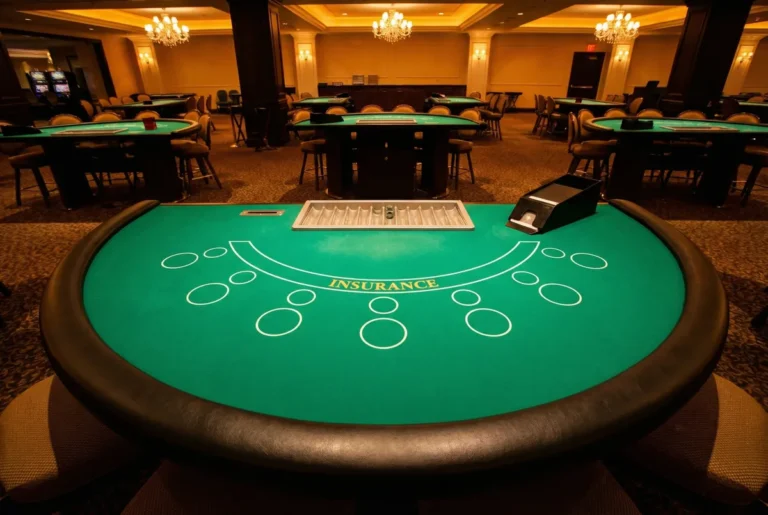
Why Casinos Use the Semicircular Table Design for Blackjack
The semicircular blackjack table is not an aesthetic choice. Every element of its design, from the arc shape to the…
Why Dealers Follow the Rule of 17 Without Choosing Strategy
Dealers at every licensed blackjack table follow a fixed algorithm: draw to 16, stand on all 17s. They make no…