Why the Dealer Removes a Burn Card Before Starting the Round
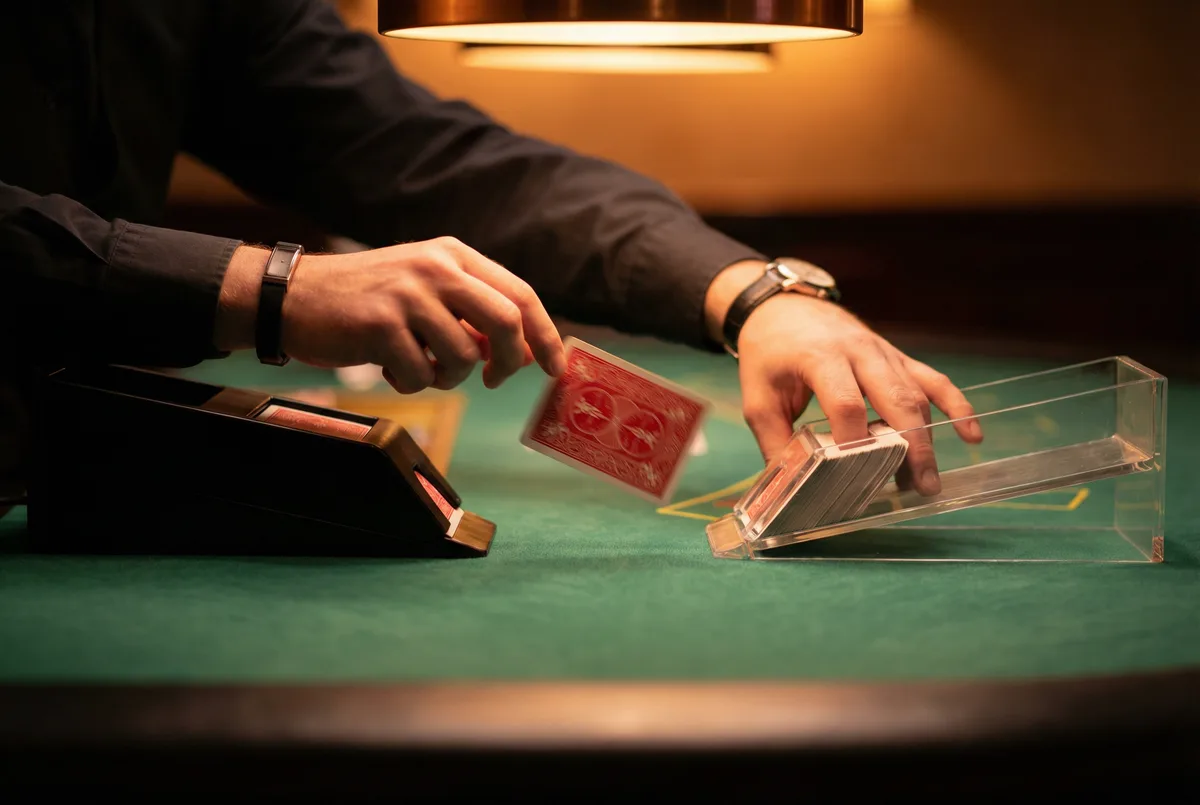
Every time a fresh shoe begins, the dealer takes the top card, flashes it or places it face-down, and slides it into the discard tray. Players rarely ask why. That single discarded card has a name, a history, and a precise function in the security architecture of modern casino dealing.
The burn card exists for reasons that originated in the era of cheating rather than the era of math. Understanding it correctly tells you something about how casino procedures were designed and whether this particular one has any effect on the game you are about to play.
Burn Card in Blackjack Explained
The burn card is the first card removed from a freshly shuffled shoe before any hands are dealt. The dealer removes it immediately after the cut card is inserted. It goes directly to the discard tray and plays no part in the round.
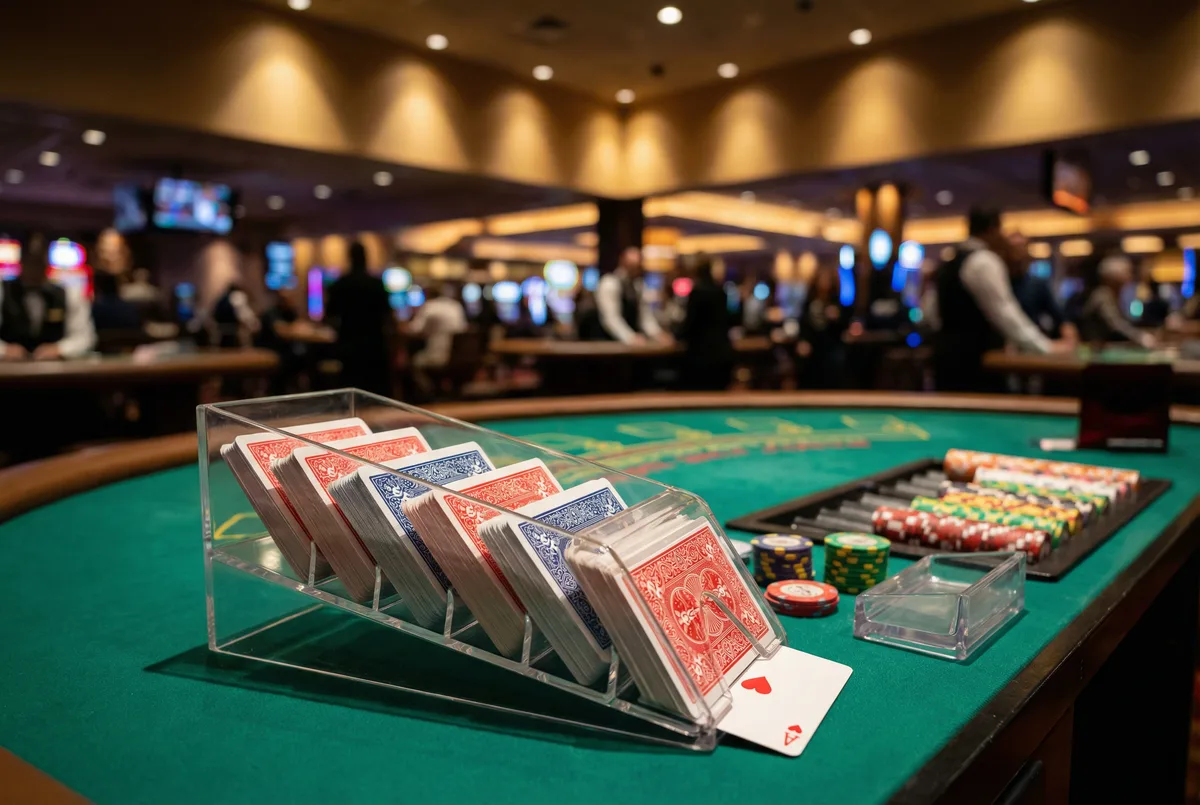
In most casinos the burn card is placed face-down. In some procedures the dealer exposes it briefly before discarding it. Both practices are accepted under gaming regulations. The number of cards burned per shuffle is typically one, though some internal procedures call for multiple burn cards after certain shuffle types.
- When it happensafter each fresh shuffle, before dealing round one
- How manytypically one card (some procedures burn two or three)
- Face-up or downvaries by casino; most burn face-down
- Where it goesdirectly to the discard tray
- Effect on house edgemathematically negligible
Why Casinos Start Burning the First Card?
The historical purpose of the burn card is to prevent top-card knowledge. In eras when hand shuffling was less standardized and casino oversight was weaker, a dealer or confederate could track the top card during the shuffle. If the first card is always discarded, knowledge of that card becomes worthless before the first bet is placed.
The security logic is simple: the top card is the most vulnerable position in any deck. It is the card most likely to be glimpsed by someone standing near the dealing tray, by a dealer colluding with a player, or through a marked card scheme targeting the top position specifically. Burning it eliminates the value of all those attacks simultaneously.
Casinos codified the burn card into their dealing procedures during the mid-20th century as gaming commissions formalized table game regulations. It became a universal requirement rather than a discretionary practice, which is why you see it at every licensed blackjack table regardless of the property.
The burn card is not a superstition or ritual. It is a tamper-prevention mechanism inherited from a period when physical cheating was a significant casino threat. Procedures that look ceremonial often have an exact security origin if you trace them back far enough.
What Is the Burn Card Actually Affect Your Expected Value?
For blackjack basic strategy players, the burn card has no effect on expected value. One unknown card removed from a six-deck shoe leaves 311 unknown cards. The composition change from removing one card is mathematically trivial and does not alter the correct blackjack basic strategy decision on any hand.
For card counters, the burn card introduces a small uncertainty. A face-down burn means the counter does not know whether the removed card was high or low. Over a full six-deck shoe, one unknown card has a negligible effect on count accuracy.
Some early blackjack card counting texts suggested adjusting the starting count slightly to account for the expected value of the burn card. This adjustment is so small that modern counters treat it as irrelevant. The burn card is not a factor in any practical counting system used today.
Common Myth
“The burn card changes the odds and can be used to predict the coming shoe”
Players see the burn card flashed briefly and assume its rank tells them something useful about the deck composition or upcoming hands
The Reality
One card removed from a 312-card shoe has no meaningful impact on deck composition or strategy decisions
Card counters assign the same negligible weight to the burn card as to any other unknown removed card. It does not alter count strategy.
How Do Shuffle Machines Change the Burn Card Procedure?
Continuous shuffle machines (CSMs) change the burn card calculation significantly. Cards are returned to the shuffler after each round and re-randomized continuously. There is no fixed top card to protect. Many CSM tables skip the formal burn card entirely because the security threat it was designed to prevent does not exist in that format.
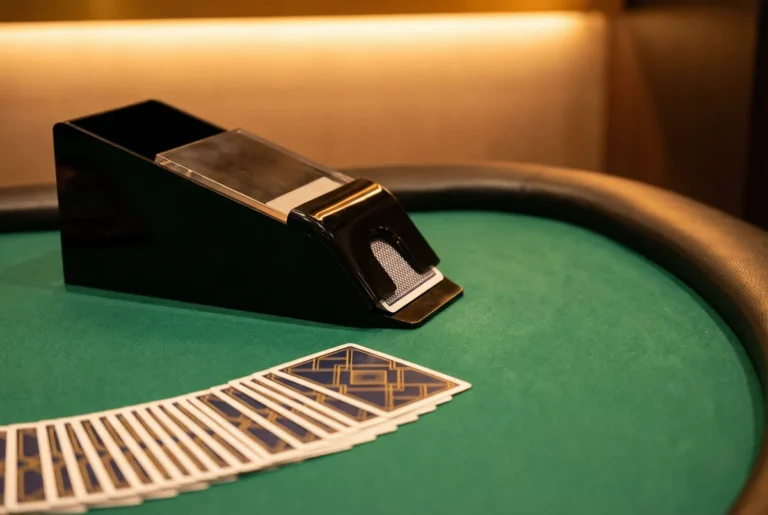
Traditional automatic shufflers that shuffle a full shoe and then present it for dealing do retain the burn card procedure. These machines produce a shuffled deck in a defined order, so the top card position still exists and the same security logic applies.
CSMs also eliminate blackjack card counting entirely, since no count can build when cards are continuously re-randomized. Card counters need a traditional shoe with defined penetration. At those tables the burn card procedure is unchanged. Live dealer games at see this in action at a live table tonight use real cards with real money at stake, so note the burn card procedure before your first hand.
Using Burn Card Awareness to Your Advantage at a Live Table
Basic strategy players do not need to track the burn card. It has no effect on your decisions, your edge, or your session outcomes. You can watch the procedure out of curiosity but there is no strategic information to extract from it.
Card counters should note whether the burn card was face-up or face-down. A face-up burn gives the counter one additional piece of count information at the very start of the shoe. A face-down burn adds one unit of count uncertainty. In practice, neither changes the counter’s opening strategy.
Understanding procedures like the burn card builds a more complete picture of how casinos operate. Every dealing rule has a reason. Most of those reasons center on preventing cheating, maintaining randomness, and ensuring the game runs consistently under regulatory oversight. None of them were designed to help you win.
Frequently Asked Questions
No. If the burn card is exposed briefly, it provides one card of count information at the start of a shoe. For card counters this is a minor data point. For basic strategy players it is irrelevant. One card in a 312-card shoe has no meaningful effect on strategy decisions or expected value.
Standard procedure is one card per shuffle. Some casinos burn two or three cards, particularly after a reshuffle or at the discretion of the floor supervisor. The exact number is defined by the casino's internal dealing procedures and varies by property.
Most CSM-equipped tables do not require a formal burn card because continuous shuffling eliminates the fixed top-card position that the burn card was designed to protect. Traditional automatic shufflers that produce a complete shoe before dealing do retain the burn card procedure.
Before you test these plays at a real table, run them through our free blackjack simulator practice unlimited hands at zero cost until every move becomes automatic.
Casino Procedures Are Built to Protect the House
The burn card, cut card, and shuffle procedures are all designed to maintain game integrity and limit player information. Understanding these procedures sets realistic expectations before you wager real money at any table.
Blackjack involves real financial risk. Procedural knowledge does not guarantee winning outcomes. Play responsibly.

Written by
Mark AnurakProfessional card counter since 2009 · 500,000+ hands logged · Former Macau advantage player. Studied under Thorp, Griffin & Wong methodology. Full bio →
Learn More
Continue your education with these related lessons.
Why Automated Shuffling Machines Secretly Destroy Your Card Counting Edge
A continuous shuffling machine feeds cards back into the shoe after every hand, eliminating any chance of tracking the count…
Complete Blackjack Table Etiquette Guide Every Serious Player Must Know
Learn the unwritten rules of the blackjack table hand signals, chip buying, tipping, and everything else that separates a smooth…
Is Playing Multi Hand Blackjack Actually Better for Your Profit?
Multi-hand blackjack looks like a shortcut to bigger wins but it exposes more money per round. Here is when it…