
How to Tell When a New Blackjack Shoe is Starting
The dealer’s hands stop mid-deal. Cards begin moving off the table in stacks. A second dealer arrives and the two of them start spreading every card face-down in wide overlapping arcs. You have just sat down at a new table and have no idea what is happening.
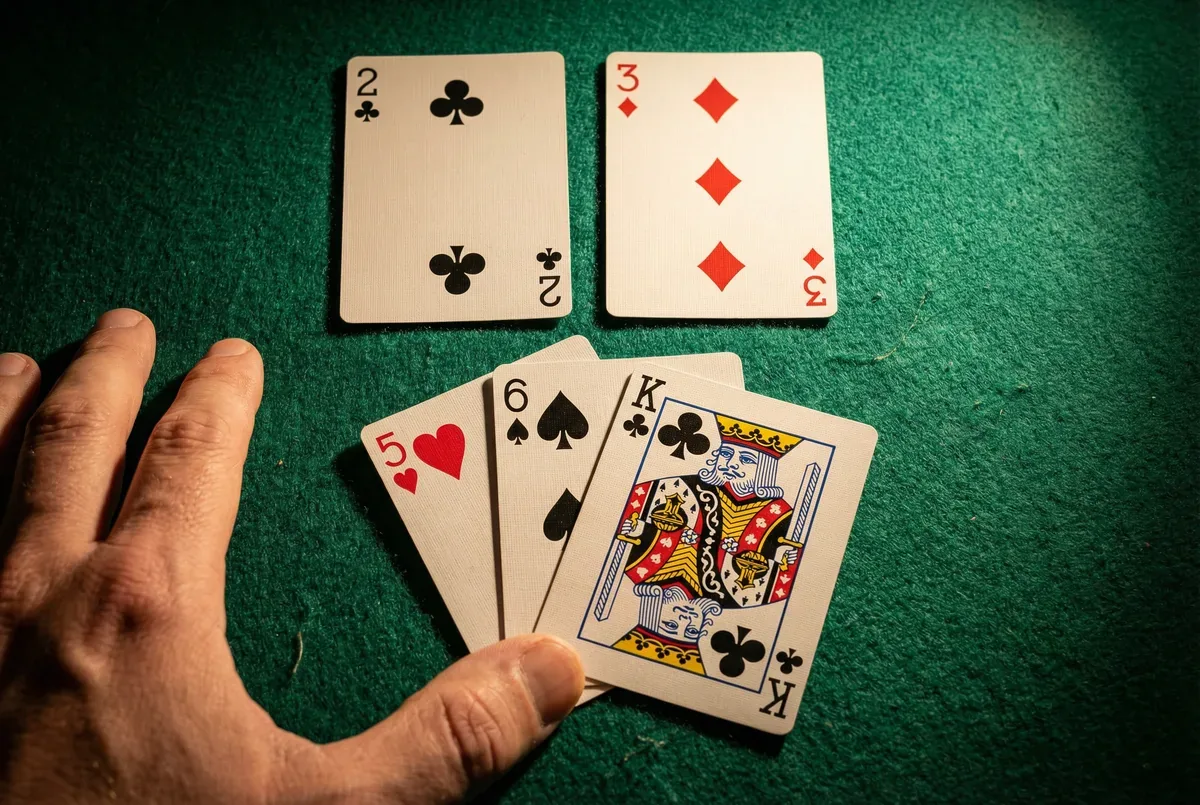
That procedure is a card wash, and it signals a fresh shoe is minutes away. Knowing each stage of the new-shoe sequence lets you track exactly where you are in the deal and what it means for your strategy decisions.
Visual Signals of a New Shoe
A new shoe follows a fixed sequence every casino uses, regardless of the property. The steps are designed for game integrity and are visible from any seat at the table.
Step one is the card wash. All cards are spread face-down across the felt and shuffled in random circular motions. This randomises newly introduced decks and visually confirms to the pit that no cards were pre-arranged.
Step two is the riffle shuffle. The dealer gathers the washed cards into rough piles, then performs several riffle and strip shuffles. Standard practice is three to five shuffle rounds before the shoe is considered adequately randomised.
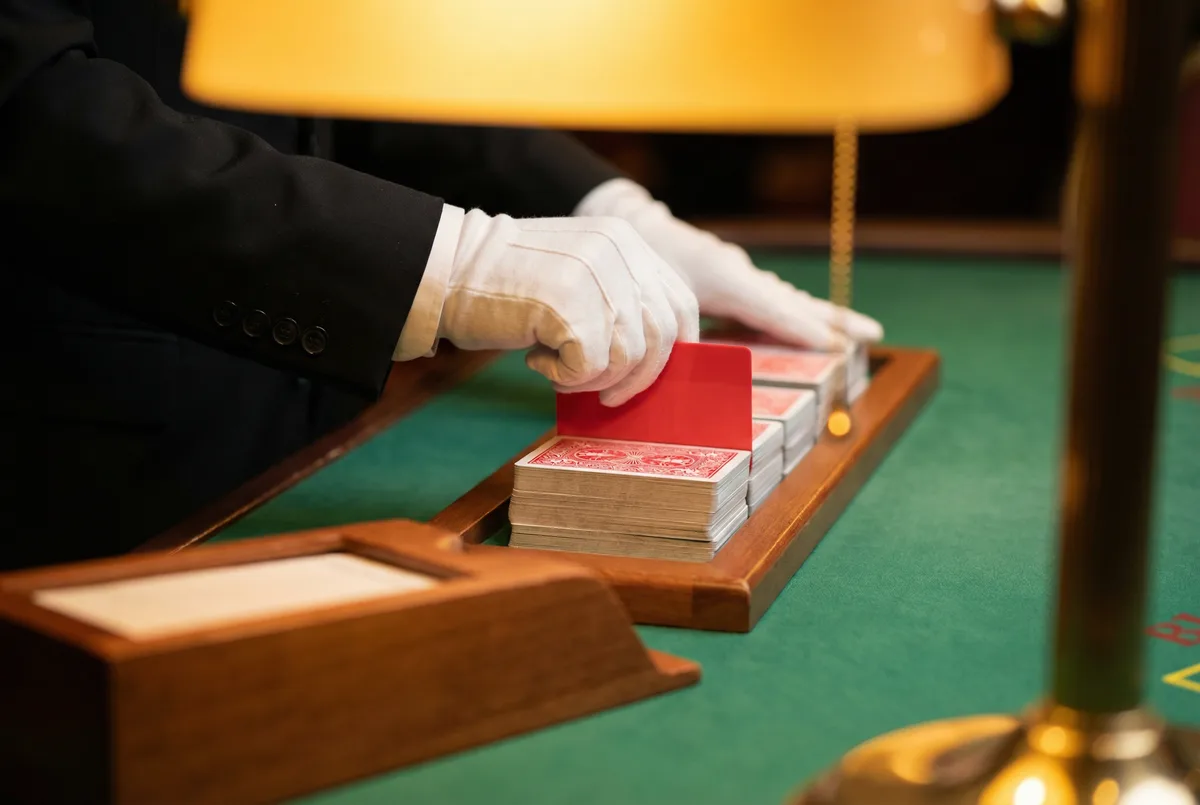
Step three is the cut. The dealer squares the full pack and offers it to a player with a coloured plastic cut card. The player inserts it somewhere in the deck. The dealer completes the cut by placing the bottom portion on top.
Step four is the burn card. The dealer removes the top card, shows it briefly, and places it face-down into the discard tray. The shoe is now live and dealing begins.
- Step 1Card wash (face-down circular mixing)
- Step 2Riffle and strip shuffle (3-5 rounds)
- Step 3Player cuts with plastic cut card
- Step 4Dealer burns top card face-down
- Step 5First hand dealt, shoe is live
Why the Cut Card Position Matters for Players?
Penetration is the percentage of the shoe dealt before reshuffling. It is determined by where the cut card is placed. A cut card inserted at 75% of the way through a 6-deck shoe means 75% of 312 cards are dealt before a new shoe procedure begins.
For blackjack basic strategy players, penetration has minimal practical effect. Your decisions are the same whether you are at the start or the end of the shoe. The key moment is simply knowing when the count resets to zero.
For card counters, penetration is critical. Deeper penetration means the count has more time to move meaningfully before the shoe ends. Shallow penetration, cut at 50% or less, is a sign the casino is reducing counter effectiveness. Many casinos place the cut card at roughly 65-75% of a 6-deck shoe.
When you see the cut card appear mid-deal, it signals that the current hand or the next hand will be the last before reshuffling. The dealer does not stop instantly when the cut card emerges. Play continues until the hand in progress is completed, then the new shoe procedure begins.
Watch where the player inserts the cut card. If the cut card goes deep into the last quarter of the shoe, this table has good penetration. If the dealer places the cut card themselves at 50%, this table is unfriendly to counters and not ideal for extended sessions with variance-sensitive strategies.
What to Do When a New Shoe Starts?
A new shoe is the cleanest entry point at any table. The count is zero, the deck composition is unknown, and blackjack basic strategy applies without adjustment. Any card counter resets their running count to zero immediately after the burn card goes into the tray.
For blackjack basic strategy players, the new shoe is simply a fresh start. Bet your standard unit and apply correct strategy from the first hand. There is no residual information from the previous shoe to act on.
Joining a table mid-shoe is also fine for blackjack basic strategy players. The new-shoe signal is most useful for counters who want to enter with a known count of zero rather than mid-count tracking.
Watching the cut card offer is also a courtesy signal. When the dealer pushes the cut card toward you, place it confidently somewhere in the middle half of the deck. Placing it near the top or bottom is unusual and may attract pit attention without any strategic benefit.
Common Myth
“Sitting out a shuffle and re-entering at a new shoe gives you an advantage”
Players assume a fresh shuffle changes the expected value somehow, or that arriving at shoe-start improves their odds. It feels like starting clean.
The Reality
A freshly shuffled shoe has the same house edge as any other point in play.
The shuffle does not alter the mathematical house edge for basic strategy players. Expected value per hand is determined by rules, not by where in the shoe you enter. The only players with a reason to prefer new-shoe entry are card counters who want a verified zero starting count.
How Does the Burn Card Affect Your Count or Strategy?
The burn card is removed face-down at the start of every new shoe. In most casinos the dealer will expose the burn card value briefly before placing it in the discard tray. Some properties burn it without showing the value at all.
When the burn card is visible, card counters update their running count accordingly. A burned 10 is tagged as -1 in Hi-Lo. A burned 2 is tagged as +1. This keeps the count accurate from the very first hand.
When the burn card is hidden, counters typically assume it is a neutral card and begin counting from zero. The effect of one unknown card on a 6-deck shoe is minimal, approximately 0.3% variance in the starting count.
Basic strategy players do not need to track the burn card at all. Its removal is irrelevant to decision-making on any hand.
The best way to study these procedures in a live context is at a real-money live dealer table. The lobby at spot the new shoe and act first at a real-money live table shows every new-shoe step with actual funds at stake. Only play there if you are prepared to risk real money.
Difference Between a Shoe Game and a Hand-Dealt Game Explained
Shoe games use a rectangular plastic box to hold multiple decks, typically 4, 6, or 8. Cards are dealt face-up and slid out one at a time. The new-shoe sequence described above applies to all shoe games.
Hand-dealt games use 1 or 2 decks held by the dealer. Player cards are dealt face-down. The shuffle happens more frequently, often every 20 to 30 hands in a single-deck game. The visual signals are the same: wash, riffle, cut, burn, deal.
Penetration in hand-dealt single-deck games is often shallower as a percentage, with casinos shuffling at 50-65% of the 52-card deck. This is partly to reduce counter effectiveness in a game that offers better rules.
Recognising the new-shoe signals across both formats lets you track your count reset point accurately regardless of which game type you play. The procedure is standardised. Once you know the sequence, you will never miss the reset point again.
Frequently Asked Questions
Yes. Dealers will tell you how many decks are in use and confirm when the current shoe is near the cut card. Asking is normal table etiquette and will not create any issues with the pit.
Most casinos use a wash for freshly introduced decks or after cards leave the table for inspection. Some automated shufflers skip the manual wash. If you see no wash, the casino may be using a continuous shuffling machine or an electronic pre-shuffled deck service.
The shoe does not reset mid-hand. Play always finishes the current round before reshuffling begins. You will see the cut card emerge from the shoe, and dealing continues until that hand resolves. The new shoe procedure starts between hands.
Before you test these plays at a real table, run them through our free blackjack simulator practice unlimited hands at zero cost until every move becomes automatic.
New Shoe, Same House Edge
A fresh shoe resets the count but not the mathematics. Every hand at a correctly played table still carries a house edge. Understanding procedure helps you play smarter, not luckier.
Casino blackjack involves real financial risk. The house edge exists on every hand regardless of shoe position. Never wager more than you can afford to lose.

Written by
Mark AnurakProfessional card counter since 2009 · 500,000+ hands logged · Former Macau advantage player. Studied under Thorp, Griffin & Wong methodology. Full bio →
Learn More
Continue your education with these related lessons.
What the Dealer Must Do and How the House Manages the Game
The dealer has zero decision-making authority at a blackjack table. Every action is predetermined by fixed house rules. Understanding exactly…
How Casino Dealers Are Trained
Casino dealers follow strict fixed rules and go through weeks of structured training. Here's what they learn and why it…
The 7 Blackjack House Rules That Secretly Change Your Expected Value
S17 vs H17, DAS, RSA, late surrender, number of decks each rule moves the house edge by a measurable number…