Why the Blackjack Insurance Side Bet is a Statistical Trap
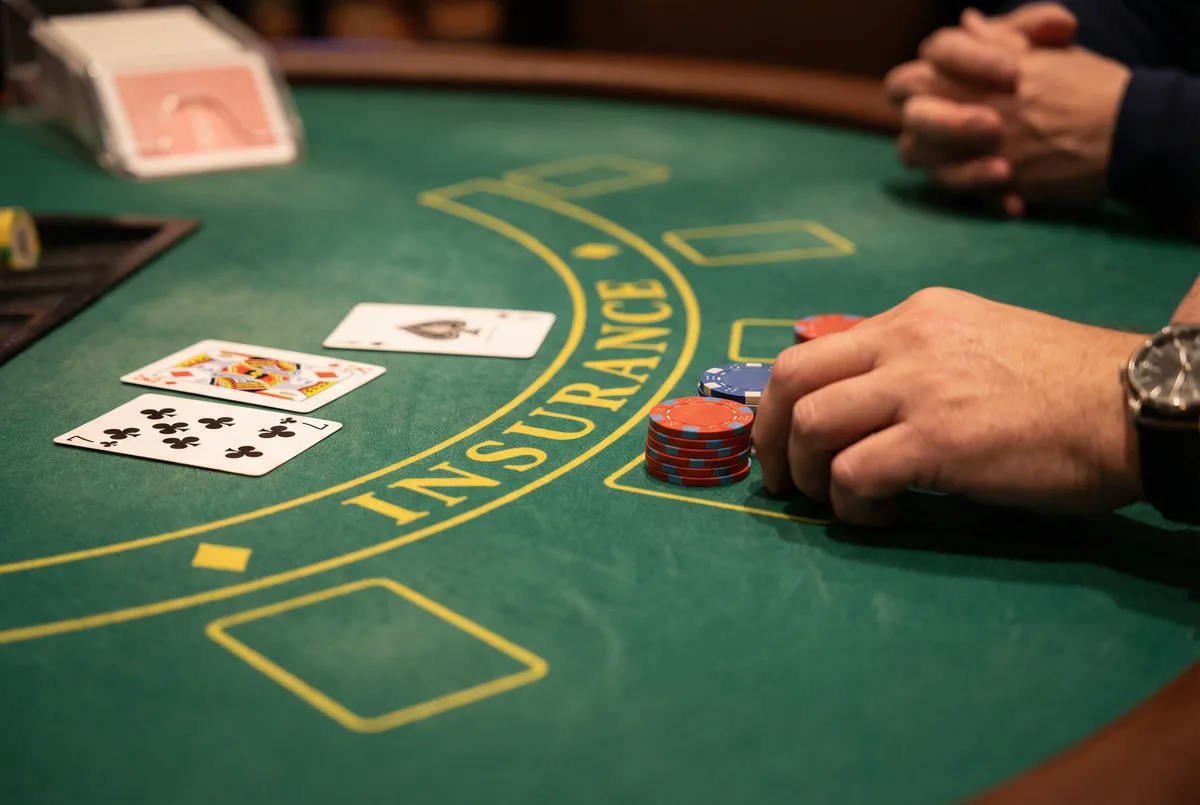
“Insurance?” The dealer’s ace is face up, and the word hangs in the air. Every player at the table hesitates. It sounds protective. It sounds like the smart move to guard against losing your bet to a dealer blackjack. That framing is exactly how casinos designed it to sound.
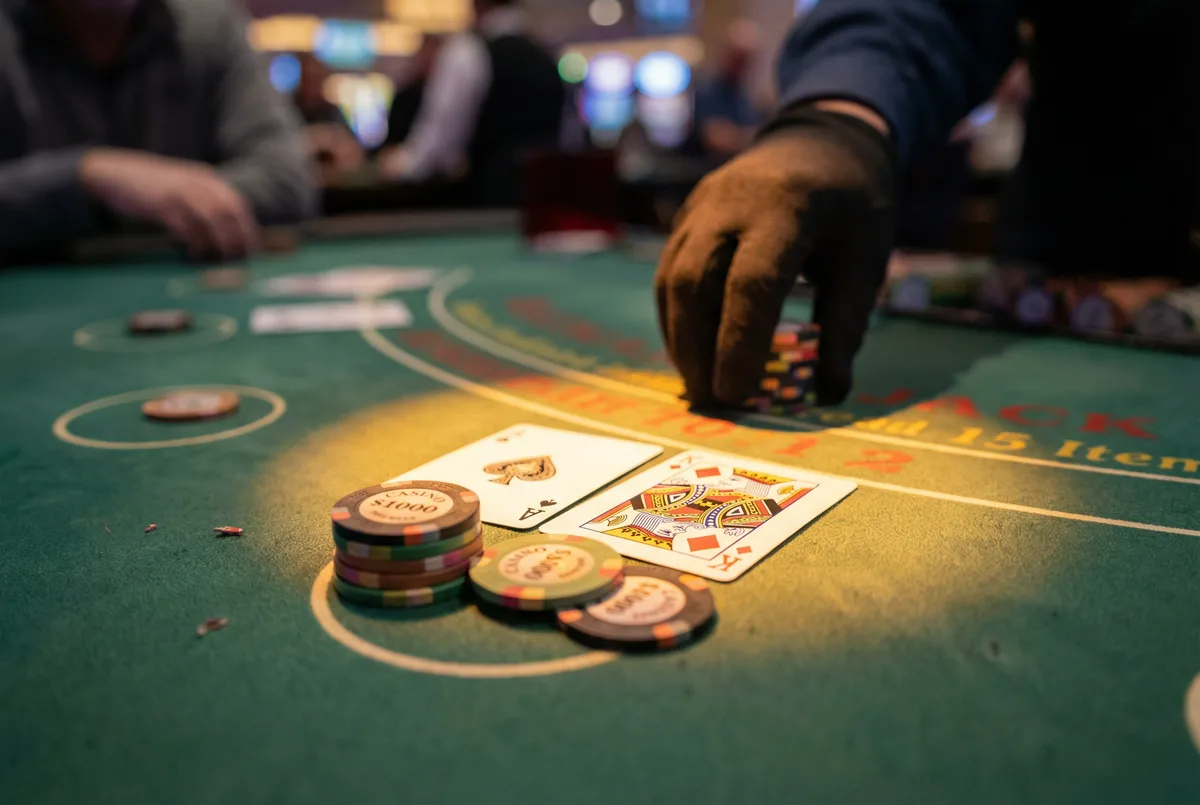
Insurance is a side bet, not a hedge. It pays 2:1 if the dealer has a 10 in the hole, but the true probability of that outcome is worse than 2:1 against.
The gap between the payout and the true odds is where the house collects its fee, and it collects it at nearly seven times the rate of the main game.
What Exactly Is the Insurance Bet
Insurance is offered every time the dealer’s upcard is an ace. Before the dealer peeks at the hole card, players may wager up to half their main bet. If the hole card is a 10-value card (10, jack, queen, or king), insurance pays 2:1. If it is not, the insurance bet is collected and play continues.
The bet is named as if it protects your main wager. In reality, the two bets are independent. Losing your insurance bet does not reduce what you lose on the main hand. Winning insurance does not affect the main hand outcome either. They settle separately every time.
“Even money” is insurance marketed to players who hold a natural blackjack. Instead of taking the 3:2 payout (which disappears if the dealer also has a natural), even money guarantees 1:1 immediately. It feels secure. Mathematically, it is identical to taking insurance and always produces a worse long-term result than declining.
Common Myth
“Insurance protects your strong hand against a dealer blackjack”
The framing is persuasive: pay a small premium to avoid losing a big bet. It mirrors how real insurance products work and feels like responsible risk management.
The Reality
Insurance is a separate losing bet with a 7% house edge, not a hedge.
In a 6-deck game, 96 of 312 remaining cards are 10-value. The true odds against the dealer having a natural are approximately 2.25:1. Insurance pays only 2:1. That 0.25 gap costs approximately 7 cents per dollar wagered on the insurance bet.
What Is the Numbers Behind the 7 Percent House Edge?
In a freshly shuffled 6-deck shoe, there are 312 cards. Of those, 96 are 10-value (tens, jacks, queens, kings). The remaining 216 are non-10 cards. When the dealer shows an ace, the probability that the hole card is a 10-value card is 96/311 (one card is already the visible ace), approximately 30.9%.
A fair payout for a 30.9% winning probability would be approximately 2.23:1. Insurance pays 2:1.
On a 10-dollar insurance bet: you win 20 dollars 30.9% of the time, and lose 10 dollars 69.1% of the time. Expected value: (0.309 x 20) minus (0.691 x 10) equals 6.18 minus 6.91, which equals -0.73. That is a loss of 73 cents per 10-dollar insurance bet.
Expressed as a blackjack house edge percentage, that is approximately 7.3% in a 6-deck game. The main blackjack game with blackjack basic strategy runs at roughly 0.5% blackjack house edge. Insurance has a blackjack house edge 14 times larger than the main bet you are supposedly protecting.
Insurance house edge (6-deck)
%
Main game house edge (basic strategy)
%
True odds of dealer natural
:1
What Is the Case For Ever Take Even Money on a Natural?
Even money on a natural feels risk-free: guaranteed profit right now instead of a potential push. The problem is that the guaranteed 1:1 return is worse than the expected value of declining. When you hold a natural and the dealer shows an ace, your expected value from declining even money is positive.
The math: roughly 30.9% of the time the dealer has a natural and you push (net zero). Roughly 69.1% of the time the dealer does not have a natural and you are paid 3:2.
Expected profit per dollar wagered is approximately 0.691 x 1.5 = 1.04 dollars, minus the 30.9% chance of getting zero. Net expected value is positive and exceeds the guaranteed 1:1 from even money.
Basic strategy is definitive here: never take even money. The occasional push when the dealer also has a natural is the price you pay for the better long-run outcome. Variance is not a reason to accept a lower-EV guaranteed return.
When Card Counting Change the Insurance Decision?
Card counters track the ratio of 10-value cards remaining in the shoe. When the true count reaches approximately +3 or higher in a Hi-Lo counting system, the proportion of 10-value cards remaining is high enough that insurance flips to a positive expected value bet.
This is called the insurance index play. It is one of the first index numbers card counters learn because it appears frequently (the dealer shows an ace on roughly 1 in 13 hands) and the EV swing is significant. At high positive counts, insurance becomes a profitable side bet rather than a trap.
For players not counting cards, the remaining deck composition is unknown. The average composition of an untracked shoe makes insurance a losing bet on every hand. The rule for blackjack basic strategy players is absolute: always decline insurance, always decline even money.
Watching how live dealers handle the insurance offer, how quickly other players decide, and how the payout works in practice is valuable preparation. The live dealer tables at this real-money live blackjack lobby give you direct exposure to the insurance prompt. Be aware you are playing with actual funds and the blackjack house edge on insurance applies immediately.
Insurance breaks even only if the dealer has a 10 in the hole more than one-third of the time. In a six-deck game with no count, that probability is about 30.8%. Even money is the same bet with a friendlier name, you're taking 1 to 1 on a natural when the correct price is 3 to 2. Refuse both, every time.
Refusing Insurance Correctly Every Time at a Live Table
Insurance is not the worst side bet in blackjack, but it is the most common. Perfect Pairs carries a blackjack house edge between 4% and 11% depending on the casino. The 21+3 side bet ranges from 3% to 13.4%. Lucky Ladies can exceed 17%. All of these are poor bets compared to the main game.
What makes insurance uniquely damaging is its frequency and its disguise. It appears every time the dealer shows an ace, roughly every 13 hands. It is presented as protection rather than as a gamble. Players who take it regularly are adding a 7% drain to sessions where their main-game edge from blackjack basic strategy is only 0.5%.
The general principle extends beyond insurance: any side bet with a blackjack house edge above the main game’s edge is costing you more than the main bet itself. The main game, played with correct blackjack basic strategy, is the best bet at the blackjack table. Side bets are revenue tools for the casino, not tools for the player.
Frequently Asked Questions
Approximately 2.25 to 1 against. With roughly 96 tens remaining in a neutral 312-card shoe minus the dealer's ace, the probability of a 10 in the hole is about 30.9%. Insurance pays 2:1, meaning the payout odds are worse than the true odds by enough to produce a 7% house edge on the bet.
No. Even money on a natural is mathematically equivalent to taking insurance and is equally unprofitable below TC +3. The emotional pull to lock in a guaranteed win is strong, but the expected value of declining even money and risking a push is higher than accepting 1:1 on your natural.
The insurance bet carries roughly 7% house edge in a 6-deck game. The main blackjack game with basic strategy runs at approximately 0.5% house edge. The insurance side bet is therefore roughly 14 times more expensive per dollar wagered than the main game making it one of the worst bets at any blackjack table.
Before you test these plays at a real table, run them through our free blackjack simulator practice unlimited hands at zero cost until every move becomes automatic.
A 7% House Edge Bet Is Not Protection
Insurance costs players money on nearly every hand it is taken. Learn to decline automatically and keep your session losses focused on the main game, where basic strategy keeps the edge below 0.5%.
All casino games carry a house edge. No strategy guarantees profit. Blackjack involves real financial risk. Only wager amounts you are fully prepared to lose.

Written by
Mark AnurakProfessional card counter since 2009 · 500,000+ hands logged · Former Macau advantage player. Studied under Thorp, Griffin & Wong methodology. Full bio →
Learn More
Continue your education with these related lessons.
Why Free Blackjack Games Online Are the Best Strategy Training
Free blackjack games online remove the financial pressure that blocks learning. Discover what they teach, what they cannot, and the…
How to Tell When a New Blackjack Shoe is Starting
A new shoe resets everything: the count, the penetration, and your decision-making baseline. Learn the visual signals that tell you…
Is First Base or Third Base the Best Seat at a Blackjack Table
First base and third base have identical house edges. The myth that third base controls the dealer's fate has been…