
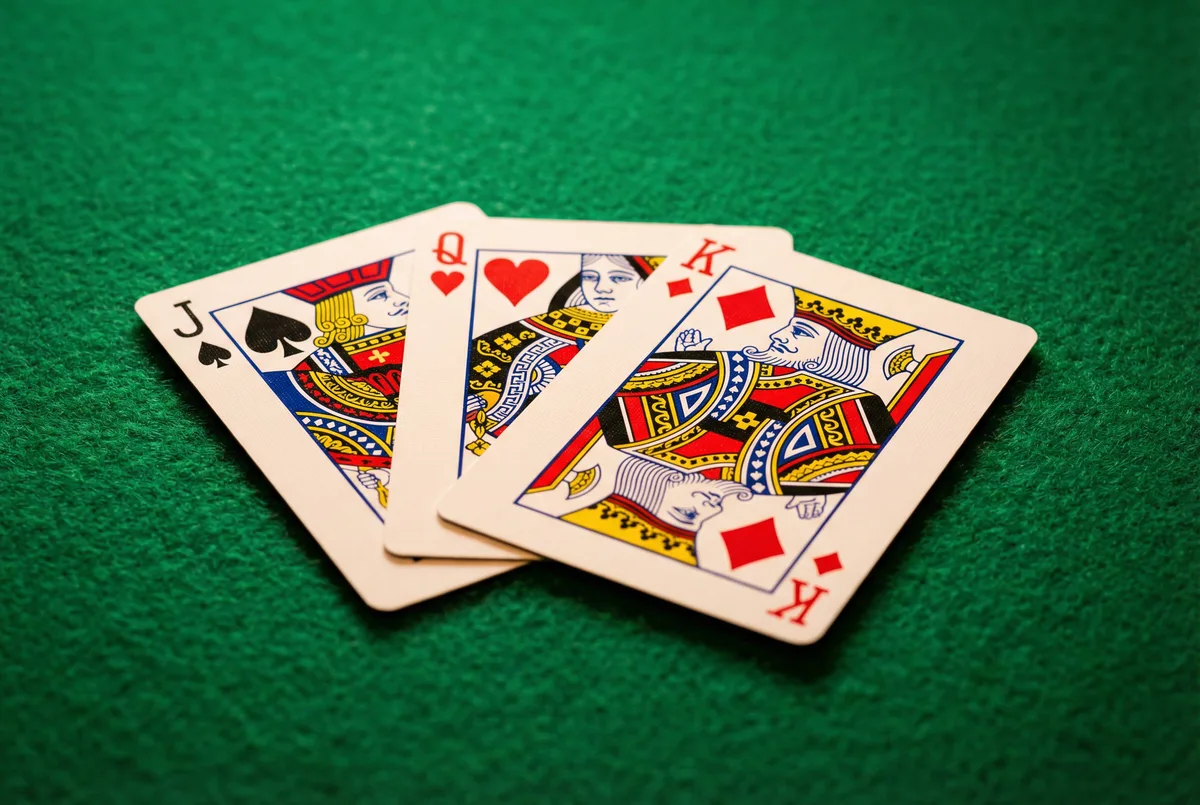
Why Face Cards are the Most Important Picture Cards in the Deck
When I first studied a blackjack basic blackjack strategy chart, I asked why doubling 11 against a dealer 3 is correct. The answer: the most likely next card is worth 10 points. Face cards account for 12 of the 16 total 10-value cards in a standard deck. They are the most important picture cards in blackjack by volume and strategic weight.
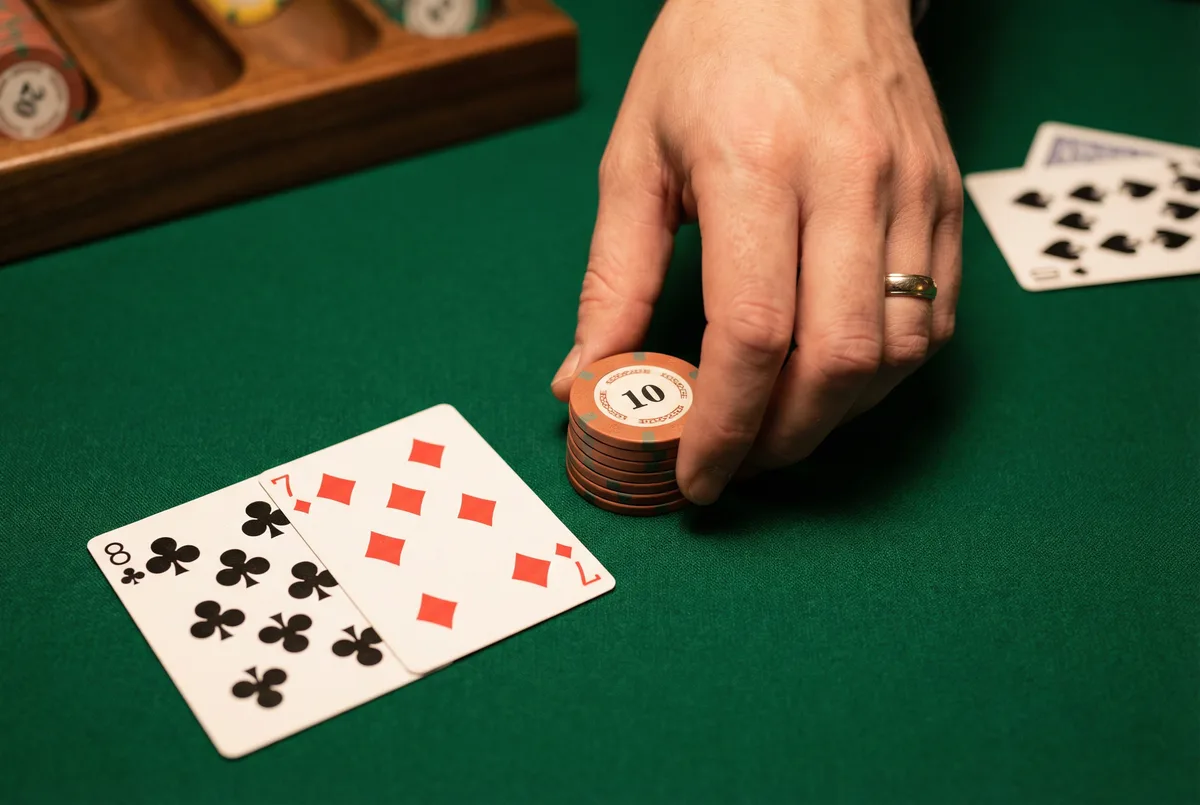
Face Cards in Blackjack: The Picture Cards That Shape Every Decision
Jacks, queens, and kings each count as 10 points in blackjack. They are worth the same as the numerical 10 card. They produce the same outcomes when dealt to you or to the dealer. Understanding why they are so strategically important starts with knowing how many of them exist in the deck relative to every other card value.
- 10 (pip card)4 per deck
- Jack4 per deck
- Queen4 per deck
- King4 per deck
- Total 10-value cards16 per deck (30.8% of the deck)
- Probability next card is 10-value30.8%
Why All Face Cards Worth 10 Points in Blackjack Matter?
All face cards are worth 10 points in blackjack because the game’s rules assign them a fixed numerical value, not their rank. Jacks, queens, and kings were standardized at 10 points when the modern game was codified in the 20th century, making them equivalent to the numerical 10 for all scoring purposes.
This uniformity is intentional. It simplifies play and concentrates strategic weight in the 16 highest-value cards. If face cards had different values (for example, jack=11, queen=12, king=13), the entire probability distribution of dealer busts, player naturals, and doubling outcomes would change. The 10-point assignment keeps the math tractable for players while maintaining a blackjack house edge for the casino.
In games where the ace can count as 1 or 11, the combination of an ace with any 10-value card produces a natural blackjack. This is the highest-paying hand in the game. Because face cards are the most numerous 10-value cards in the deck (12 of 16), they are the most frequent partners to an ace in a natural.
How Do Face Cards and Their Frequency Affect Basic Strategy?
Face card frequency affects blackjack basic strategy in every decision that involves a prediction about the next card drawn. With 16 cards out of 52 worth 10 points, approximately 30.8% of all cards dealt will be 10-value. This probability is the foundation for the dealer bust assumptions that drive most doubling and standing decisions in blackjack basic strategy.
When the dealer shows a 6, blackjack basic strategy says to stand on totals as low as 12. A 10-value hole card gives the dealer 16, forcing a hit that is likely to bust. When you double on 11 against a dealer 4, you are betting the next card is 10-value, giving you 21.
That bet is correct because 30.8% of the remaining deck produces exactly that result. Basic strategy does not guess. It encodes these probabilities into a decision matrix you apply mechanically.
The same logic applies to pair splitting. Splitting a pair of 8s creates two hands, each starting with an 8. The most likely next card for each hand is 10-value, giving each a total of 18. Two hands of 18 are mathematically better than one hand of 16 in most scenarios against the dealer.
Dealer Shows
Your Hand
You hold a total of 11 against the dealer's 6. What is the correct play and why does face card frequency matter here?
Face cards and 10s together make up 30.8% of the deck. Doubling on 11 exploits this distribution: you are most likely to receive 21 while the dealer faces a high bust probability with a 6 upcard.
Why Dealer Bust Probability Depend on 10-Value Card Frequency?
The dealer’s hole card is most likely to be 10-value in any given hand. When the dealer shows a 4, 5, or 6, strategy assumes the hole card is 10: giving the dealer 14, 15, or 16. The dealer must hit all stiff totals. The next card is also most likely 10-value, which busts the dealer.
This is not a certainty. It is a probability. The dealer showing a 6 busts on average 42% of the time across all possible hole cards and next draws. That 42% bust rate is high enough that standing on totals as low as 12 is the correct blackjack basic strategy play. Face card volume is the reason that rule exists.
Understanding this at a mechanical level transforms how you read the dealer’s upcard. You are not guessing when you stand on 13 vs. a dealer 4. You are applying a mathematically derived decision that accounts for 30.8% of the remaining deck being worth 10 points.
There are 16 ten-value cards in a standard 52-card deck: the 10, J, Q, and K in each of four suits. That's 30.8% of the deck, the highest concentration of any single value group by a wide margin. This is why basic strategy is built around the assumption that the next card is likely a 10. The 30.8% figure underlies every doubling and splitting decision in the chart.
Applying Face Card Knowledge at the Table
Face card knowledge does not require calculation at the table. Basic strategy already encodes the 30.8% probability into every decision on the chart. What face card understanding gives you is the ability to trust the chart under pressure, because you understand the mechanism behind each recommended play.
I use this mental model whenever I feel uncertain about a standing decision on a low total against a bust card: the dealer’s most likely hole card is a 10-value, putting them in danger of busting if they must hit. My job is to stay in the hand and let the dealer’s bust probability play out.
There is no better way to internalize this than watching real hands at a real table. Step into a live game and note how often 10-value cards appear over 20 hands. You will land close to 30% even in a short sample.
That observation is enough to make the probability feel real rather than abstract. Real money is involved from your first bet, so set your session budget before you sit and treat it as a ceiling.
Frequently Asked Questions
No. In blackjack, all face cards (jack, queen, king) are permanently worth 10 points. Unlike aces, they have no flexible value. They cannot be adjusted based on hand total. In every version of blackjack dealt in licensed casinos, face cards count as 10.
Because the dealer's most likely hole card is 10-value, giving them a 14 total. The dealer must hit 14, and the next card drawn is also most likely to be 10-value, busting the dealer. Basic strategy stands on 12 vs. 4 because the dealer bust probability exceeds the player's risk of busting on a hit.
Yes. Picture cards and face cards refer to the same cards: jacks, queens, and kings. Both terms are used interchangeably in blackjack strategy discussions. All three have a fixed value of 10 points in every standard game.
Before you test these plays at a real table, run them through our free blackjack simulator practice unlimited hands at zero cost until every move becomes automatic.
Strategy Built on Probability, Not Guesswork
Every basic strategy decision is grounded in card distribution math.
Blackjack Academy is an educational resource. All strategy is based on mathematical expectation models. Always play within your means.

Written by
Mark AnurakProfessional card counter since 2009 · 500,000+ hands logged · Former Macau advantage player. Studied under Thorp, Griffin & Wong methodology. Full bio →
Learn More
Continue your education with these related lessons.

History of the First American Blackjack Rules from 1825
The first written American rules for twenty-one appeared in 1825. They looked nothing like the game you play today. There…
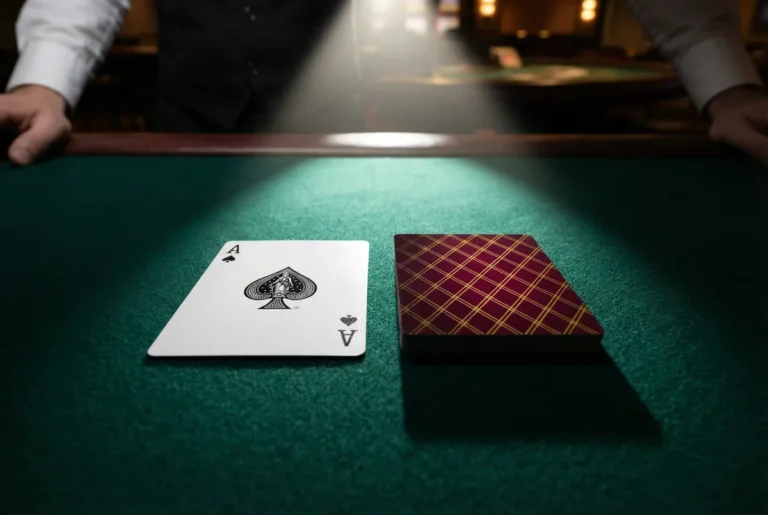
The Hidden Truth Behind the Dealer Hole Card and Face Down Protocols
The dealer's hole card is the single hidden piece of information in blackjack. How it is dealt, when it is…

Complete Guide to Playing Blackjack for Beginners and Winning
Without a strategy chart, the average player concedes a house edge of 1.5 to 2 percent. With correct basic strategy,…